Why a 2,000-year-old low-fat, high-protein cheese is taking over French dairy aisles

Why a 2,000-Year-Old Low-Fat, High-Protein Cheese Is Capturing the Hearts of French Consumers
Why a 2 000 year old low – A quiet cheese revolution is sweeping across France, redefining how consumers view dairy products in their daily lives. At the center of this shift is cancoillotte, a creamy, soft cheese that has long been a staple in the Franche-Comté region but is now gaining national attention. This revival, fueled by social media and a growing interest in healthier eating, has turned the once-niche cheese into a household name, challenging traditional perceptions of French cuisine.
Cancoillotte is more than just a food item—it’s a cultural artifact with roots tracing back to ancient Roman times. Historical records suggest it has been produced for over two millennia in the eastern part of France, near the Swiss border, where its origins are steeped in agrarian traditions. Despite its long history, the cheese remained largely unknown beyond its native region until recent years, when a wave of digital influencers began championing its unique qualities.
A Viral Moment That Changed Everything
Johan Papz, a 30-year-old French content creator, became an unexpected ambassador for cancoillotte after a casual conversation at the gym sparked a revelation. His friend, a bodybuilder, mentioned the cheese’s nutritional profile, which struck Johan as a game-changer. “I was raised in Lyon, where cancoillotte was a regular part of meals, but I never realized it was so healthy,” he says in a TikTok video that has amassed 2.2 million views since its April 23 release. “It’s the best day of my life.”
“Why didn’t anyone tell me about this? Because my diet has just changed forever,” Johan tells CNN, his voice tinged with disbelief. “When I looked at the product, I was honestly in a state of shock.”
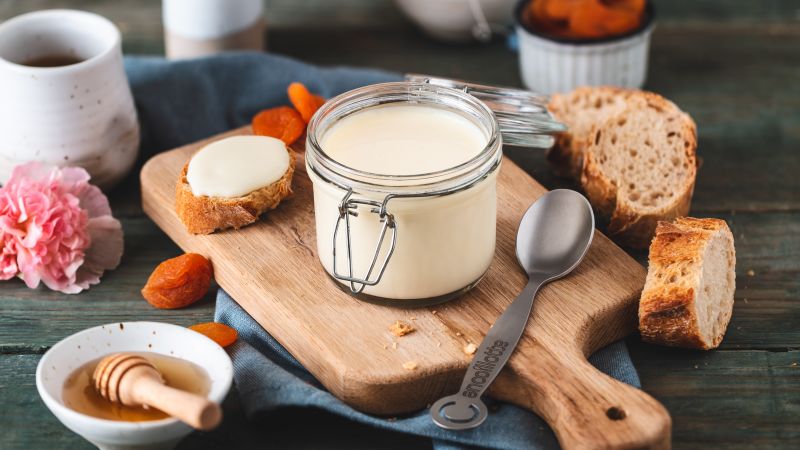
His transformation highlights a broader trend: the rise of cancoillotte as a trendy, health-conscious alternative to heavy dairy staples. The cheese, traditionally made from skimmed cow’s milk—a byproduct of butter, cream, and cheese production—has a distinct texture that sets it apart. Its gooey, spreadable consistency and complex flavor profile, which ranges from yeasty and fruity to earthy and “barnyard,” make it a versatile addition to both savory and sweet dishes.
The Nutritional Breakdown
What truly sets cancoillotte apart is its nutritional value. A 100-gram serving contains just 8 grams of fat and 16 grams of protein, compared to the 15–30 grams of fat found in many classic French cheeses. This makes it an appealing option for those seeking to balance indulgence with dietary discipline. “The harder and drier the cheese, the higher its fat and calorie content,” notes Johan, who now incorporates it into his meals daily. “This is like a cheat code for anyone trying to stay on track.”
The cheese’s production process is as unique as its taste. Skimmed milk is fermented and coagulated, then drained and pressed into a form called metton. These hard crumbles are later ground, aged, and heated to 194°F (90°C) with butter, water, and salt to achieve the final product. This labor-intensive method has kept cancoillotte relatively obscure for decades, despite its presence in local markets.
A Social Media Surge
Johan’s endorsement wasn’t an isolated event. His video, which shows him scooping cancoillotte over roasted potatoes and eating it by the spoonful, quickly became a sensation. The clip not only introduced the cheese to a wider audience but also amplified its appeal as a guilt-free treat. “I share a lot about my food journey,” he explains. “I work out six times a week and aim to recommend options that let people enjoy their meals without compromising their goals.”
The impact of his content was immediate. According to Julie Morin, president of the Association for the Promotion of Cancoillotte, the cheese’s popularity skyrocketed in May alone, with demand rising by 25%. At Fromagerie Poitrey-La Belle Etoile, the region’s leading cheesemaker, sales saw a 10% increase during the same period. “We didn’t expect to be so successful on social media,” Morin says. “We actually ran out of stock after the viral video.”
This surge has not only boosted sales but also sparked a reevaluation of traditional French dairy products. While cancoillotte has been around for centuries, its modern resurgence is a testament to how digital platforms can revive old-world foods for contemporary tastes. Morin acknowledges that the cheese’s reputation has sometimes been overshadowed by its “ringard” status—a French term meaning outdated or old-fashioned. “It’s true that some people still see it as a product for older generations,” she admits. “But its growing appeal shows it’s far from irrelevant.”
The Future of French Cheese
As cancoillotte climbs the ranks of popular cheeses, it’s prompting questions about the future of France’s dairy industry. The cheese’s rise coincides with a broader shift toward healthier eating habits, particularly among younger consumers. This trend has already begun to affect other staples, such as the croissant-cookie hybrid known as the crookie and the Algerian hazelnut spread, El Mordjene, both of which have gained global traction through similar social media strategies.
Despite its newfound popularity, cancoillotte still faces challenges. Its reputation as a “corny” or rustic cheese persists in some circles, and its pronunciation—kan-kwah-yoh—can be tricky for even native speakers. Yet, these hurdles are being overcome by a growing community of food enthusiasts who see its potential beyond its traditional roots. “It’s a product that deserves to be reimagined,” Morin says. “Its history is rich, but its future is even more promising.”
The cheese’s journey from regional secret to national sensation underscores the power of social media in reshaping food culture. Johan Papz’s video, which blends nostalgia with modern health trends, has not only revived interest in cancoillotte but also demonstrated how a simple food item can spark a movement. As demand continues to grow, the question remains: will this ancient cheese become a permanent fixture on France’s grocery shelves, or is it just a fleeting trend?