No fuel, no weapons: How Ukraine’s new drone strategy is mauling Russian supply lines

Ukraine’s Drone Campaign Targets Russian Supply Chains
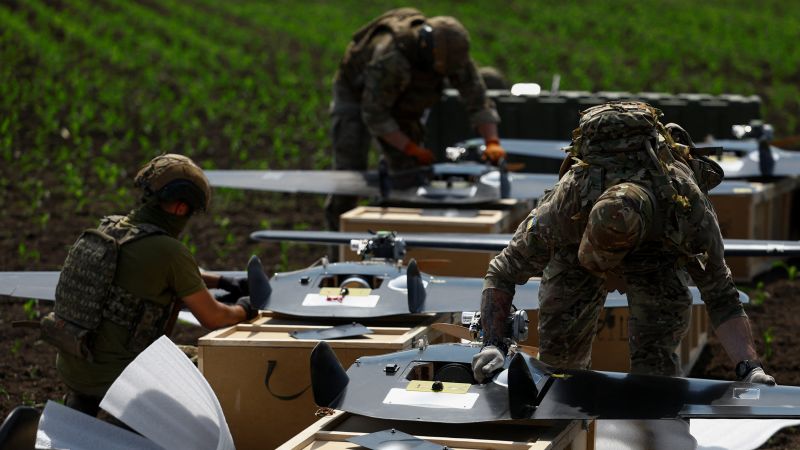
No fuel no weapons – As the conflict in Ukraine enters its fifth year, the nation has unveiled a novel strategy to cripple Russian logistics, leveraging advanced mid-range drones. These unmanned systems, developed entirely within Ukraine, are now playing a pivotal role in disrupting supply routes critical to the southern frontlines, where Moscow had previously aimed to launch a major summer offensive. By targeting infrastructure such as bridges, train networks, and fuel convoys, Kyiv has managed to create a significant challenge for Russian forces, undermining their operational capacity and forcing adjustments to their supply tactics.
Aerial Strikes on Vital Transportation Hubs
French open-source analyst Clément Molin, in collaboration with the volunteer-driven OSINT group Geoconfirmed and CNN’s investigative team, has documented approximately 150 drone attacks on Russian fuel tankers and cargo vehicles. These strikes, geolocated and analyzed, highlight a growing trend of Ukrainian precision attacks. However, Molin notes that the actual number of incidents may be even higher, as some strikes remain unrecorded due to their remote locations or the speed at which they occur.
The attacks have intensified since early May, with a notable shift in focus toward port facilities and maritime vessels. This expansion suggests that Ukraine is not only targeting land-based logistics but also attempting to weaken Russia’s control over coastal supply routes. The effectiveness of these strikes is underscored by their range of 50 to 300 kilometers, enabling drones to strike at key points far beyond the immediate battlefield. This capability has added a new layer to Ukraine’s military strategy, allowing for sustained pressure on Russian supply lines without requiring direct frontline engagement.
Key Drones in the Offensive
Among the newly deployed drones, the FP-2 and the Behemoth stand out for their operational impact. The Behemoth, for instance, can travel at 180 km/h (110 mph) and carry a 70-kilogram warhead, making it a versatile weapon for both strategic and tactical strikes. Molin, who provided insights to CNN, emphasized that these drones have given Ukraine the ability to sever critical supply links, particularly those connecting Crimea to the mainland. “The Ukrainians have obtained the means to start a large-scale drone campaign to cut Crimea from its main supply roads and to complicate Russia’s logistical situation throughout the frontline,” he stated in a
“The Ukrainians have obtained the means to start a large-scale drone campaign to cut Crimea from its main supply roads and to complicate Russia’s logistical situation throughout the frontline,” he stated in a
blockquote>.
Ukraine’s Unmanned Systems Forces, the military branch responsible for drone operations, reported a dramatic 28-fold increase in mid-range strike missions over the past year. This surge reflects a deliberate effort to not only target Russian military equipment but also to erode the logistical infrastructure that sustains their frontlines. The stated objectives include suppressing Russian offensive capabilities, creating insurmountable supply challenges, and dismantling air defenses in occupied territories to pave the way for long-range strikes. By doing so, Ukraine aims to cripple Moscow’s ability to conduct large-scale assaults and maintain a steady flow of resources to its troops.
Impact on Russian Supply Routes
The consequences of these drone strikes are already evident. Several critical transportation corridors between Russia and occupied Ukraine have been rendered hazardous, leading to a bottleneck in the movement of fuel and munitions. In Crimea, which has been under Russian control since the war’s early stages, fuel shortages have become a persistent issue. According to Mick Ryan, a former Australian military officer and author of the blog Futura Doctrina, Ukrainian drones have effectively seized control of three coastal highways that connect the peninsula to the mainland. “Petrol tankers and lorries are regularly set alight,” one Russian military blogger admitted, as the links between Crimea and the rest of Ukraine continue to be systematically severed.
A striking example of this disruption occurred near the village of Chonhar, where a vital bridge linking Crimea to the city of Melitopol was repeatedly targeted. Geolocated video footage shows the bridge’s road surface riddled with deep craters, indicating sustained damage from drone strikes. The Russian-backed administration in the Kherson region, which oversees much of the occupied territory, has acknowledged the toll on infrastructure, with traffic on the Chonhar bridge halting multiple times. In response, they have resorted to using temporary pontoon bridges to maintain connectivity, though these solutions are far less efficient than the original structures.
Strategic Shift and Military Response
Ukrainian Defense Minister Mykhailo Fedorov has described this campaign as a “logistical lockdown,” emphasizing its role in systematically dismantling Russian capabilities deep behind the frontlines. “The enemy will no longer feel safe, even at a considerable distance from the line of contact,” he remarked last month, underscoring the psychological and physical toll on Russian forces. The strategy’s success is further supported by data from the Institute for the Study of War, which reports that Ukrainian forces have struck at least 35 trucks and other vehicles near highways in Crimea and southern Ukraine. These strikes, often concentrated in May, have significantly disrupted the flow of supplies to frontline troops.
Freight traffic on the Chonhar bridge, a lifeline for Russian logistics, has plummeted by 71% in just two weeks this month, according to Robert Brovdi, commander of Ukraine’s drone forces. The decline highlights the precision and frequency of drone attacks, which have forced Moscow to reroute its supply chains. While Russian air defenses have struggled to counter this aerial threat, the cumulative effect of these strikes is a severe strain on their ability to sustain operations in the south. This situation has created a ripple effect, with frontline troops facing dwindling resources and logistical challenges that hinder their advance.
As the war drags on, Ukraine’s drone strategy is not only a tactical maneuver but also a strategic shift that challenges Moscow’s assumptions about controlling the region. The use of mid-range drones has transformed the conflict into a battle for logistical dominance, where every strike on a fuel truck or bridge contributes to a broader effort to weaken Russian military momentum. Analysts suggest that this approach is reshaping the dynamics of the war, making it increasingly difficult for Russia to maintain the flow of supplies necessary for its campaigns. The success of these operations could ultimately determine the outcome of the summer offensive, as Kyiv continues to assert its ability to strike at the heart of Russian logistics. With each new attack, the depth of the “kill zone” expands, pushing the frontlines further back and forcing Moscow to adapt to an evolving battlefield. The question remains: can Russia’s supply lines withstand the relentless pressure of Ukraine’s drone campaign? The answer may soon become clear as the conflict intensifies in the months ahead.