Trump claims vandals will force drainage of algae-plagued Reflecting Pool

Trump Alleges Vandalism at Algae-Plagued Reflecting Pool, Promises Quick Fixes
President Accuses Unidentified Individuals of Damaging Historic Water Feature
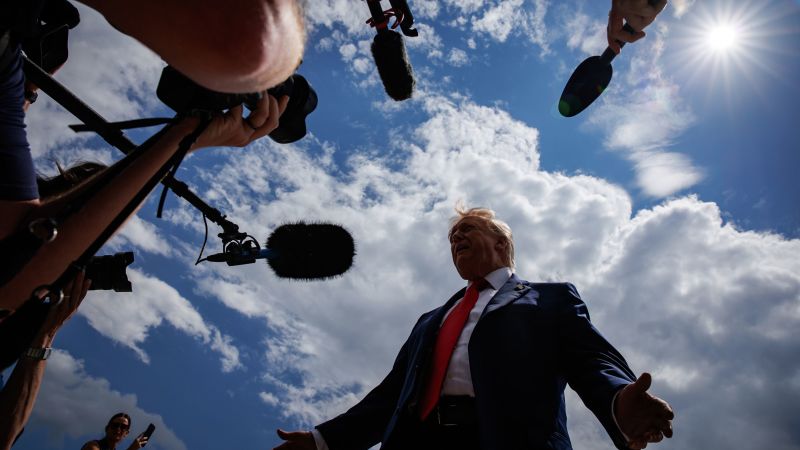
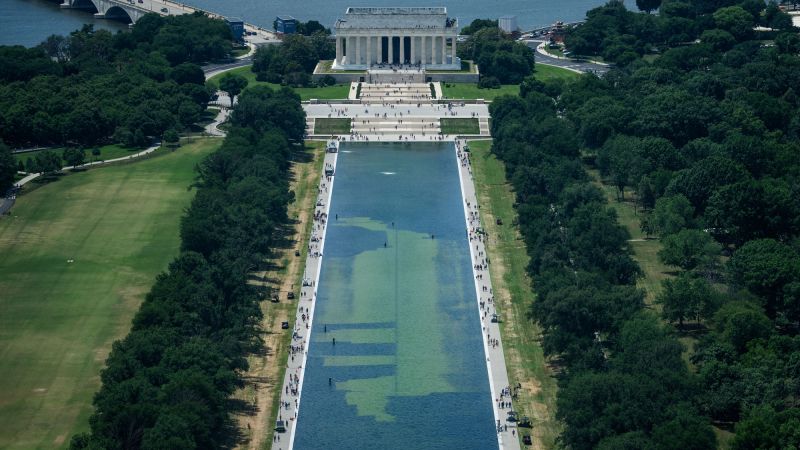
Trump claims vandals will force drainage – On Saturday, President Donald Trump asserted without citing evidence that vandals had compromised the algae-infested Reflecting Pool on the National Mall, necessitating its drainage for repairs. The pool, a prominent landmark near the Lincoln Memorial, has long been a symbol of Washington, D.C.’s grandeur. Trump claimed that law enforcement had detained “numerous extra individuals” for the alleged damage, though the specifics remain unclear. The president’s remarks come amid growing public scrutiny of the pool’s condition, which has become a focal point of debate over urban beautification efforts and the state of federal infrastructure.
David Hearn Claims He Was Merely Exploring the Pool’s Recent Renovation
Three-time U.S. Olympian David Hearn, who was arrested for interacting with the pool’s blue material, told CNN that his actions were driven by curiosity rather than malice. Hearn, a former material science researcher, described how he noticed a flap of blue material partially detached from the pool’s bottom after a leisurely bike ride. “I thought it might be part of the new design,” he said, adding that he reached into the water to examine it, only bending the flap slightly. A National Park Service employee reportedly warned him against touching the water, but Hearn insisted his actions were harmless. “After I left, the pool looked exactly the same as when I arrived,” Hearn stated, emphasizing that he had not removed or disturbed any part of the structure. His arrest, however, sparked controversy, with critics arguing that his actions were mischaracterized as vandalism. The incident has drawn attention to the pool’s recent renovation, a $14 million project aimed at restoring its historic appearance. Trump, who has repeatedly praised the initiative, now faces questions about its success—or the role of alleged vandals in undermining it.
Renovation Efforts Highlight Trump’s Commitment to D.C. Beautification
The Reflecting Pool’s renovation, which included replacing the bottom lining with blue material, is part of a broader campaign by Trump to modernize Washington, D.C. His efforts have encompassed projects like the White House ballroom expansion and the revitalization of other aging public fountains. The pool was intended to be a centerpiece for the nation’s 250th anniversary celebrations, with its transformation symbolizing a renewed commitment to civic pride. Yet, the algae outbreak and visible signs of wear have turned the project into a lightning rod for political discourse.
Public Fervor and Social Media Amplify the Controversy
In recent days, the pool has become a hotspot for both tourists and locals, who have gathered to capture footage of the murky green water. Social media platforms have since been flooded with posts either criticizing Trump’s presidency or celebrating the cleanup initiative. Some visitors have peeled small sections of the blue material to keep as souvenirs, while others have filmed federal workers adding hydrogen peroxide to the pool’s water. The algae, which has been a persistent issue for years, has now become a visual representation of the broader debate over the president’s policies. The Interior Department, which oversees the pool, has downplayed the algae’s impact, stating that its efforts have already made the water “crystal clear.” However, the visible green color still draws attention, with some observers questioning whether the department’s claims align with the public’s perception. CNN has sought comment from both the Interior Department and the National Park Service to clarify the algae’s current state and the extent of any damage.
Trump Connects Algae Issue to Vandalism, Favors Swift Action
On Friday, Trump reiterated his allegations, linking the algae buildup to acts of vandalism. He referenced the etching of “8647” into the National Mall’s grass, a symbol that has gained traction in right-wing circles, as evidence of a larger pattern of destruction. “We’ve had some real problems with vandalism at the beautiful Reflecting Pool,” he wrote on Truth Social, without providing specific examples. The president claimed that 75% of the algae had been removed and that the affected area would be repaired by early next week. The controversy has deepened as the Fourth of July and the nation’s 250th anniversary approach, with the pool now reflecting the divide between those who support Trump’s initiatives and those who view them as misguided. The incident has also reignited discussions about the effectiveness of previous administrations in addressing the city’s infrastructure challenges. Trump criticized the Biden administration for not completing the project, highlighting the $34 million Obama-era reconstruction that had stalled before his takeovers.
Legal Proceedings and Public Perception Set for July 9
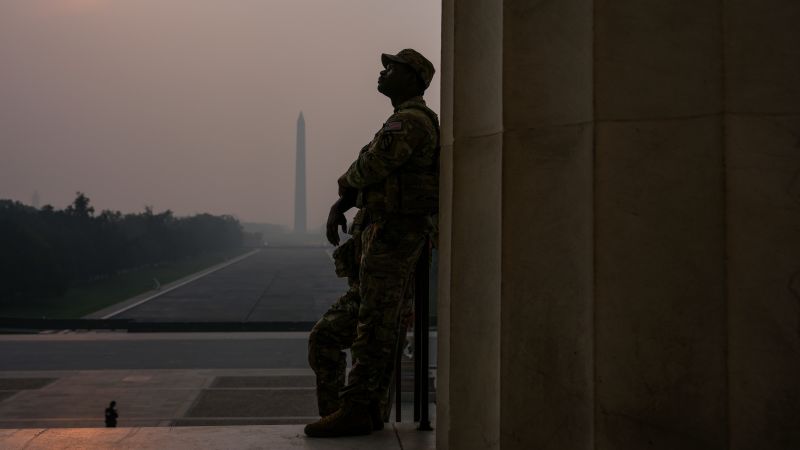
Hearn is scheduled to appear in court on July 9, where he will likely defend his actions as a legitimate act of public inquiry. The arrest has drawn comparisons to similar incidents involving Trump’s allies, with some suggesting that the charge of “destruction and defacing government property” may be used to target critics of the president’s policies. Meanwhile, the National Guard and Park Police have been deployed to monitor the pool, raising questions about the proportionality of the response. The algae problem, while not new, has taken on symbolic weight in the current political climate. For years, the pool’s murky appearance has been a point of contention, with environmentalists and city officials debating the best ways to manage its upkeep. The recent renovation, however, has intensified these concerns, as the blue lining—designed to enhance the pool’s aesthetics—now seems to contrast with the algae’s persistent presence.
A Divided Legacy: From Vision to Controversy
The Reflecting Pool, originally constructed in the early 20th century, was meant to serve as a serene space reflecting the monuments around it. Trump’s efforts to modernize the pool have been framed as a way to restore its former glory, but the algae outbreak has cast doubt on this vision. While the president claims the issue is due to vandals, critics argue that the problem stems from environmental factors, such as DC’s warm, humid weather, which accelerates algae growth. The algae’s visibility has also become a focal point for those questioning the cost-effectiveness of the renovation. With $14 million allocated to the project, some wonder whether the investment was justified or if the damage could have been prevented with better maintenance. Meanwhile, the public’s fascination with the pool’s condition highlights the role of media and social platforms in shaping narratives about government projects. As the court date nears, the incident remains a microcosm of the larger debates surrounding Trump’s leadership. The president’s assertion that vandals are to blame underscores his tendency to frame challenges as deliberate attacks on American values. Yet, the controversy also reveals the complexities of urban renewal, where environmental factors, public curiosity, and political rhetoric intersect. The Reflecting Pool, once a quiet icon of the nation’s history, now stands as a stage for both celebration and criticism, reflecting the enduring tensions of the era.