
Trump says he’s holding Canada responsible for wildfire smoke and threatens higher tariffs
Trump Links Canadian Wildfire Smoke to Tariff Increases, Vows to Confront Carney
Smoke Crisis Sparks Diplomatic Tensions
Trump says he s holding Canada – President Donald Trump announced on Friday that he is placing blame on Canada for the wildfire smoke currently blanketing significant portions of the Midwestern and eastern United States. The president expressed his intention to contact Prime Minister Mark Carney directly, proposing that the financial burden of this environmental pollution should be incorporated into the tariffs that Canada already remits to Washington.
In a statement published on his Truth Social platform, Trump issued a strong condemnation of Canadian forest management practices. He declared that American citizens are suffering from an unwarranted invasion of contaminated air that poses serious health risks. The president characterized the situation as entirely intolerable and demanded accountability from his northern neighbor.
“We are holding Canada responsible for the fact that they are not properly maintaining their Forests, and Brush therein, and the United States is being unnecessarily invaded by filthy, polluted, and unhealthy air, the quality of which is dangerous, and totally unacceptable!”
Widespread Air Quality Alerts Affect Millions
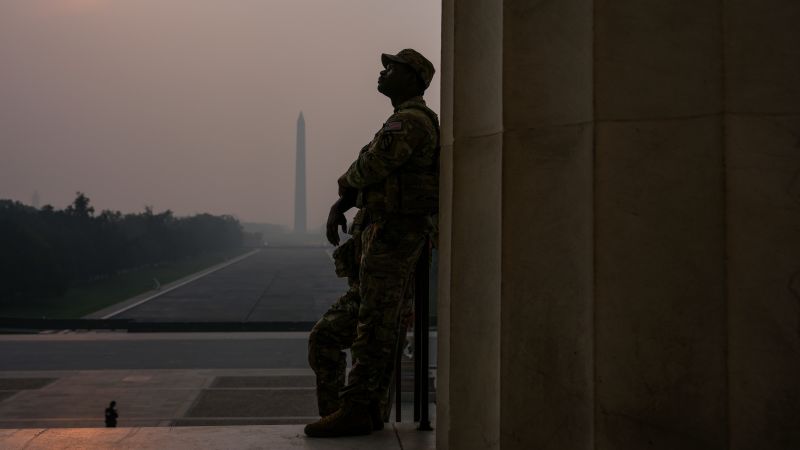
The environmental crisis has prompted emergency air quality warnings across a vast geographic area. More than one hundred million residents spanning eighteen states plus the District of Columbia have been placed under official alerts regarding deteriorating atmospheric conditions. The affected region extends continuously from the northeastern corner of Minnesota down through the southeastern portion of Virginia.
Authorities have classified air quality levels in many of these areas as either “very unhealthy” or “hazardous,” prompting residents to limit outdoor activities and take precautionary health measures. The smoke plume has created visibility issues and respiratory concerns for millions of Americans who were not expecting such conditions during this time of year.
Trump Promises Direct Communication with Carney
Trump indicated that he would reach out to Prime Minister Carney later in the day to determine what actions Canada plans to implement regarding the situation. The president characterized the recurring smoke events as deliberate negligence on Canada’s part, noting that such occurrences have become an annual pattern.
“I will call the Prime Minister during the day to find out what they are going to do about it,” Trump continued. “This is Willful Negligence, and becoming a yearly occurrence, costing the United States Billions of Dollars, which cost of this pollution must of necessity be added to the TARIFFS Canada is currently paying,” he added.
Legal Framework and Tariff Strategy
The current diplomatic friction exists against a backdrop of evolving legal mechanisms for imposing trade restrictions. Following a Supreme Court decision that prevented Trump from utilizing emergency powers to establish tariffs, the administration shifted toward alternative statutory authorities. These alternative approaches necessitate formal investigations and extended public comment periods, which have consequently decelerated the overall tariff implementation timeline.
Despite these procedural delays, the Trump administration has maintained its commitment to restoring America’s effective tariff rate to levels observed earlier in the year, prior to the landmark judicial ruling. This policy objective remains a central priority for the executive branch as it navigates the complex legal landscape.
Canada Remains a Target of Trump’s Trade Policy
Canada has consistently featured prominently in Trump’s trade agenda, often serving as a focal point for his economic criticisms. The president has reserved some of the most substantial tariff rates specifically for American goods destined for Canada’s markets. His grievances have included allegations of unfair practices in the lumber industry and accusations that Canadian policies have resulted in the loss of automotive manufacturing positions within the United States.
Nevertheless, the United States-Mexico-Canada Agreement, commonly known as USMCA, has provided considerable protection for Canadian exports. Trump personally negotiated this trade pact during his initial presidential term, and it has exempted thousands of products from the steepest tariff rates that the current administration has imposed on other trading partners.
However, the Trump administration recently chose not to extend the USMCA in its existing configuration, a decision that could reshape trade relations between the two nations in the coming months. This development adds another layer of complexity to an already strained bilateral relationship.
CNN’s David Goldman contributed to this report.
