Wife of Spanish PM forbidden to leave country as corruption probes pile up

Wife of Spanish PM Forbidden to Leave Country as Corruption Probes Intensify
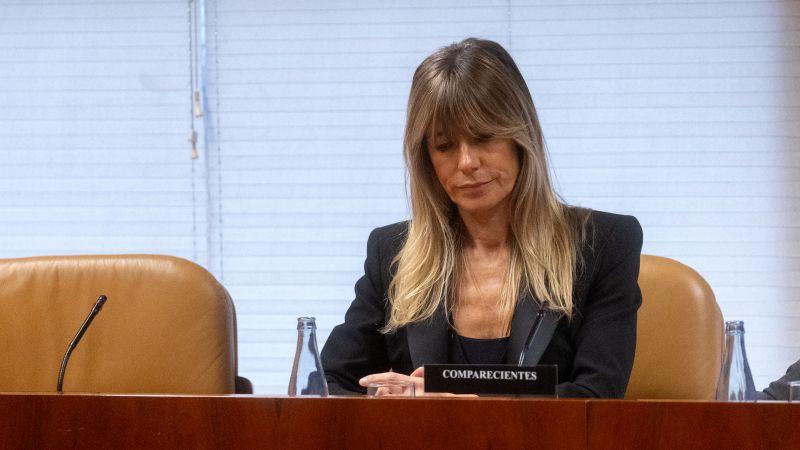
Wife of Spanish PM forbidden to leave – Spain’s Prime Minister Pedro Sánchez faces mounting pressure as his spouse, Begoña Gómez, has been barred from exiting the nation. A Spanish judge issued an order last Saturday compelling her to appear in court, surrender her passport, and remain confined to the country. The directive also mandates that Gómez attend court sessions twice monthly, marking a significant escalation in the ongoing corruption investigations that have begun to encircle Sánchez’s political sphere.
The case against Gómez, a former university professor, centers on allegations of embezzlement, influence peddling, and financial misconduct. Prosecutors claim she leveraged her marriage to the PM to boost her career at a Madrid-based institution, while also accusing her of misusing public funds. Both Gómez and Sánchez have maintained their innocence, with the latter dismissing the proceedings as a “farce” designed to undermine his leadership.
“Today is a dreadful day for those of us who believe in justice,” wrote Justice Minister Félix Bolaños on X, responding to the judge’s decision. He added, “truth will ultimately prevail.”
The investigation gained momentum in early 2024 after a complaint was filed by Manos Limpias, an anti-corruption organization known for its ties to far-right factions. The group alleged that Gómez had engaged in influence-peddling activities, potentially linking her to broader networks of political corruption. Sánchez, who has taken a vocal stance against U.S. policies, including those of the Trump administration, had previously withdrawn from public duties for nearly a week to assess whether he should continue in office amid the controversy.
Spain has long been a battleground for corruption, with high-profile scandals eroding trust in political institutions over the years. The current PM, Pedro Sánchez, has led the country for nearly eight years, navigating a complex landscape of economic challenges and political fragmentation. Despite these difficulties, his administration has managed to foster one of Europe’s most vibrant economies, a feat attributed to his focus on modernizing public services and investing in renewable energy initiatives.
Sánchez’s rise to power was a direct consequence of a major corruption scandal that rocked the center-right People’s Party in 2018. That incident, which involved widespread embezzlement and favoritism, led to a no-confidence vote and the party’s loss of control. Now, similar accusations are targeting Sánchez’s own inner circle, including figures from his governing Socialist Workers’ Party (PSOE). The latest developments have raised questions about the stability of his minority coalition, which has already seen setbacks in regional elections.
One of the most recent blows to Sánchez’s administration occurred last week with a police raid on the headquarters of his party in Madrid. The operation focused on alleged misuse of party funds, with authorities examining whether resources were diverted to support legal campaigns against key party members. The High Court cited the probe as part of a broader effort to uncover a network aimed at influencing judicial processes against the government.
Meanwhile, other prominent allies of Sánchez are also under scrutiny. Former Prime Minister José Luis Rodríguez Zapatero, a respected figure in Spanish politics, is a suspect in a separate case involving organized crime, document forgery, and financial misconduct. The charges relate to a loan granted to a regional airline, with Zapatero denying any wrongdoing. Similarly, José Luis Ábalos, Sánchez’s former close aide, is accused of accepting kickbacks for facilitating the purchase of $60 million worth of facemasks during the pandemic. Ábalos had spent seven months in pretrial detention before his trial in April.
Even Sánchez’s personal life has not escaped the spotlight. His musician brother, David, is currently on trial in Badajoz, near the Portuguese border, for alleged influence peddling in his appointment to a government position nine years ago. While Sánchez has not been directly implicated in these cases, the cumulative effect has weakened his already precarious coalition. Political analysts note that the PM’s ability to maintain support hinges on his capacity to navigate these challenges without appearing defensive.
Some critics argue that the measures against Gómez are excessive, especially considering the police protection she receives. A Spanish newspaper, El País, highlighted that the investigation “has been marked by disproportionate measures, seeking maximum media attention, and lacking the impartiality and restraint that citizens expect from the justice system.” Others have questioned whether the prosecution is motivated by a desire to tarnish Sánchez’s reputation, given his outspoken criticism of U.S. policies and his role as a vocal opponent of President Trump’s administration.
The allegations against Gómez have intensified the political drama surrounding Sánchez, who has become a rare European leader willing to challenge American foreign policy. His focus on issues like the Iran conflict and Gaza humanitarian crises has positioned him as a progressive voice, yet the corruption probes now threaten to overshadow these efforts. The Spanish government’s credibility, already strained by economic and social pressures, faces further scrutiny as more of its leaders are implicated in legal actions.
As the investigations continue, the PM’s opponents have seized the opportunity to criticize his leadership. Alberto Núñez Feijóo, head of the main conservative party, recently declared that the government is “in its death throes,” suggesting that the probes could lead to a significant shift in power dynamics. With public trust in institutions at a critical juncture, the outcome of these cases may determine the future of Sánchez’s political career and Spain’s governance in the coming months.
Spain’s history with corruption has often been characterized by a pattern of high-profile cases that ripple through political elites. From the 17th-century poet Francisco de Quevedo’s remark, “Mr. Money is a powerful gentleman,” to the modern-day scrutiny of Sánchez’s family, the nation continues to grapple with the legacy of graft. The current wave of investigations, however, has brought a new intensity to the issue, with the PM’s personal and professional ties now under intense examination.
With Gómez’s passport confiscated and her movement restricted, the legal battle against Sánchez’s inner circle has entered a new phase. The allegations against her are part of a larger narrative of political accountability, but they also highlight the personal toll of such scrutiny. As Spain’s justice system moves forward, the question remains whether these cases will restore public confidence or further erode it, casting a long shadow over Sánchez’s tenure as a leader in one of Europe’s most dynamic economies.