How three Norway players are continuing the mission their dads started at the 1994 World Cup

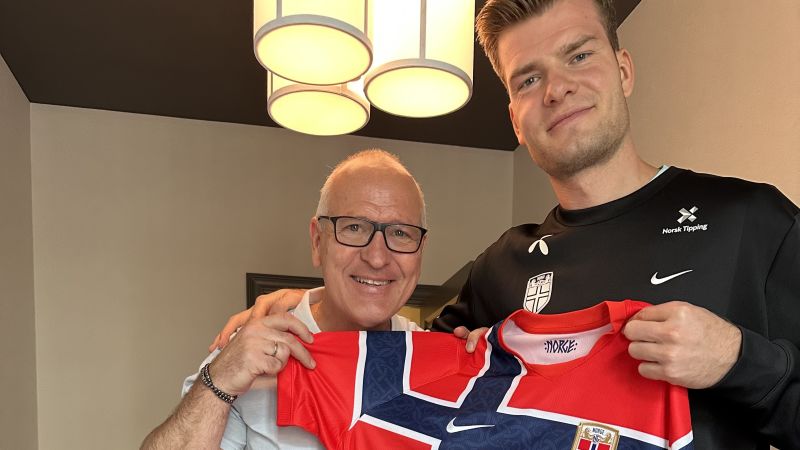
Norway’s Soccer Legacy: Three Players Continue Their Dads’ 1994 World Cup Mission
How three Norway players are continuing the legacy of their fathers, who competed in the 1994 World Cup, has become a central theme at the 2026 FIFA World Cup. As the Norwegian team takes the field in Boston, this generational connection adds a unique layer to their journey. Kristian Thorstvedt, Alexander Sørloth, and Erling Haaland are following in the footsteps of their parents, who played in the historic tournament held in the United States. Their participation is not just a coincidence but a testament to the enduring passion for soccer in Norway, a country that has long embraced the sport’s growth through family dedication and cultural commitment.
A Pathway Forged by Family and Tradition
The 1994 World Cup, though marked by early elimination, laid the groundwork for Norway’s soccer resurgence. The team’s fourth-place finish in the group stage—a result that left them with a 4-point tally and a 0-goal difference—symbolized both triumph and unfinished business. For Kristian Thorstvedt, whose father Gøran was a goalkeeper in that tournament, the chance to compete in the same event is a fulfillment of a lifelong dream. “It feels like a fairytale that’s finally becoming reality,” Thorstvedt shared, reflecting on the emotional weight of his father’s legacy. Similarly, Alexander Sørloth, the son of a 1994 player, and Erling Haaland, whose father Alf-Inge was part of the same squad, are carrying the torch for their families and the sport they love.
“I’ve been proud of him and the team,” said Sørloth, a former handball and speed skating athlete. “It’s amazing to see the next generation step into the spotlight. The trainers and coaches I know have been there for years, so it’s a really good feeling for myself.”
These players’ paths have been shaped by the sacrifices and aspirations of their parents. While the 1994 team struggled to translate their performance into deeper success, their legacy inspired a new wave of talent. Kristian Thorstvedt, for example, initially faced challenges in Norway’s competitive soccer landscape, prompting him to seek opportunities abroad. His journey from university in New Hampshire to professional play mirrors the resilience of his father’s generation, who paved the way for future success. “These sliding doors moments define our lives,” Thorstvedt remarked, highlighting how his father’s career influenced his own path.
Legacy Meets Modern Triumph
The current Norway squad is a rare example of how three Norway players are continuing their fathers’ legacies in the same World Cup. This generational overlap underscores the nation’s commitment to nurturing talent and maintaining a sports culture that values family support. While the 1994 team’s legacy was once seen as a footnote in global football, the recent success of players like Erling Haaland—now a top striker for Man City and Norway—has rekindled the nation’s pride. Haaland’s father, Alf-Inge, played a pivotal role in that 1994 campaign, and his son’s performance at the 2026 World Cup is a direct continuation of that story.
As the 2026 tournament progresses, how three Norway players are continuing the mission of their fathers is evident in their determination and skill. The blend of tradition and modern expertise has transformed Norway from a team that once narrowly missed advancement to a force in international soccer. This evolution reflects broader cultural shifts, with families now placing greater emphasis on specialized training and individual growth. “We know that to enjoy football and make it the thing you like to do most in life, the most important thing is not to put too much pressure on the kids,” Thorstvedt added, emphasizing the importance of balancing ambition with emotional support.
Patrick Berg, another player whose father Ørjan was part of the 1994 team, represents a family line that has been deeply involved in Norwegian soccer. His participation in the 2026 World Cup is more than a personal milestone—it’s a continuation of a legacy that spans decades. The same spirit that drove his father to compete in the U.S. now fuels his efforts on the global stage, proving that the mission of how three Norway players are continuing their fathers’ journey is alive and well.
From the 1994 World Cup to the present, how three Norway players are continuing the legacy of their families has become a powerful narrative. The journey of these athletes is a celebration of perseverance, tradition, and the deep bonds that connect generations of Norwegians to the sport. As they step onto the field, their story reminds us that the mission their fathers started is not just a past chapter but a living legacy that continues to inspire new dreams and ambitions.