Senate’s likely next No. 2 warns Trump if Democrats take the majority: ‘It’s going to be a fight’ on key values

Senate’s Next No. 2 Warns Trump: ‘Key Values Will Be Tested’
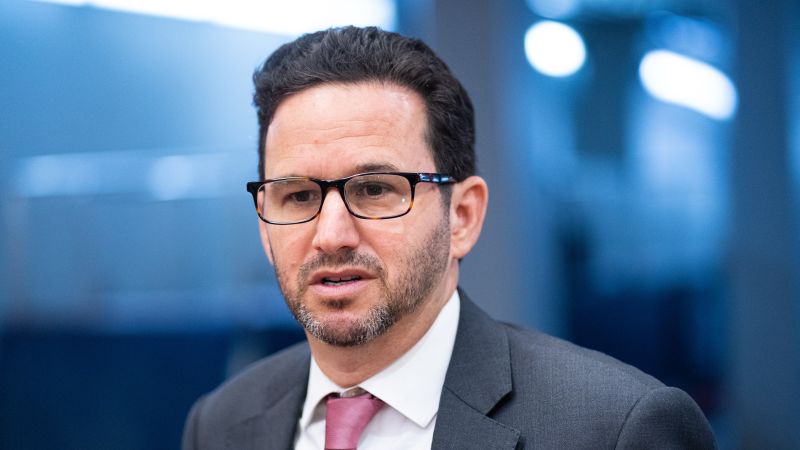
Senate s likely next No 2 warns – Senate’s likely next No. 2, Sen. Brian Schatz, has signaled that a Democratic majority could bring intensified scrutiny to President Donald Trump’s judicial and policy appointments. As the Senate Democratic caucus prepares for leadership changes, Schatz, a Hawaii Democrat, warned that the party’s new majority would not tolerate the same level of partisan flexibility as before. “If we take control, the confirmation process will become a more rigorous fight for core values,” he said during an interview with CNN. This shift could have major implications for the trajectory of Trump’s agenda, particularly in areas like Supreme Court nominations and major legislative decisions.
The Role of Senate Leadership
Schatz is widely expected to assume the role of Senate Democratic whip, succeeding the retiring Dick Durbin. In this capacity, he would lead efforts to hold Trump accountable for his policies and appointments. “The standards for nominees would need to rise significantly,” he stated, highlighting the importance of ideological consistency in the confirmation process. With Democrats looking to regain control in the 2026 midterms, Schatz stressed that the party would prioritize maintaining its principles over compromising for short-term gains. “We can’t just accept the status quo—we need to fight for what we believe in,” he said.
The senator’s concerns stem from the current Senate majority, where Republicans have advanced Trump’s priorities with minimal opposition. Over the past two years, the GOP has relied on procedural tactics to bypass Democratic resistance, enabling figures like Bill Pulte, RFK Jr., and Pete Hegseth to secure confirmations despite controversy. Schatz, however, argued that a Democratic-led Senate would change this dynamic. “The way we handle confirmation is going to be different,” he noted, suggesting that future nominees would face stricter scrutiny and a more unified Democratic front.
Strategic Opposition and Core Values
Schatz outlined a strategy that combines assertiveness with pragmatism, emphasizing the need to balance compromise with principle. “You find common ground where possible and you stand your ground when necessary,” he explained, using this approach to address issues such as Supreme Court confirmations. He warned that Trump’s potential fourth Supreme Court nominee would face heightened scrutiny, with the Democratic majority likely to demand a more transparent process. “This would be a defining moment for our party’s values,” he said, underscoring the importance of maintaining ideological integrity.
The senator also hinted at the possibility of impeachment measures against Trump, should the opportunity arise. While some of his earlier appointees received cautious support from Democrats like Joe Manchin, Schatz predicted that a unified Democratic Senate would make impeachment a more viable option. “We’d take our role of advice and consent seriously,” he stated, noting that confirmation battles would become a key battleground for core values. “The process would require more than just a few votes—it would demand broad consensus.”
Facing Challenges in the Midterms
Despite Democratic optimism, Schatz acknowledged the hurdles ahead in securing a majority. He pointed to public sentiment, which has shifted due to rising prices and concerns over Trump’s age. “People are starting to turn against Trump because of the economic toll and his leadership style,” he said. This could work in the Democrats’ favor, but Schatz warned that maintaining momentum would require a clear, forward-looking vision. “We can’t just focus on opposition—we need to show voters what we’re fighting for,” he added.
The senator emphasized the need for Democrats to present a compelling case for their policies, particularly in areas like healthcare expansion and foreign policy reform. “The public isn’t behind this war in Iran because they never heard the case for it,” he argued, suggesting that a Democratic-led Senate would push for more accountability and transparency in military decisions. Schatz’s message aligns with a broader strategy to reframe the political narrative and restore trust in the party’s leadership and priorities.