
Rep. Dan Goldman addresses Brooklyn coffee shop banning him over his views on Israel
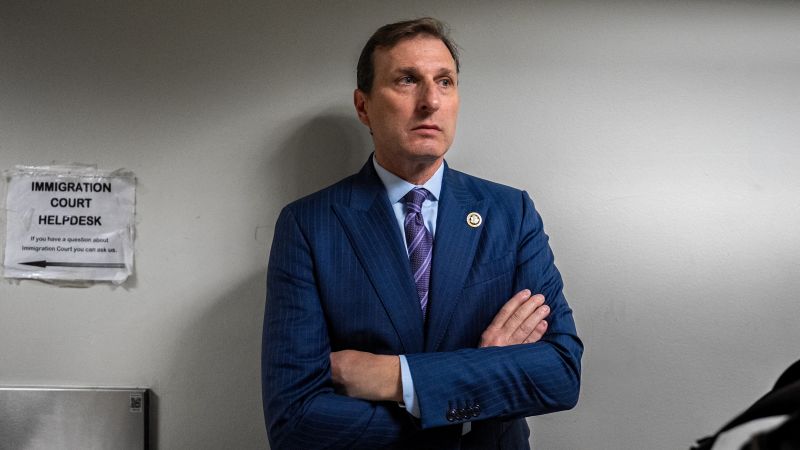
Rep. Dan Goldman Confronts Brooklyn Coffee Shop Ban Over Gaza Views
Rep Dan Goldman addresses Brooklyn coffee – Rep. Dan Goldman addresses Brooklyn – During a contentious Democratic primary campaign, New York’s Representative Dan Goldman faced a surprising controversy when Poetica Coffee, a Brooklyn-based establishment, reportedly barred him from entering its premises. The incident, which went viral on social media, underscored the growing divide in political discourse surrounding Israel’s actions in Gaza. Goldman, speaking to CNN on Monday, described the situation as a reflection of a “sad state of affairs,” noting how the coffee shop’s decision to exclude him from its space highlighted the tensions between personal beliefs and public spaces in the political arena.
The Coffee Shop’s Viral Post
Poetica Coffee, known for its socially conscious branding, used its Instagram account to share a post that sparked widespread attention. The image, which circulated rapidly on Monday, showed a receipt and a photo of Goldman. The caption implied that the shop was criticizing his stance on Israel’s war in Gaza, linking his presence to his support for AIPAC, the American Israel Public Affairs Committee. Although the post was later deleted, its impact lingered, igniting conversations about free speech and how political activism can manifest in everyday settings like coffee shops.
“Hey Congressman Dan Goldman, we see that you stopped by our shop today for a coffee. Do you see how it doesn’t taste like genocide juice? Or are you still having a hard time telling the difference?”
This satirical statement, featured in the now-removed post, directly connected Goldman’s visit to the debate over Israel’s actions in Gaza. The coffee shop’s progressive image, which often emphasizes social justice, was used to challenge Goldman’s alignment with AIPAC, a group frequently criticized by left-leaning activists for its advocacy of Israeli policies.
Goldman’s Personal Experience
Goldman recounted a contrasting experience during his visit to Poetica Coffee, where he felt welcomed by the staff. He noted that the barista, a woman wearing a hijab, was “exceptionally kind” and even allowed his daughter to use the bathroom. “She didn’t know me, but she couldn’t have been nicer,” he said. “I decided to buy a coffee and leave a large tip as a gesture of gratitude.” This personal anecdote stood in stark contrast to the shop’s public post, highlighting the disparity between individual interactions and broader political narratives.
“I had such a nice interaction with the barista at Poetica Coffee. It’s a reflection of a sad state of affairs that we could have had such a positive encounter without knowing each other’s views.”
Goldman’s remarks emphasized the irony of the situation, suggesting that the shop’s decision to ban him based on his political stance overshadowed the warmth of personal relationships. The incident raised questions about whether political differences should dictate social interactions in public spaces like coffee shops.
Broader Political Context
The ban from Poetica Coffee occurred as Goldman navigated a heated Democratic primary race. His opponent, Brad Lander, a former city comptroller backed by Mayor Zohran Mamdani, has accused him of being “beholden to AIPAC.” Lander, who has called Israel’s offensive in Gaza a “genocide” and advocates for reducing U.S. military aid, sees Goldman’s support for the organization as a key point of contention. This criticism has been part of Lander’s broader strategy to position himself as a progressive alternative in the race.
“There are plenty of ways to lobby elected officials and express outrage at their decisions without turning coffee shops into battlegrounds for political exclusion,” Lander stated in a statement to *The New York Times*. “I don’t think we should let one person’s platform determine how others feel in their own space.”
Lander’s remarks reflect the larger ideological battle within the Democratic Party, where candidates are scrutinizing each other’s positions on Israel. Goldman’s support for AIPAC has been a focal point, with opponents arguing that his alignment with the group compromises his progressive credentials.
Gaza Conflict and Goldman’s Position
The incident also reignited discussions about the Gaza conflict, which has claimed over 70,000 lives since October 7, 2023, when Hamas launched a surprise attack on Israel. Goldman has consistently argued that while he supports Israel’s right to exist as a Jewish state, he remains critical of its policies. His stance aligns with many who advocate for a nuanced approach to the war, emphasizing the need to balance national security with humanitarian concerns.
“I have many issues with Prime Minister Benjamin Netanyahu, but supporting Israel’s existence as a Jewish state doesn’t mean I condone every action taken by the government,” Goldman clarified. “In fact, I don’t, and I’ve been very open about that.”
This statement from Goldman encapsulates the complexity of his position, which bridges support for Israel’s sovereignty with a critical eye on its military operations. As the conflict continues to dominate headlines, his experience at Poetica Coffee serves as a microcosm of the broader political climate in Brooklyn and beyond.
