
A deadly collapse at a Florida condo happened slowly over several weeks, probe finds
A Deadly Collapse at a Florida Condo Began Weeks Before the Tragedy
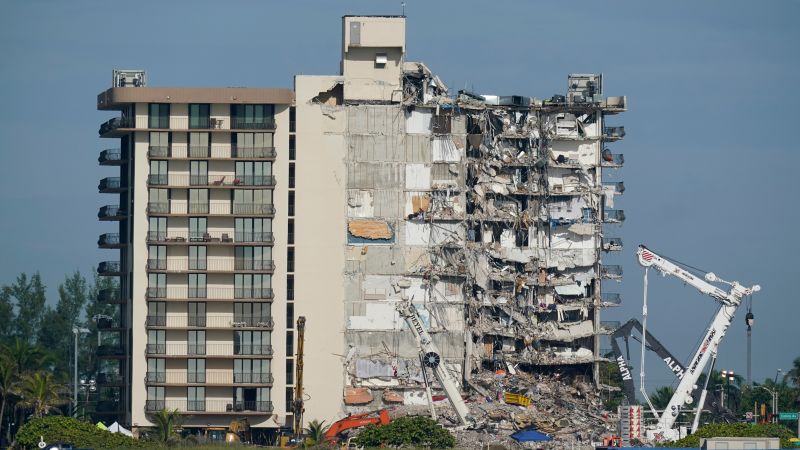
A deadly collapse at a Florida – In the early hours of June 24, 2021, the Surfside condo building collapsed, killing 98 individuals. Federal investigators have since concluded that the disaster was not an instant event but a slow process that unfolded over several weeks. The National Institute of Standards and Technology (NIST) released its final report on Monday, detailing how structural weaknesses in the Champlain Towers South were present long before the final disaster struck. The findings highlight the critical role of design flaws and ongoing modifications in contributing to the catastrophe.
Structural Failures Rooted in Design and Alterations
The report identifies two key connections—between garage columns and the pool deck—as the starting points of the collapse. These connections began to deteriorate in early June, setting off a chain of events that led to the building’s catastrophic failure. Over the building’s 40-year lifespan, repeated changes to its structure weakened critical components, making them unable to handle the increased weight. This gradual breakdown, combined with initial design shortcomings, created a scenario where the pool deck could not support the load it was subjected to, ultimately resulting in the slow-motion collapse.
“Structures designed to code should have a safety margin, allowing them to withstand more than expected loads,” said Judith Mitrani-Reiser, one of the lead investigators. “However, in the case of Champlain Towers South, these margins were already compromised from the beginning.”
The NIST report emphasizes that the collapse was not a sudden failure but a culmination of long-term structural issues. Evidence gathered by investigators suggests that the building exhibited signs of distress weeks prior to the disaster. These included subtle but significant cracks in the pool deck and surrounding areas, which were overlooked or underestimated by maintenance teams. The report underscores how these early warning signs were ignored, leading to a critical moment of failure.
The Night of the Collapse
The tragedy occurred at 1:22 a.m. on June 24, 2021, in Surfside, Florida, a coastal town just north of Miami. At the time, most residents were asleep, leaving them unprepared for the sudden destruction. The building, which had been standing for decades, came down in a matter of seconds, burying dozens of people under rubble. The report provides a detailed timeline of how the structural failure progressed, revealing that the collapse was a gradual process rather than an abrupt event.
Following the disaster, a Miami judge approved a settlement exceeding $1 billion to address personal injury and wrongful death claims. The agreement was part of a class-action lawsuit representing victims and their families. Harley Tropin, who led the legal team for the affected parties, did not comment on the latest report but acknowledged its implications for the ongoing case.
Design and Construction Flaws
The NIST report explains that the original design of the structure did not adhere to the building codes in place during its construction. Additionally, the actual construction deviated from the intended design, further reducing the building’s stability. Over time, modifications such as the addition of heavy planters, sand, and pavers around the pool area placed additional stress on the weakened structure. The report attributes these changes to a diminishing of safety margins, compounded by long-term corrosion and wear.
Photographs taken in the weeks leading up to the collapse show visible cracks in the planter walls and corners where they met planter boxes. One witness reported that three weeks before the disaster, a gate near the pool area had sagged slightly, causing it to jam. This observation, along with other physical signs, suggests that the building was already in a state of decline before the final collapse.
The Aftermath and Legislative Response
The companies that originally designed and constructed Champlain Towers South are no longer in operation, making it difficult to hold them accountable for the structural failures. However, the collapse prompted swift action from state legislators, who enacted a law in 2022 requiring condo associations to maintain adequate financial reserves for major repairs. This law was aimed at preventing similar disasters by ensuring buildings have the necessary funds to address potential issues.
Despite the new regulations, some residents were caught off guard by the steep fees imposed to cover deferred maintenance costs. These fees, necessary to meet the updated standards, created financial strain for many. In response, lawmakers introduced another measure to provide more flexibility in managing repair expenses, allowing condo associations and residents to adapt to the new requirements without excessive burden.
Legacy of the Collapse
The Champlain Towers South collapse has left a lasting impact on Florida’s condominium industry. It has prompted a reevaluation of building codes, maintenance practices, and the oversight of aging structures. The NIST report serves as a critical reminder of how seemingly minor design flaws and repeated modifications can escalate into catastrophic failures. As the investigation concludes, it highlights the need for vigilance in ensuring the safety of residential buildings, especially those in high-risk areas like Surfside.
For residents of the area, the tragedy remains a stark lesson in the importance of proactive maintenance and structural integrity. The legal and regulatory changes that followed the collapse reflect a broader effort to prevent such disasters in the future. While the final report provides clarity on the events leading to the collapse, it also underscores the ongoing challenges faced by condo associations in balancing cost management with safety standards.
The slow progression of the collapse—from minor cracks to a full-scale disaster—demonstrates how time can exacerbate structural weaknesses. The NIST findings emphasize that the failure was not an accident but a result of systemic issues that were present from the building’s construction. This realization has led to increased scrutiny of older buildings and a push for stricter inspections and maintenance protocols.
As the community continues to recover from the tragedy, the report serves as a foundational document for understanding the causes of the disaster. It also sets a precedent for future investigations into structural failures, ensuring that lessons learned from Champlain Towers South are applied to prevent similar incidents. The combination of design flaws, alterations, and maintenance neglect created a perfect storm that resulted in one of the deadliest building collapses in U.S. history.
