
Why the forces that felled Keir Starmer threaten so many Western leaders
Why the forces that felled Keir Starmer threaten so many Western leaders
A pattern of unmet promises and crumbling trust
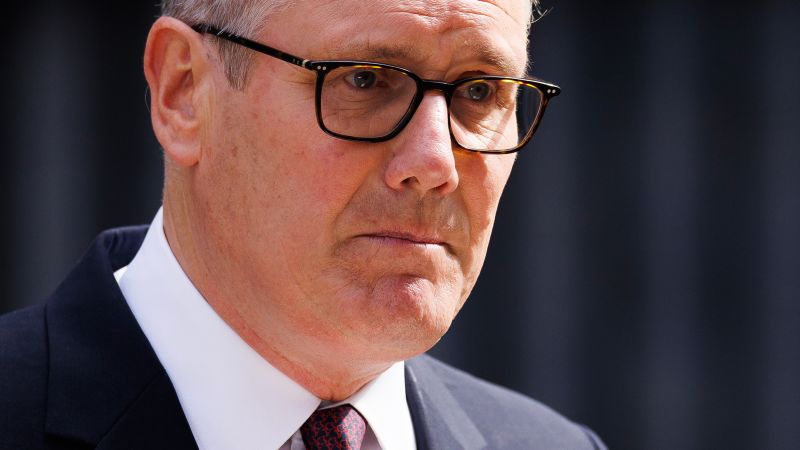
Why the forces that felled Keir – Keir Starmer, the British Prime Minister, has become a symbol of a larger challenge facing Western leaders. His recent resignation, just two years after securing a sweeping parliamentary victory, highlights a recurring issue: the inability of leaders to translate electoral promises into tangible change. Voters, increasingly disillusioned with modern politics, have grown wary of the systems that once promised stability and progress. Starmer’s downfall underscores a deeper crisis, as the same forces that toppled him now threaten leaders across the globe, from the UK to Germany, France, and the United States.
The paradox of power and promise
Many Western leaders ascend to power by capitalizing on public frustration, offering bold visions to restore prosperity and address rising living costs. Yet, once in office, they often struggle to deliver. This pattern is evident in the experiences of Starmer, who faced a chaotic political landscape, institutional stigma, and economic upheaval. His efforts to implement his agenda were stymied by entrenched systems, internal party conflicts, and the relentless pressure of social media to keep narratives aligned with public sentiment.
Starmer’s story mirrors that of other leaders. In France, Emmanuel Macron, who once championed reform and modernization, now stands on the brink of leaving office after failing to enact his post-ideological program. His two terms have been marked by public unrest, a string of unstable governments, and a reputation as an elitist. Similarly, in the US, Donald Trump’s administration has been criticized for its inability to address the cost-of-living crisis, despite a generally strong economy. Trump, often preoccupied with personal vendettas, dismissed “affordability” as a Democratic fabrication, a stance that has further eroded his support.
The legacy of democratic hope and its unraveling
“Appeals to democracy and civic participation are corny and old fashioned and boring and naive,”
Barack Obama once remarked, reflecting a growing skepticism toward the capacity of democratic institutions to fulfill their promises. His speech at the opening of his presidential center in Chicago last week reiterated the belief that democratic governance remains the key to change. However, the collapse of leaders like Starmer raises questions about whether this faith is misplaced. Obama himself faced challenges, including policy reversals and ideological battles within his own party, which hampered his ability to maintain momentum.
The modern political maelstrom has created a perfect storm of distrust. In Britain, Starmer’s government struggled to counteract the effects of a low-growth economy and a lack of financial resources to tackle healthcare, public services, and military modernization. Despite attempts to cushion citizens from soaring energy prices, his efforts fell short, leaving voters to question the value of political stability. This has contributed to a new era of uncertainty, with the UK set to welcome its sixth prime minister in a decade since the Brexit vote.
Global implications of a fractured political landscape
The decline of trust is not confined to the UK. In Germany, leaders have grappled with the same pressures, as the country’s political center struggles to bridge the gap between voters and economic realities. Meanwhile, in France, the National Rally party has seized on this discontent, positioning itself as a viable alternative to Macron’s centrist agenda. The rise of far-right movements suggests that the erosion of institutional credibility has created opportunities for extremist ideologies to gain traction.
Starmer and Macron are part of a broader trend where leaders, despite strong electoral starts, fail to sustain their narratives once in power. The modern era of politics demands not only policy innovation but also the ability to navigate ideological divides and maintain public engagement. Leaders who cannot adapt to this new environment risk being swept aside by the very forces they once promised to confront.
Revisiting the skills of past political titans
Some argue that the current crop of leaders lacks the charisma and strategic acumen of past icons like Margaret Thatcher, Helmut Kohl, or Ronald Reagan. These leaders were adept at crafting compelling visions and uniting their nations during times of crisis. In contrast, today’s politicians often face a fragmented electorate, where trust in institutions is at an all-time low. The question remains: are these leaders simply less skilled, or has the very nature of Western societies changed, rendering them ungovernable?
The failure to deliver on promises has deepened public cynicism, creating a cycle of disillusionment. When voters feel that their needs are unmet, they turn to alternative narratives, whether from the left or the right. This dynamic has been exacerbated by the rise of social media, which amplifies discontent and creates a demand for instant results. Leaders who cannot meet these expectations find themselves trapped in a paradox: they are elected on the promise of change, yet their inability to deliver leaves them vulnerable to swift rejection.
The jinx of incumbent power
Starmer’s resignation may signal the beginning of a broader reckoning for Western leaders. The same forces that undermined him are now testing the resilience of other political figures. In the US, Trump’s approval ratings have reached record lows, partly due to his unpopularity in the war on Iran and his reluctance to address affordability concerns. His comments about Air Force One, declaring it “a level of luxury that nobody’s ever seen before,” epitomize a disconnect between his rhetoric and the realities facing ordinary citizens.
The implications of this trend extend beyond individual leaders. If governments cannot translate promises into action, the credibility of democratic institutions itself comes under scrutiny. Voters, increasingly frustrated, may begin to question whether the system is capable of delivering the change they seek. This erosion of trust could lead to a shift in political power, favoring leaders who offer more radical solutions or exploit existing divisions.
Looking ahead: A new era of political uncertainty
The collapse of Starmer’s leadership serves as a cautionary tale for politicians worldwide. It highlights the challenges of governing in an age where economic instability, social media influence, and institutional distrust are constant factors. As Western democracies continue to grapple with these issues, the question of whether the current political landscape is unsustainable becomes ever more pressing. The story of Starmer’s downfall is not just one of personal failure, but a reflection of the broader struggles that define modern governance.
With each leader’s inability to deliver on their campaign promises, the cycle of voter anger and political upheaval intensifies. The modern political maelstrom is not merely a series of isolated events but a systemic challenge. As the UK, France, and other nations face uncertain futures, the stakes for democratic governance grow higher. The next chapter in this story will determine whether Western leaders can restore faith in the system or whether the jinx of incumbent power will continue to shape the political landscape for years to come.
