Flowers under pillows and naked rituals: What really happens at Swedish Midsummer

Flowers under pillows and naked rituals: What really happens at Swedish Midsummer
Flowers under pillows and naked rituals – Swedish Midsummer, a vibrant celebration of the summer solstice, has captured global attention thanks to viral moments like the YouTube clip where Hollywood star Alicia Vikander explained its customs to Jimmy Kimmel. In the video, she not only described the festival’s essence but also demonstrated the iconic “frog dance,” a playful routine involving high stilettos and exaggerated movements. This tradition, though whimsical, underscores the cultural significance of Midsummer in Sweden, a holiday deeply rooted in ancient practices and still cherished by modern Swedes.
The summer solstice, marking the longest day of the year, holds a special place in Scandinavian culture. While Nordic nations and Eastern European countries each celebrate it with unique rituals, Sweden’s approach is arguably the most elaborate. Midsummer stands as a quintessential Swedish event, a time when communities come together to honor the sun’s peak and the transition into summer. For many, it is more than just a festival—it is a time of joy, camaraderie, and a blend of old-world mysticism with contemporary revelry.
The Midsummer Feast: A Taste of Tradition
At the heart of the Midsummer celebration lies its iconic meal, a feast that showcases the country’s culinary heritage. The traditional spread includes pickled herring, a staple of Scandinavian cuisine, paired with dill-seasoned new potatoes. Smoked and cured salmon, cheese quiches, and meatballs are also common on the table, while the dessert—a strawberry and whipped cream cake—adds a sweet finale. This meal is often accompanied by shots of snaps, a type of spirit known as Aquavit, which is consumed in a communal manner while singing songs passed down through generations.
Before the feast, however, participants engage in the maypole ceremony, a centuries-old tradition that embodies the festival’s pagan origins. A maypole, adorned with birch leaves and wildflowers, is raised in the center of the gathering. As the sun reaches its highest point, people dance around the pole, holding hands and singing in unison. The dance, while rooted in ritual, also includes a lively segment known as “The Little Frogs.” This part of the performance features exaggerated leaps and hand movements mimicking frogs, with participants quacking and waving their arms as if celebrating the amphibians’ unique anatomy. For Swedes, these actions are as natural as breathing, as Alicia Vikander humorously noted during her appearance: “Everybody between the ages of five and 95 in Sweden knows this dance and does it every year.”
“Everybody between the ages of five and 95 in Sweden knows this dance and does it every year.”
The maypole tradition traces its roots to the Middle Ages, but the celebration itself dates back to Norse pagan times. The ancient Scandinavians viewed the summer solstice as a sacred moment, when the boundary between the physical and spiritual worlds was believed to be thin. During this time, plants were thought to possess powerful healing properties and were used for divination. One such custom involved young women collecting seven distinct wildflowers and placing them under their pillows to dream of their future husbands—a practice that remains popular today.
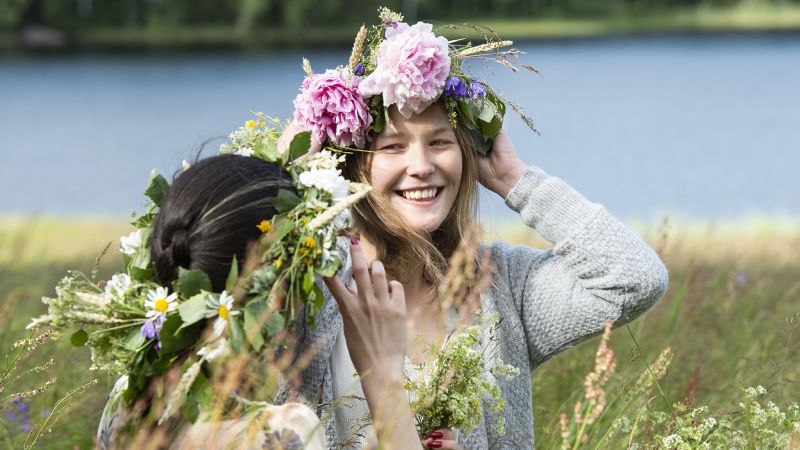
Another key element of Midsummer is the symbolism of flowers. Wearing a wreath of blossoms in one’s hair was seen as a sign of renewal and fertility. These wreaths, often made from fresh or dried flowers, were not just decorative; they held practical significance. In some regions, dried flowers were kept throughout the year and even used to infuse the Christmas bath, believed to ward off illness during the long winter. This connection between seasonal rituals and health underscores the deep spiritual and practical beliefs that shaped Midsummer’s customs.
Midsummer also features the practice of walking barefoot on dewy grass at dawn, a ritual thought to channel the earth’s energy and ensure good health. In more audacious celebrations, participants might strip down entirely and roll in the grass, embracing the raw, unfiltered joy of the season. These activities, though seemingly simple, reflect an ancient worldview where nature’s elements were seen as vital to human well-being. The summer solstice was not just a day of light—it was a time of magical transformation, a belief that persists in the way Swedes approach the festival today.
Midsummer Eve: A Weekend of Festivities
Midsummer Eve, which always falls on a Friday between June 19 and 25, is the focal point of the celebrations. This year, it occurred on June 19, drawing large crowds to Sweden’s cultural landmarks. One of the most iconic venues is Skansen, the world’s oldest open-air museum, located in Stockholm. This living museum offers a glimpse into Sweden’s diverse regions, with recreated houses and farmsteads from across the country. Midsummer festivities at Skansen begin mid-morning, featuring wreath-making workshops and a bustling market where traditional crafts and foods are sold.
At 11 a.m., the museum kicks off the maypole raising, a spectacle that draws both locals and tourists. The event is followed by a series of dances and games, set to the lively tunes of Skansen’s folk musicians. Dancers, dressed in colorful provincial costumes, lead the crowd through the day’s rituals. These costumes, often adorned with intricate embroidery and regional patterns, serve as a visual reminder of Sweden’s rich cultural tapestry. The “frog dance,” a favorite among attendees, is performed with infectious energy, blending humor and tradition in equal measure.
For international visitors, the experience is enhanced by the museum’s efforts to ensure inclusivity. The program, narrated by a multilingual host, is conducted in both Swedish and English, allowing newcomers to fully participate. Spectators can enjoy performances by Skansen’s folk dance troupe, which reenacts traditional peasant dances throughout the day. These routines, accompanied by fiddlers and harpists, offer a glimpse into the music and movement that have defined Midsummer for centuries.
As the sun sets on Midsummer Eve, the festivities reach their peak with the evening dance—a lively, communal celebration that echoes the public gatherings of the past. This event is not just about revelry; it is a living testament to the festival’s pagan roots, where the solstice was seen as a time of heightened magic and connection to nature. Whether in a summer house by the sea or at a museum in Stockholm, the essence of Midsummer remains the same: a celebration of life, light, and the enduring power of tradition.
The festival’s enduring appeal lies in its ability to bridge ancient customs with modern joy. While the original intent of Midsummer may have been tied to fertility and the mystical forces of nature, today it is celebrated with a spirit of inclusivity and fun. From the maypole dance to the floral wreaths, every element of the tradition is steeped in symbolism, yet it is also a time for people to let loose, connect with loved ones, and embrace the warmth of summer. In Sweden, Midsummer is not just a holiday—it is a shared experience, a time when the past and present merge in a dance of light and laughter.