
8 protesters accused by feds of antifa ties get up to 100 years in Texas immigration center shooting
8 Texas Protesters Linked to Antifa Face Decades in Prison Over Immigration Center Shooting
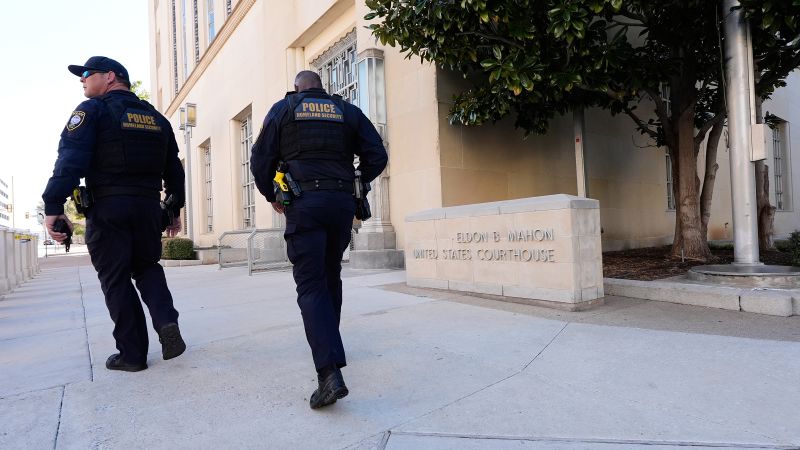
8 protesters accused by feds of antifa – On Tuesday, eight individuals accused by federal authorities of ties to the antifa movement were handed lengthy prison sentences for their involvement in a July 4 shooting at a Dallas-area immigration detention facility. The incident, which left a police officer injured, was characterized by prosecutors as an act of terrorism, prompting the Justice Department to pursue severe penalties. One defendant, a former U.S. Marine Corps reservist, received the maximum sentence of 100 years, while the remaining seven were sentenced to terms ranging from 30 to 70 years. The rulings sparked immediate backlash from family members and supporters, who gathered outside the federal courthouse in Fort Worth to express their disapproval.
Protesters Dispute Allegations of Antifa Affiliation
The defendants, who were charged with federal offenses, maintain that their actions were peaceful and aimed at supporting detained immigrants. Hope Song, the mother of Benjamin Song, who was given the harshest sentence, challenged the government’s claim that her son targeted law enforcement. “He didn’t mean to harm anyone,” Song stated at a news conference. “This was a demonstration of solidarity, not an attack.” Her son’s conviction hinges on the assertion that he shouted “get to the rifles” before opening fire, according to prosecutors. However, Song’s attorney, Phillip Hayes, argued that the shooting was a result of the officer’s aggressive behavior, not premeditated violence.
“This is a bunch of kids and young adults who really have a really big heart and really wanted their voice to be heard,” Hayes said outside the courthouse. “It was never intended that anybody get hurt. It was never intended that any shots would be fired.”
Judge Calls Shooting an “Assault on Democracy”
US District Judge Reed O’Connor, one of the two presiding over the case, described the event as an attack on democratic institutions. “The need to deter this type of conduct is high,” he remarked, emphasizing the gravity of the offense. O’Connor’s characterization contrasts with the defense’s portrayal of the incident as a peaceful protest. The judge’s decision to impose a 100-year sentence has raised questions about the balance between national security and civil liberties, particularly given the broader context of the Trump administration’s stance on antifa.
Antifa as a Decentralized Movement
Prosecutors allege that the eight defendants are members of antifa, a decentralized network of far-left groups dedicated to opposing neo-Nazi and white supremacist ideologies. While antifa is not a single organization, it is often seen as a collective force that engages in direct action during demonstrations. President Donald Trump, in an executive order issued last fall, labeled antifa a domestic terrorist organization, despite the absence of a formal equivalent to the State Department’s foreign terror list within the U.S. legal framework.
Defense Challenges Extremist Labels
Defense attorneys argue that the protesters’ actions should be evaluated within the context of free speech. “They believe violence is justified,” said Prosecutor Frank Gatto, who urged the court to impose strict penalties. “This was more than just a protest—it was a coordinated effort to undermine the rule of law.” In contrast, Hayes asserted that his client’s behavior was a defensive response to perceived threats, highlighting his son’s “impeccable life” as a former Marine and dedicated student. The defense also emphasized that the shooting was not a deliberate act but a consequence of the officer’s quick movements.
Family Members Advocate for Leniency
Other defendants and their families pleaded for leniency during the trial. Autumn Hill, a participant in the demonstration, described the event as a “party” rather than a violent confrontation. “We didn’t expect or want any violence or destruction,” she said. Amber Lowrey, whose sister Savanna Batten received a 50-year sentence, highlighted her client’s compassion and aspirations, including plans to open a bakery. “She’s the best person I know,” Lowrey added, framing her activism as a progression from animal rights to human rights advocacy.
Broad Implications for Protest Movements
Critics have warned that the case could redefine how protests are perceived, potentially impacting First Amendment protections. The conviction of protesters under antifa labels raises concerns about the use of federal law to suppress dissent. This legal strategy has been applied in other cases, such as the recent charging of 15 individuals in Minnesota for impeding the Trump administration’s immigration efforts. Those accused were alleged to have blocked government buildings, thrown ice at vehicles, and disrupted arrests as part of a coordinated campaign against deportation policies.
Public Reaction and Legal Debate
The sentencing has ignited debates about the fairness of linking peaceful demonstrations to extremist organizations. Supporters of the defendants argue that the charges may be used to target activists, while prosecutors insist the actions were premeditated and part of a broader threat to national security. The 100-year sentence for Benjamin Song, in particular, has drawn attention due to its severity, with some calling it disproportionate for a single act of gunfire. The case now stands as a pivotal moment in the intersection of protest, ideology, and federal law enforcement.
Context of the Texas Shooting
The incident at the Prairieland Detention Center occurred during a demonstration advocating for the rights of detained immigrants. Prosecutors claimed the protesters, including Song, aimed to intimidate law enforcement and disrupt the immigration process. However, defense claims suggest the officer’s aggressive approach may have triggered the shooting. “The officer pulled out his firearm first,” Hayes argued, pointing to the ricochet bullet that struck the officer as evidence of the chaotic circumstances. This line of reasoning has been central to the appeal process, with Song’s legal team seeking to overturn the maximum sentence.
Legacy of the Case
As the sentences take effect, the case is likely to influence future protests and legal battles. Critics argue that the use of antifa as a domestic terror designation could lead to the criminalization of grassroots activism. Meanwhile, supporters of the prosecution highlight the importance of holding individuals accountable for acts that endanger public safety. The dual perspective underscores the tension between safeguarding civil liberties and ensuring the enforcement of laws against perceived threats to democracy. With the legal proceedings concluded, the focus now shifts to the broader societal impact of these convictions.
