
Netanyahu’s emerging challenger represents his polar opposite, and that may be his appeal
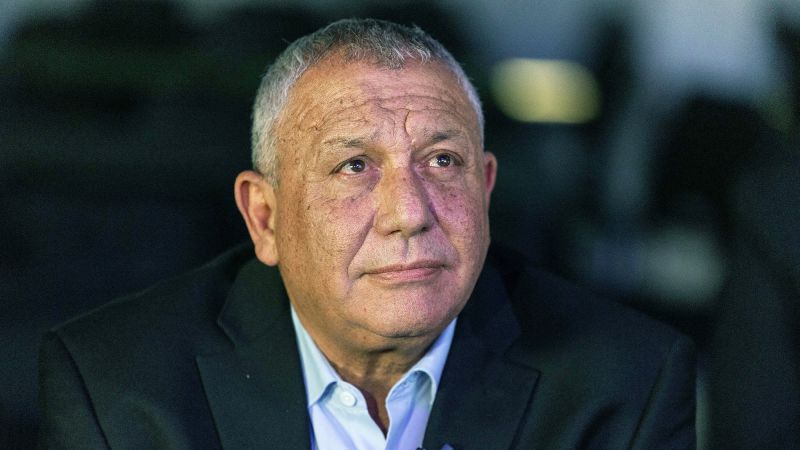
Netanyahu’s Emerging Challenger Embodies His Polar Opposite, Potentially Fueling His Appeal
Netanyahu s emerging challenger represents his polar – As the October 7 conflict reshaped Israel’s political landscape, the nation’s longest-serving leader, Benjamin Netanyahu, found himself facing a new kind of opposition. Gadi Eisenkot, the former head of the Israeli Defense Forces, is now emerging as a formidable rival, not just through his policies but through his stark contrast to Netanyahu’s style. This divergence, once a subtle undercurrent, has become a central theme in the Likud party’s campaign strategy for the upcoming parliamentary elections in late October.
The Rise of Gadi Eisenkot
The Likud party’s recent social media post, featuring an AI-generated clip of Eisenkot and Ahmad Tibi standing under ominous clouds, symbolizes the political maneuvering at play. The message, “There is no Gadi without Tibi,” underscores a deliberate emphasis on anti-Arab rhetoric—a hallmark of the party’s messaging for years. Yet, this focus on unity with Arab lawmakers has inadvertently spotlighted Eisenkot as a key contender for Netanyahu’s position. While his name may not yet echo globally, Eisenkot has become a central figure in Israeli politics, surpassing former Prime Minister Naftali Bennett in public perception as the main challenge to Netanyahu’s leadership.
Historically, Eisenkot’s Yashar party, meaning “straight” or “honest” in Hebrew, struggled to gain traction. Polls once showed it hovering in the single digits, but recent shifts have altered this trajectory. Now, the party is projected to secure around 21 seats in the Knesset, according to the latest Channel 12 survey, placing it just behind Likud’s anticipated 23 seats and ahead of Bennett and Yair Lapid’s joint list, which is expected to capture 18. This rise has prompted Likud to pivot its messaging, framing Eisenkot as its primary rival after previously targeting Bennett.
Analysts suggest that Eisenkot’s appeal lies in his ideological contrast to Netanyahu. While the prime minister has built a career on dramatic public performances and sharp political messaging, Eisenkot is known for his measured approach and emphasis on process. His soft-spoken nature and understated presence, even in the digital age, have drawn attention. “Gadi wouldn’t strike Iran,” critics have begun to mock, a line that highlights his perceived difference from Netanyahu’s aggressive foreign policy stance. Yet, this very contrast may be his strength, as voters increasingly seek leaders who prioritize diplomacy over theatrics.
A Legacy of Military Leadership
Netanyahu’s political success has long been tied to his military background, particularly his time in the Sayeret Matkal commando unit. His tenure as a commander, along with his knack for leveraging media, has defined his leadership style. In contrast, Eisenkot’s career has been shaped by strategic thinking and a focus on institutional integrity. His rise to chief of staff in the IDF from 2015 to 2019, under Netanyahu’s mentorship, marked a significant chapter in Israeli military politics.
During Eisenkot’s leadership, the IDF faced scrutiny over its actions in the Hebron case, where Elor Azaria, a combat medic, was convicted of killing a wounded Palestinian attacker. Eisenkot supported the military’s legal process despite pressure from right-wing factions, including Netanyahu himself. This decision, while controversial, solidified his reputation as a leader committed to accountability and fairness. His ability to navigate such challenges in the military has translated into a political career that now challenges Netanyahu’s dominance.
From Coalition to Opposition
When Eisenkot entered politics in 2022, he joined forces with Benny Gantz, another former military chief, as part of a united anti-Netanyahu bloc. However, as the war with Hezbollah escalated, Eisenkot grew disillusioned with the government’s strategy. In a February 2024 letter, he criticized the lack of clear objectives, stating, “The war is being conducted through tactical gains, without significant moves to achieve strategic objectives.” This critique resonated with voters weary of prolonged conflict without a defined endgame.
Netanyahu’s response to Eisenkot’s criticism was both personal and political. At Eisenkot’s 2019 retirement ceremony, the prime minister praised his military service, declaring, “Under your command, Gadi, the IDF carried out great work.” Yet, Eisenkot’s growing influence has since challenged this narrative. His independent campaign, marked by a focus on transparency and pragmatic governance, has gained traction, especially in regions like northern Israel, where locals question the viability of a ceasefire with Hezbollah. “What ceasefire?” one resident asked, reflecting broader skepticism about the government’s ability to secure peace.
The shift in public sentiment is evident in the latest polls, where 38% of respondents believe Eisenkot is better suited for the role of prime minister, compared to 36% for Netanyahu. This subtle lead suggests that Eisenkot’s appeal lies not just in his policies but in his ability to connect with voters who feel disconnected from Netanyahu’s leadership. His party’s growth from obscurity to a major contender underscores a changing political landscape, where the anti-Netanyahu movement is no longer a monolith but a collection of diverse voices.
Biographies That Mirror Ideologies
The personal histories of Netanyahu and Eisenkot further highlight their ideological differences. Netanyahu, the son of a historian, grew up in Jerusalem’s elite circles, shaping his worldview through academic and political circles. His background in the Sayeret Matkal, a unit known for its elite operations, contributed to his image as a strong, decisive leader. Eisenkot, on the other hand, was born to Moroccan immigrants and raised in Tiberias and Eilat, areas historically less central to Israel’s political power. This upbringing, combined with his military career focused on strategic planning, has influenced his more measured approach to governance.
Eisenkot’s rise in the Knesset has also sparked discussions about the role of military leaders in Israeli politics. Unlike Netanyahu, who has used his military experience as a tool for public performance, Eisenkot has positioned himself as a leader who prioritizes stability over spectacle. His current campaign, which includes a mix of policy-focused messaging and personal anecdotes, aims to tap into this appeal. Meanwhile, Likud’s efforts to portray Eisenkot as a collaborator with Arab lawmakers have backfired, as the party now treats him as a direct threat to its electoral prospects.
As the October 7 conflict continues to shape Israel’s political future, the race for leadership is becoming more than a contest of policies—it’s a clash of personalities and ideologies. Eisenkot’s ability to represent a vision of governance that contrasts sharply with Netanyahu’s has made him a symbol of change for many voters. While Netanyahu’s decades of political theater remain a defining feature, Eisenkot’s quiet determination and focus on strategy may offer a compelling alternative. The upcoming elections will likely determine which vision resonates more with the Israeli public, and the battle for the nation’s soul is far from over.
“Gadi wouldn’t strike Iran,” critics have begun to mock, a line that highlights his perceived difference from Netanyahu’s aggressive foreign policy stance.
The broader implications of this shift are significant. As the Yashar party gains momentum, it signals a growing appetite for leaders who balance pragmatism with a commitment to moral clarity. With 400 more campaign videos planned for release, Eisenkot’s team is keenly aware of the message they need to send. Whether it’s through his military expertise or his personal style, Eisenkot is positioning himself as a leader who could redefine Israel’s political direction. The question remains: can his polar opposite approach succeed where Netanyahu’s has faltered?
