
Ukraine launches major drone attack on Moscow, hitting a satellite center and killing a baby
Ukraine Launches Major Drone Attack on Moscow, Hitting Satellite Center and Killing Baby
Ukraine launches major drone attack on Moscow – Ukraine launched a major drone attack on Moscow, targeting a key satellite communications facility and resulting in a civilian fatality. The strike, which occurred on June 30, marked the second such operation in less than a week, intensifying Kyiv’s efforts to strike deep within Russian territory. The attack hit the Dubna Satellite Communications Centre, located about 500 kilometers north of Moscow and near the Ukrainian border, damaging infrastructure critical to Russia’s military command and intelligence operations. President Volodymyr Zelensky emphasized the strategic value of the target, stating it plays a pivotal role in Russia’s war efforts. While Moscow has not officially confirmed the damage, regional officials have acknowledged the impact of the strike, highlighting its significance in the ongoing conflict.
Strategic Strikes and Human Toll
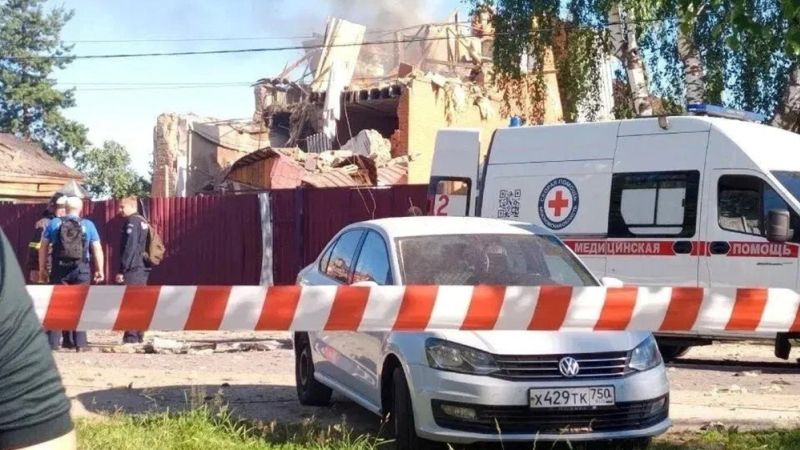
The Dubna facility, a central hub for long-range communication, was struck by a coordinated drone assault that disrupted operations and raised concerns about the vulnerability of Russia’s infrastructure. Ukraine’s military analysts claim the attack showcased a breakthrough in targeting Russia’s air defenses, allowing precision strikes on critical sites. In addition to the satellite center, the attack also resulted in the death of a six-month-old infant in Yegoryevsk, a town southeast of Moscow. A residential home was hit by a drone, causing a collapse that trapped several people under debris. Rescue teams managed to save two adults and two children but could not revive the baby, who succumbed to injuries en route to the hospital. Governor Andrey Vorobyov shared the tragic update on his Telegram channel, underscoring the human cost of the conflict.
Ukraine’s major drone attack on Moscow has intensified the debate over the war’s geographical expansion. With strikes now reaching Russian cities, the conflict is increasingly perceived as a direct assault on the nation’s heartland. Zelensky has previously outlined a strategy to “compel” Russia into negotiations, and these attacks are seen as a means to pressure the Kremlin. The use of drones has become a cornerstone of Ukraine’s military campaign, with the focus keyword “Ukraine launches major drone attack” repeated in the context of sustained efforts to weaken Russian operational capabilities.
Russian Responses and Defense Challenges
Russian air defenses intercepted over 60 drones during the June 30 barrage, according to Moscow Mayor Sergey Sobyanin. However, despite these efforts, the Ukraine launches major drone attack managed to strike the Dubna center, demonstrating gaps in Russia’s monitoring systems. The Ministry of Defense reported that 419 drones were accounted for in total, though some were neutralized before reaching their targets. One such example was a drone that hit a summer home in the Tver region but was downed earlier by defense systems, resulting in the death of a 61-year-old woman. These incidents underscore the challenges Russia faces in defending its territory from aerial assaults.
The Ukraine launches major drone attack has been part of a broader strategy to disrupt Russia’s military infrastructure and signal determination. Analysts note that the success of these strikes relies on the destruction of radar systems in the Bryansk border region, creating a corridor for drones to bypass defenses. This systematic approach has enabled Kyiv to conduct more precise and damaging operations, according to reports. The second strike on Dubna followed an earlier attack in early June, which had already tested the resilience of Russia’s communication networks. The cumulative effect of these strikes is expected to increase pressure on Moscow’s war effort.
Escalation and Global Reactions
As the Ukraine launches major drone attack intensifies, its impact extends beyond military objectives, affecting public morale and international perceptions. The incident in Yegoryevsk, where a baby was killed, has drawn criticism from Russian officials, who accused Ukraine of targeting civilians. Kremlin spokesperson Dmitry Peskov stated during a press briefing,
“Civilians are suffering, children are dying,”
highlighting the growing humanitarian concerns. The dual focus on infrastructure and populated areas has intensified discussions about the war’s escalation, with some analysts questioning whether it has shifted into a direct confrontation with Russian society.
The coordination of the Ukraine launches major drone attack reflects Kyiv’s evolving tactics in the war. By striking deep within Russian territory, Ukraine aims to undermine the Kremlin’s ability to coordinate its forces and project power. This approach has also galvanized support among some Russian citizens, who express frustration with the conflict’s reach. The attacks on Moscow and St. Petersburg have become symbolic of Ukraine’s determination to challenge Russian dominance, with each strike reinforcing the narrative of a prolonged and intensifying war. As the focus keyword “Ukraine launches major drone attack” continues, the strategic and psychological ramifications for both sides are expected to grow.
