
Who is the Ukrainian tycoon at the center of mysterious Monaco bombing?
Who Is the Ukrainian Tycoon at the Center of Mysterious Monaco Bombing?
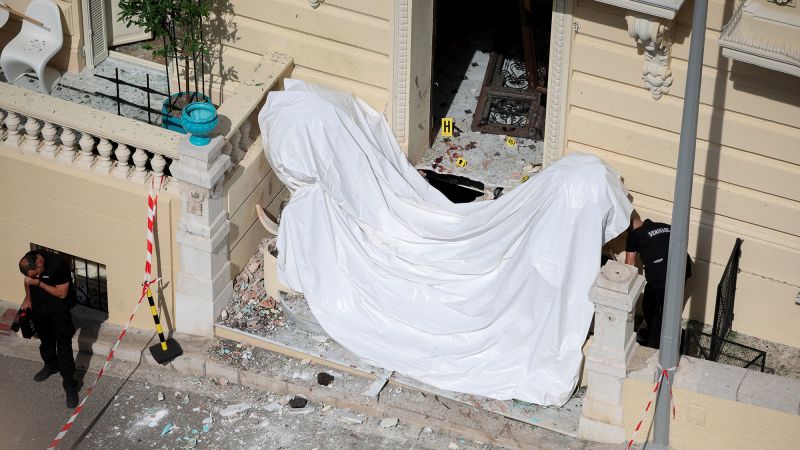
Who is the Ukrainian tycoon at – Residents of Monaco are still reeling from a shocking attack that targeted Vadym Yermolaiev, a Ukrainian-born businessman, on Monday. The explosion, which occurred at Yermolaiev’s residence, left the city-state’s elite in disbelief, as the event shattered its reputation for safety and exclusivity. While the full motive of the attack remains unknown, the incident has sparked questions about the links between the wealthy Ukrainian tycoon and the broader conflict in Ukraine. Yermolaiev, who was critically injured in the blast, is now the focus of international attention as authorities investigate the circumstances surrounding the attack.
From Dnipro to Monaco: A Life of Wealth and Influence
Vadym Yermolaiev built his fortune in Dnipro, a city in southeastern Ukraine that became a hub for rapid economic growth after the Soviet era. His business ventures, primarily in real estate, positioned him as a prominent figure among Ukraine’s affluent class. However, the war in Ukraine has complicated his standing, as his business dealings in Russian-occupied Crimea drew scrutiny from Kyiv. Despite this, Yermolaiev maintained a public image of success and stability until the bombing disrupted his life in Monaco.
Before the war, Dnipro was known for its blend of opportunity and ambition, often described as a city where power and wealth intertwined seamlessly. This dynamic extended to its Jewish community, which has long been a cornerstone of the region’s cultural and economic life. Yermolaiev was not only a member of this community but also a vocal advocate for its interests. His decision to renounce Ukrainian citizenship in 2019, however, hinted at a growing distance from his homeland, a move he later justified with a statement to Forbes.
“The Ukrainian judicial system, to put it mildly, is not perfect, and the tax system is not objective,” Yermolaiev told Forbes. His remarks suggested a desire for international protection, possibly due to concerns about legal challenges or political pressures in Ukraine. Yet, this step also underscored the complexity of his identity, as he now holds Cypriot citizenship while maintaining a residence in Monaco.
The Family in Peril
Monaco’s local authorities confirmed that the adult male victim was a resident of the city since at least 2021, though they initially withheld details about his identity. Ukrainian officials, however, provided more clarity, stating that three individuals injured in the attack were part of “a family of Ukrainian origin.” Yermolaiev, along with a woman and a child, sustained critical injuries. While the identities of the latter two remain unconfirmed, his wife shared her account with Ukrainian media, revealing that she was not present at the scene when the bomb detonated.
The attack, which took place just moments before the explosion, was unprecedented in Monaco. Minister of State Christophe Mirmand described it as “an attack so unusual and outrageous that it left the exclusive seaside city-state in shock.” This event not only highlighted the vulnerability of Monaco’s secure environment but also raised questions about the possible motivations behind targeting a foreign resident. The city, renowned for its low crime rates and privacy-focused culture, has rarely seen such an act of violence.
A Criminal Legacy: The Role of Yermolaiev’s Son
Though Yermolaiev himself has no obvious ties to the war in Ukraine, his family’s connection to the country’s criminal underworld has come under renewed scrutiny. His son, Artur Yermolayev, is a known figure in Ukrainian crime circles. Arrested in Cyprus in 2019 for leading a large-scale fraud scheme, Artur was later extradited to Estonia, where he was convicted of orchestrating a deceptive investment operation that defrauded victims across Europe.
The scheme, which operated under the guise of legitimate financial opportunities, stole an estimated 100 million euros from individuals in multiple European nations between 2019 and 2022. In Estonia alone, Yermolayev and his associates reportedly drained 5.4 million euros from unsuspecting citizens. After receiving a five-year prison sentence, he negotiated a deal to serve only four months of his term before being deported to Israel. The fine he paid, totaling 8.5 million euros, further emphasized the financial stakes of his criminal activities.
The Unseen Threats Behind the Bomb
Monaco’s reputation as a haven for privacy and prosperity is often cited as a key factor in its appeal to wealthy individuals. The city’s tax-friendly regime and strict laws on residency make it an attractive location for those seeking to minimize their financial obligations. Yet, the bombing has exposed the potential for unseen dangers to threaten even the most secure environments. The fact that the attack was carried out by an unknown suspect adds another layer of mystery, leaving investigators to piece together clues from the aftermath.
While Yermolaiev’s personal ties to the conflict remain unclear, the timing of the attack—just days after the Ukrainian Foreign Ministry acknowledged his involvement in Crimea—has raised eyebrows. Though he denied the allegations, his business dealings there were enough to draw Kyiv’s attention. This juxtaposition of his family’s criminal activities and his public role as a Ukrainian national may have played a role in the decision to target him. The bomb, which was placed at his residence, was a calculated move that exploited the city-state’s sense of invulnerability.
A Shattered Sense of Security
Residents of Monaco, a place where the boundaries between the elite and the ordinary are often blurred, are now questioning their assumptions about safety. The bombing has disrupted the city’s carefully maintained image as a refuge from the chaos of global conflicts. With its narrow streets, towering luxury buildings, and a population largely composed of millionaires, the attack has shaken the community to its core. The explosion, which targeted a foreign resident, symbolizes a broader vulnerability that may extend beyond the city’s borders.
Yermolaiev’s injuries, along with those of two other individuals, have left his family and associates in a precarious position. The woman and child, who were also harmed, remain unidentified, adding to the enigma of the event. While the Ukrainian media has provided some context, the full story of the attack is still emerging. The question remains: was this a personal vendetta, a political statement, or a coordinated effort to destabilize Monaco’s reputation as a safe haven for international wealth?
Investigating the Unknown
As authorities continue their inquiry, they are examining all possible angles of the attack. The location of the bomb, the timing of its placement, and the identities of those involved are all under scrutiny. Yermolaiev’s renunciation of Ukrainian citizenship in 2019 may have made him a target for those seeking to retaliate against his country’s policies, but the specifics of the motive are still elusive. His son’s criminal record, while separate from the attack, suggests a family history of financial misdeeds that could have drawn the attention of rival groups or individuals.
Monaco’s unique status as a sovereign city-state, with its own legal system and minimal interference from foreign powers, has also been called into question. The bombing, which targeted a resident with ties to Ukraine, has reignited discussions about the city’s role as a hub for both wealth and intrigue. Whether this event marks a new era of security threats in Monaco or a one-off incident remains to be seen. For now, the city is left to ponder the implications of an attack that struck at the heart of its affluent lifestyle.
The investigation into the attack is ongoing, with authorities working to determine who orchestrated the explosion and why. Vadym Yermolaiev’s journey from a Ukrainian businessman to a resident of Monaco, and now a victim of an unexplained act of violence, highlights the complex interplay of identity, wealth, and security in the modern world. As the mystery deepens, the incident serves as a reminder that even the most privileged individuals are not immune to the risks of global unrest.
Contributors to this report include CNN’s Lex Harvey, Stephanie Halasz, Victoria Butenko, Elina Baudier Kim, and Kosta Gak, who have provided insights into the unfolding
