
‘The greatest cosmic movie ever made’: Historic telescope kicks off an unprecedented survey
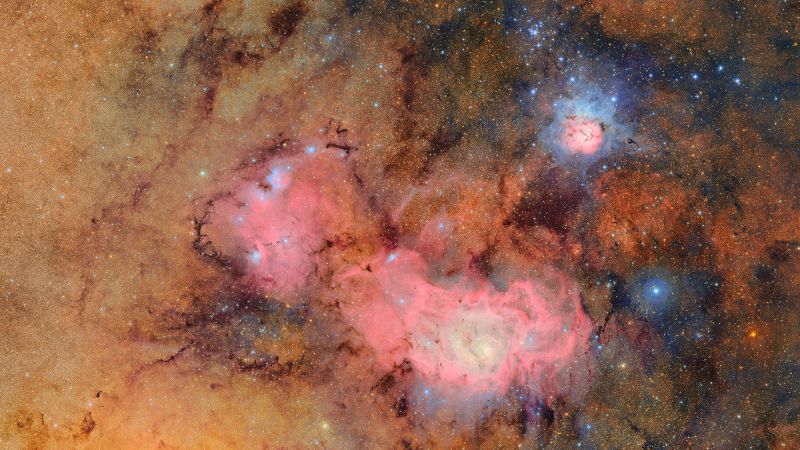
The Start of a Cosmic Journey
The greatest cosmic movie ever made – On Tuesday, the Vera C. Rubin Observatory initiated the Legacy Survey of Space and Time (LSST), a groundbreaking astronomical project designed to map the southern sky in extraordinary detail over the next decade. This endeavor, hailed as one of the most ambitious in modern science, will use a powerful camera to capture images at regular intervals, creating a dynamic record of celestial changes that could reveal profound insights into the universe’s evolution. The observatory, located in Chile, is equipped with the world’s largest digital camera, weighing over 6,600 pounds, which will operate continuously to document the cosmos as it shifts and transforms.
A Technological Marvel in Chile
The Rubin Observatory is perched atop Cerro Pachón, a mountain in northern Chile with an elevation of 8,800 feet. This remote location is chosen for its optimal conditions: exceptionally dark skies and arid air minimize atmospheric interference, making it an ideal site for deep-space observation. The observatory’s camera, which is as large as a compact car, will be used to scan the night sky nightly, employing a series of colored filters to enhance its ability to detect a wide range of celestial phenomena. These filters will allow the telescope to simulate human vision, capturing nuanced details that might otherwise go unnoticed.
The Camera’s Role
Each night, the observatory will generate thousands of images, systematically building a comprehensive database of the southern sky. By revisiting the same regions of the sky repeatedly, scientists aim to create a living archive of how galaxies, stars, and other cosmic objects evolve over time. This repetitive scanning will enable the detection of subtle changes, such as the movement of asteroids or the formation of supernovae, providing a timeline of the universe’s activity. The process, which involves a decade of continuous imaging, will ultimately produce a vast collection of data that could revolutionize our understanding of cosmic dynamics.
Collaboration with Global Observatories
The LSST’s capabilities extend beyond its own observations, as the project is designed to coordinate with other astronomical facilities worldwide. By sharing its findings, the observatory will help other institutions identify and respond to significant cosmic events in real time. For instance, when a supernova explodes or a black hole merges with another, the LSST’s early detection could prompt follow-up studies from telescopes across the globe. This interconnected approach will create a more holistic view of the universe, allowing researchers to piece together complex phenomena through shared data and collaborative efforts.
Unlocking Cosmic Mysteries
One of the LSST’s primary objectives is to shed light on the enigmatic forces of dark matter and dark energy. By analyzing the distortion of light from distant galaxies, scientists hope to uncover more about the invisible structures that shape the universe’s expansion. Additionally, the survey aims to compile a detailed inventory of objects within our solar system and the Milky Way, including previously unknown asteroids and other celestial bodies. These efforts will not only enhance our knowledge of the cosmos but also serve as a foundation for future research into the universe’s hidden components.
System Optimization and Readiness
Before officially launching, the LSST team conducted extensive tests to ensure the observatory’s systems were fully prepared. The decision to begin operations came after a thorough evaluation of technical readiness, data processing efficiency, and scientific validation. Key factors in this assessment included image quality, the speed of the survey, and the reliability of the observatory’s uptime. Željko Ivezić, the project’s lead, emphasized that these optimizations were critical to the success of the mission. “Important factors that played a role in this decision included image quality, effective survey speed, system uptime and reliability, and calibration accuracy,” he stated in a recent statement.
The Science Behind the Survey
The LSST’s camera, with its ability to capture high-resolution images, will be pivotal in tracking the movement of objects across the sky. By using different filters, the telescope can analyze light across a spectrum of colors, enhancing its sensitivity to various phenomena. For example, the camera’s ability to detect supernovae and asteroid trajectories will be crucial in understanding the mechanics of cosmic events. The project’s timeline includes a year-long period of system testing, which concluded earlier this year, paving the way for its full-scale operation. This phase involved refining the camera’s performance and ensuring that the data systems could handle the massive volume of information generated each night.
Initial Discoveries and Future Potential
Even before the official start, the observatory has already begun contributing to scientific knowledge. Through preliminary imaging, researchers have identified thousands of new asteroids and other objects within our solar system. These early findings underscore the project’s potential to uncover previously unknown celestial bodies. As the survey progresses, the use of artificial intelligence and machine learning will play a vital role in analyzing the data. These tools will help scientists detect patterns and anomalies, such as sudden changes in star behavior or rare cosmic collisions, that might otherwise be missed.
Reliable Data and Public Access
One of the LSST’s most exciting aspects is its commitment to transparency. The final dataset is expected to include billions of objects and trillions of measurements, all made available to the public through regular data releases. This open-access model will empower both professional astronomers and amateur enthusiasts to explore the universe’s secrets. “This is the first time so much astronomical data will be available to so many people,” noted the observatory team in a recent news release. “It opens the door to new kinds of discoveries by both scientists and the public.”
Leadership and Federal Investment
The project’s launch was highlighted by a statement from Brian Stone, who is currently fulfilling the duties of the US National Science Foundation director. He described the LSST as “the greatest cosmic movie ever made,” a metaphor that captures the observatory’s ability to document the universe’s continuous transformation. Stone credited the decades of vision and innovation behind the project, as well as the federal investment that made it possible. “This moment reflects decades of vision, innovation and the power of federal investment,” he said, emphasizing the importance of public funding in advancing scientific exploration.
A New Era of Cosmic Exploration
The LSST represents a leap forward in observational astronomy, combining cutting-edge technology with a collaborative approach to data analysis. Its ability to generate 7 million alerts per night—each pointing to a potential discovery—will create a dynamic flow of information for scientists to study. These alerts will highlight interesting movements, explosions, or phenomena that require further investigation. As the observatory continues its work, it will not only document the universe’s history but also anticipate future events, offering a window into the cosmos that has never been available before. With its comprehensive dataset and innovative methods, the LSST is poised to become a cornerstone of modern astrophysics.
Call to Action
For those interested in the latest developments in astronomy, the LSST’s progress offers a unique opportunity to engage with the universe’s mysteries. The observatory team encourages scientists and the public to stay informed and participate in the discovery process. To learn more about the project’s advancements, consider subscribing to CNN’s Wonder Theory science newsletter. It provides regular updates on groundbreaking research, scientific breakthroughs, and the fascinating stories behind our cosmic exploration. As the LSST’s timelapse of the universe unfolds, it promises to reveal new insights that will shape our understanding of the cosmos for years to come.
