
Seattle’s solution for the middle-class housing squeeze: government housing
Seattle’s Bold Move to Address Housing Inequality
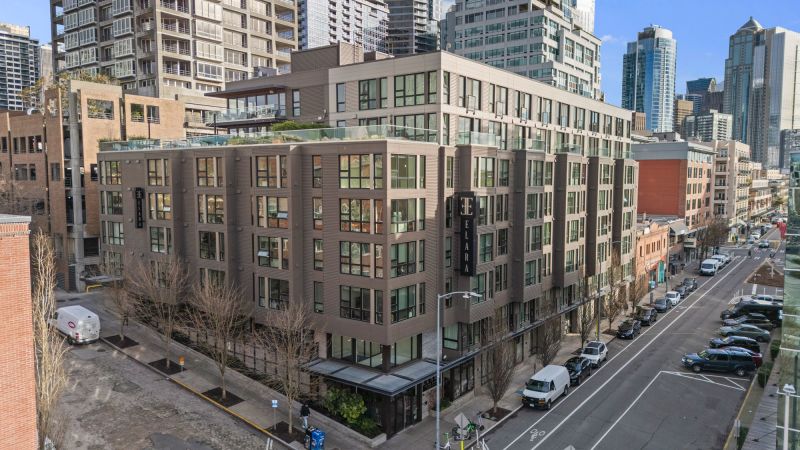
Seattle s solution for the middle – Seattle is taking a radical approach to alleviate the housing crisis gripping its middle-class residents. The Elara at the Market, a once-exclusive 150-unit apartment complex in Belltown, has undergone a transformation that now positions it as a model for government-led social housing. This eight-story building, known for its modern amenities and proximity to Amazon headquarters, has become a symbol of the city’s efforts to bridge the gap between affordable living and market-rate costs. With the recent acquisition of the property by the Seattle Social Housing Developer (SSHD), the city is testing a new strategy to ensure housing accessibility for a broader range of income levels.
The Middle-Class Housing Dilemma
The housing market in Seattle has long been a challenge for middle-income families. While the city’s average home value soared to $945,000 between 2012 and 2022, rents climbed by 75%, reaching approximately $1,800 per month. This surge has left many households in a precarious position: too financially stable to qualify for traditional housing assistance, yet unable to afford private-market apartments. The Elara, once a hub for Amazon workers, exemplifies this trend. Its tenants, including Bilal Durrani, a manager at the tech giant, paid over $2,000 monthly for a one-bedroom unit—prices that now seem out of reach for some residents.
The SSHD’s intervention marks a shift in Seattle’s housing policy. By purchasing the Elara for $61 million, the city is launching a social-housing initiative inspired by Vienna’s model, where nearly half of residents live in government-subsidized housing. Unlike the federally funded public housing of the 20th century, which often concentrated low-income populations in isolated areas, Seattle’s approach aims to create mixed-income communities. The goal is to provide stability without sacrificing the vibrancy of neighborhoods like Belltown.
A New Model for Mixed-Income Living
Seattle’s social housing strategy prioritizes affordability for a wider demographic. After acquiring the Elara, the SSHD initiated a lottery to fill 15 vacant units for individuals earning up to 50% of the area’s median income—around $65,000 for a two-person household. Simultaneously, it froze rents for existing tenants for two years, preventing immediate displacement. This dual approach ensures that lower-income renters can benefit from the building’s prime location without destabilizing the current residents.
Residents like Durrani have mixed feelings about the change. He was surprised when his landlord, now the SSHD, sent a notice about the conversion. Initially concerned about rent increases or shifts in the building’s character, he found comfort in the freeze on market-rate costs and the elimination of storage fees. “I’m glad the city is stepping in,” Durrani said, adding that he views himself as a test case for Seattle’s experiment. “It’s a good sign that the government is trying to help people who can’t afford the city’s rising prices.”
Political and Financial Foundations
Seattle’s push for social housing has strong political backing, particularly from progressive lawmakers and advocates. In 2023, voters approved a ballot measure creating the SSHD, which would oversee the development of housing for those earning up to 120% of the area median income—about $138,000 for a single person. To fund this initiative, the city also introduced a “social housing tax” targeting businesses like Amazon and Microsoft, which pay over $1 million in annual salaries. This tax is expected to generate $115 million this year, supporting the SSHD’s acquisitions and construction projects.
With this financial framework, the city plans to acquire over 1,000 apartments and develop 600 new social housing units within five years. The Elara’s transformation is just the beginning, and officials hope it will inspire broader adoption of the model. Rents for higher-income tenants will be adjusted to subsidize lower-income neighbors, creating a system where residents at all income levels coexist in a single building. This approach not only stabilizes neighborhoods but also aims to reduce the stigma often associated with public housing.
Voices of Concern and Hope
While the initiative has been welcomed by some, it has also sparked debate. Critics, including development experts and business advocates, argue that the SSHD’s strategy may divert resources from more pressing needs. They question whether the social housing model is the most effective way to address the city’s housing shortages, suggesting that funds could be better spent on building new homes or preserving existing affordable units. These concerns are echoed by nonprofit and for-profit housing providers, many of which are reporting losses as their properties convert to market-rate units.
Yet, supporters see the program as a necessary evolution in housing policy. Jamie Madden, an affordable housing development consultant and author of *Bittersweet Lane: Cre*, praised the SSHD’s focus on mixed-income communities. “The government’s role is crucial when the private sector fails to meet demand,” she stated. “By creating a system where everyone can afford to live in the city, Seattle is setting a precedent for other urban centers facing similar challenges.”
The Elara’s conversion highlights the broader implications of this shift. As the building’s occupancy turns over, it’s a microcosm of Seattle’s larger housing landscape. While the SSHD aims to balance affordability and quality, its success will depend on how well it integrates different income groups and maintains the building’s appeal. For now, residents like Durrani remain hopeful, believing that this experiment could offer a sustainable solution to the city’s housing crisis. “It’s a start,” he said, “and I’m willing to see where it goes.”
Seattle’s approach is part of a growing national trend, with cities like San Francisco and Minneapolis exploring similar models. However, the city’s unique context—its booming tech industry and steep housing costs—makes its social housing initiative both ambitious and necessary. As the SSHD continues its work, the Elara stands as a testament to the potential of public-sector involvement in shaping equitable urban living. Whether this model proves scalable or faces unforeseen challenges, it has already sparked a conversation about the future of housing in America’s most expensive cities.
“People always get freaked out when the government steps in, but I’m glad the city is doing something,” said Bilal Durrani, reflecting on the Elara’s transformation. His experience underscores the tension between skepticism and optimism that defines Seattle’s social housing movement.
With the SSHD’s efforts underway, the question remains: can government-led housing initiatives like this become a lasting solution or a temporary fix? The answer may depend on how effectively the city balances economic incentives with social equity. For now, the Elara’s story serves as a case study in the evolving landscape of urban housing, where the line between private and public ownership is increasingly blurred in the pursuit of affordability.
