
Roof of tutoring center collapses in eastern Pakistan, killing at least 14 children, police say
Roof Collapse at Lahore Tutoring Center Claims 14 Lives, Officials Report
Roof of tutoring center collapses in eastern – On Tuesday, a catastrophic collapse of a tutoring center’s roof in Lahore, Pakistan, left at least 14 children dead and eight others injured, according to police and rescue personnel. The incident occurred at a structure still under construction, highlighting concerns about building safety in the region. Senior police official Faisal Kamran confirmed that authorities had detained the center’s owner and a second individual in connection with the disaster.
The collapse happened when the unfinished second floor’s roof gave way, trapping multiple students beneath the debris. Rescue teams swiftly arrived at the scene, combing through the rubble to locate survivors. Despite the efforts, the tragedy unfolded with alarming speed, leaving families in shock. Kamran emphasized that the building, described as aging, had been poorly constructed, contributing to its sudden failure. “The roof’s collapse was due to substandard materials and negligence in the construction process,” he stated during a press briefing.
Community Response and Emotional Toll
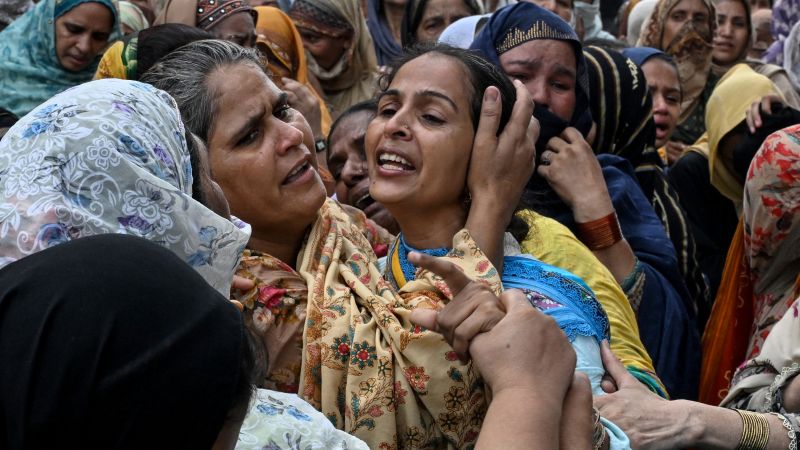
Residents nearby immediately joined the rescue efforts, using shovels and their hands to clear the wreckage. “We didn’t have time to think—just to act,” said one bystander, reflecting the urgency of the moment. As the bodies of the victims were retrieved, scenes of deep sorrow emerged across Lahore. Parents wept, clutching their children’s belongings, while mothers and other female relatives cried out in anguish, pounding their chests as they mourned the loss.
“We don’t know whose home to visit first to offer condolences for the loss of their children,” said resident Zafar Iqbal, who moved between grieving families in the neighborhood. His words captured the collective grief of the community, where dozens of mourners gathered outside the victims’ homes to express their solidarity.
The tragedy has sparked outrage among locals, who are demanding accountability from the building’s operator. “This wasn’t just an accident—it was a failure of responsibility,” said a father who lost two children. The demand for stricter enforcement of safety regulations has grown louder, as the incident underscores the risks faced by children attending evening classes in private facilities. Many families, who rely on such centers for after-school education, now question the adequacy of the structures housing their children.
Background on Building Safety in Pakistan
Building failures have become a frequent occurrence in Pakistan, with lax enforcement of safety standards playing a significant role. According to local experts, countless structures are built using inferior materials and ignored safety protocols to cut costs. This has led to a pattern of incidents where unfinished or outdated buildings collapse, often during heavy rains or due to poor maintenance.
The Lahore incident is a stark reminder of the vulnerabilities in Pakistan’s construction sector. The building in question, located in a residential area on the city’s outskirts, was not designed for the number of students it accommodated. Reports indicate that the second floor was only partially completed, with structural supports insufficient to bear the weight of the roof. “This was a clear case of negligence,” remarked a civil engineer who analyzed the site after the collapse. “The building wasn’t ready for occupancy, and yet classes were held inside.”
Leadership Statements and Calls for Reform
Following the disaster, Pakistan’s President Asif Ali Zardari and Prime Minister Shehbaz Sharif issued statements expressing their condolences. Zardari described the incident as a “heartbreaking tragedy” and pledged to review building regulations. Sharif emphasized the need for “immediate action” to ensure similar events do not occur in the future. Their remarks were met with mixed reactions, as many residents felt the government had been slow to address safety concerns in private infrastructure.
The collapse has also raised questions about the oversight of educational facilities. Private tutoring centers, which are popular among parents seeking additional academic support, often operate in buildings that are not officially inspected. This lack of regulation has left many structures at risk, especially in densely populated urban areas. “Parents trust these centers, but they should also demand that the buildings are safe,” said a local educator who witnessed the aftermath. “The government must step in to ensure that safety is a priority.”
Aftermath and Ongoing Investigations
Hours after the collapse, funeral prayers were held for the victims, with families gathering in the nearby neighborhood to pay their respects. The bodies of the children were handed over to their families, while the injured were receiving treatment at a local hospital. Investigators are now examining the construction process and the building’s compliance with safety codes. “We’re looking into every possible cause,” Kamran said. “This will help us prevent future disasters.”
The tragedy has also prompted calls for improved emergency response systems. While rescue teams were quick to arrive, some families criticized the delay in recovering their loved ones. “We needed more resources to save the children faster,” said a mother who lost her son. The incident has reignited debates about the role of local authorities in regulating construction and the importance of regular inspections, particularly for buildings housing vulnerable populations like children.
As the investigation continues, the focus remains on holding those responsible accountable. The arrested owner of the tutoring center faces charges related to unsafe construction practices, with potential penalties including fines or imprisonment. Meanwhile, the families of the victims are seeking justice, demanding stricter penalties for the operator and a comprehensive review of all private tutoring centers in Lahore. “We want to know who will be punished for this,” said one parent, whose child was among the casualties. “We need guarantees that this won’t happen again.”
The incident has also sparked a broader conversation about the role of private education in Pakistan. While these centers provide valuable academic support, they often operate outside the reach of government oversight. “The demand for quality education has led to unsafe conditions,” noted a local analyst. “Parents and students are willing to take risks for better learning opportunities.” As the community grapples with loss, the call for reform grows stronger, with hopes that the collapse will serve as a turning point in improving building safety across the country.
