
China tells its ethnic minorities to integrate or face consequences with sweeping new unity law
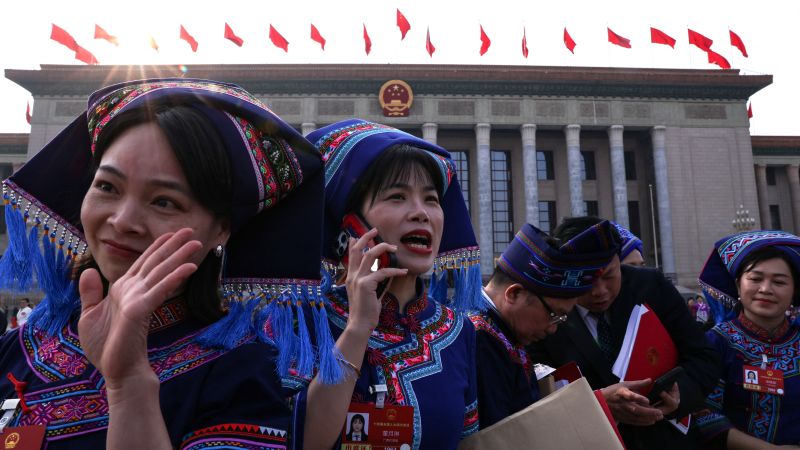
China Tells Its Ethnic Minorities to Integrate or Face Consequences with Sweeping New Unity Law
China tells its ethnic minorities to integrate – China’s latest legislation, the Ethnic Unity and Progress Promotion Law, marks a significant shift in the nation’s approach to fostering national cohesion. Enacted on July 1, 2026, the law mandates that ethnic minority groups—such as Tibetans, Uyghurs, and Mongols—align their identities with the overarching Chinese nationality and demonstrate loyalty to the Communist Party. This move, spearheaded by President Xi Jinping, seeks to institutionalize policies that have long aimed to unify the country’s 56 recognized ethnicities under a shared national framework. The law extends its influence beyond China’s borders, granting Beijing authority to hold individuals outside the mainland accountable for actions deemed to undermine ethnic unity or create division.
A Legal Mandate for Cultural Conformity
The law imposes strict requirements on education, media, and public institutions to prioritize Mandarin Chinese as the primary language of instruction and communication. Schools are tasked with curricula that instill a “strong sense of the Chinese people’s community,” while parents are encouraged to teach children to embrace the Communist Party and national unity. Local governments are also directed to revise housing policies to promote integration, potentially leading to residential relocations. These measures aim to erode distinct cultural and linguistic identities, replacing them with a singular, state-sanctioned Chinese narrative.
Under the law, any activity that challenges the unified Chinese identity is subject to scrutiny. This includes the use of minority languages in schools and the promotion of ethnic-specific traditions. Critics argue that the law’s broad scope allows for the suppression of cultural expressions, such as religious practices and historical narratives, which are central to minority communities. The legislation also introduces legal consequences for organizations and individuals abroad who are perceived as threatening ethnic harmony, a provision that has raised concerns about transnational influence.
International Reactions and Concerns
The law has drawn sharp criticism from human rights groups and scholars, who warn of its potential to stifle dissent and reinforce assimilation. In a statement released in April 2026, United Nations human rights experts highlighted that the law could severely impact the linguistic, cultural, and religious autonomy of ethnic communities. They cited examples such as the large-scale detention of Uyghurs in Xinjiang and the curbs on minority languages in primary and secondary education as evidence of the policy’s reach.
“The law could have serious implications for the linguistic, cultural, and religious autonomy of ethnic communities, including Tibetans, Uyghurs, and Mongols,” said the UN experts. “It also raises the risk of transnational repression, as Beijing may apply its rules to overseas citizens and activists.”
James Leibold, a professor at La Trobe University in Melbourne specializing in China’s ethnic policies, emphasized that the law represents a pivotal moment in the nation’s strategy to unify identities. “Beijing is no longer treating ‘ethnic unity’ as a general political slogan or a matter of local propaganda work,” he stated. “It is making the production of a single Chinese national identity a binding responsibility across schools, families, media, museums, cadres, budgets, technology platforms, and security organs.” Leibold noted that the law could create a “chilling effect” on international scholars, journalists, and activists, encouraging self-censorship and limiting open discourse on ethnic issues.
Historical Context and National Security Goals
Xi Jinping’s push for ethnic integration aligns with his broader vision of national security and stability. The law comes after years of tightening control over minority regions, particularly following the 2008 protests in Tibet and the 2012 election, which saw Xi ascend to power amid concerns over ethnic tensions in Xinjiang. These events underscored the Communist Party’s commitment to countering perceived separatist movements and strengthening centralized authority.
Under Xi’s leadership, China has intensified oversight of religious institutions, reduced the use of ethnic minority languages in educational settings, and expanded surveillance programs targeting Uyghurs and other Muslim groups. The new law appears to institutionalize these efforts, embedding them into a legal framework that supports long-term assimilation. For some analysts, this represents the culmination of a decades-long policy shift that prioritizes national identity over ethnic diversity. “The law is the final step in a process that has gradually eroded ethnic autonomy,” said Leibold. “It ensures that minority identities are only acceptable when they conform to the party’s definition of Chinese unity.”
Global Implications and the Shadow of Repression
While China’s officials maintain that the law strengthens social harmony, critics point to its potential for transnational repression. A 2022 report by the human rights organization Safeguard Defenders revealed evidence of over 100 overseas police stations established by Beijing to monitor and, in some cases, repatriate citizens living abroad. These outposts, located in countries such as the United States and Australia, have been accused of tracking individuals who critique China’s policies or promote ethnic minority causes.
Such measures suggest that the law’s influence extends beyond domestic borders, targeting global dissenters. For instance, diaspora communities and international researchers who study China’s ethnic policies may now face legal repercussions for their work. This raises questions about the law’s role in silencing voices that challenge the state’s narrative. “Beijing’s approach has become more aggressive in recent years,” said Leibold. “It is using legal tools to enforce a national identity that subordinates ethnic diversity to party interests.”
As the law takes effect, its impact on China’s ethnic minorities and their international allies will be closely watched. While supporters argue it promotes unity and economic development, opponents see it as a tool to marginalize minority cultures. The challenge lies in balancing national cohesion with the preservation of ethnic heritage, a tension that the law now enshrines into legal obligation. Whether this strategy fosters stability or deepens divisions remains a subject of global debate, with the law serving as a defining moment in China’s evolving relationship with its diverse populations.
