
Ocasio-Cortez endorses Abdul El-Sayed in Michigan Senate race
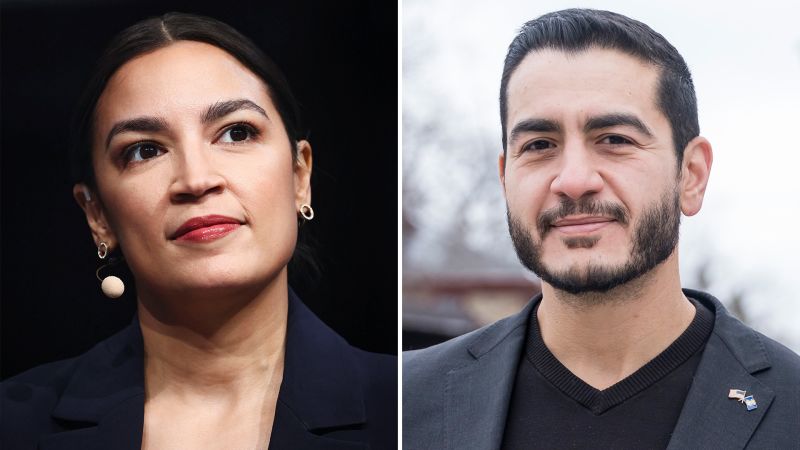
Ocasio-Cortez Endorses Abdul El-Sayed in Michigan Senate Race
Ocasio Cortez endorses Abdul El Sayed – In a pivotal move for the Democratic Party, New York Congresswoman Alexandria Ocasio-Cortez has thrown her support behind Abdul El-Sayed, the progressive Senate candidate from Michigan, in a race that could shape the outcome of the 2026 midterm elections. Her endorsement, announced on Thursday, underscores a growing alignment between Ocasio-Cortez and El-Sayed, despite earlier concerns from party leaders that his left-leaning platform might struggle to appeal to voters in a traditionally competitive state. The Michigan Senate primary, held on August 4, is one of the most closely watched contests in the current cycle, as Democrats seek to reclaim a majority in Congress and retain a seat in a state that Donald Trump carried in the 2024 presidential race.
The Endorsement and Its Implications
Ocasio-Cortez’s backing of El-Sayed marks a significant endorsement for the candidate, who has positioned himself as a voice for working-class Americans. “After watching this campaign unfold for well over a year, it has become clear that Abdul El-Sayed is the strongest candidate to keep this seat in November,” she stated in a recent statement. “He is building a winning coalition by putting forward an agenda that speaks directly to working people.” This declaration highlights El-Sayed’s focus on issues like healthcare, climate action, and economic equity, which align with Ocasio-Cortez’s own progressive priorities. However, it also signals a strategic shift within the party, as Ocasio-Cortez seeks to balance bold ideas with the practical realities of winning in a swing state.
“Congresswoman Ocasio-Cortez has changed the trajectory of American politics and inspired a generation to believe that government really can work for working people,” El-Sayed said in response to her endorsement. “She has spent her career taking on the powerful on behalf of everyday people, and she has shown all of us what courageous, smart, values-driven leadership looks like.”
Ocasio-Cortez’s decision to endorse El-Sayed comes as she continues to build momentum for a potential 2028 presidential bid. Unlike Sen. Bernie Sanders, a prominent leader of the party’s left flank, who has been more open to endorsing progressive candidates, Ocasio-Cortez has exercised caution in her primary season. Her selective approach has sparked debate within the Democratic Party, with some viewing her endorsements as a way to consolidate support for candidates who can bridge the gap between progressive ideals and mainstream appeal.
Key Players in the Michigan Senate Race
The Michigan Senate primary features three main contenders: El-Sayed, centrist Rep. Haley Stevens, and liberal state senator Mallory McMorrow. Stevens, backed by establishment Democrats and the American Israel Public Affairs Committee (AIPAC), represents a more moderate faction within the party, while McMorrow, who has received an endorsement from Sen. Elizabeth Warren, has emphasized her commitment to progressive policies. El-Sayed, however, has gained traction among grassroots activists and younger voters, particularly due to his vocal criticism of Israeli policies in the Gaza conflict.
Ocasio-Cortez previously endorsed El-Sayed during his 2018 gubernatorial campaign, which had already established his reputation as a reform-minded candidate. This time around, her support carries added weight, given the party’s current challenges in uniting its base. Meanwhile, El-Sayed has also become a lightning rod for debates over the Democratic Party’s direction, with some arguing that his bold rhetoric could energize the left but also alienate centrist voters.
Divided Stances on Israel
Support for Israel has emerged as a critical dividing line in the race, reflecting broader ideological splits within the Democratic Party. El-Sayed has called Israeli Prime Minister Benjamin Netanyahu a “war criminal” and labeled the military campaign in Gaza as a “genocide,” drawing sharp criticism from some establishment Democrats. In contrast, Stevens has aligned herself with AIPAC, advocating for a more measured approach to the conflict. This contrast is further amplified by the presence of Mallory McMorrow, who previously described the Israeli military action in Gaza as a “genocide” but has since tempered her language, emphasizing the importance of finding a “solution” over strict definitions.
“The definition of the conflict matters less than reaching a ‘solution,’” McMorrow said during a campaign event last fall, when she was pressed on the issue. Her comments have positioned her as a moderate in the race, though she has remained firm in her belief that “war crimes were committed” during the conflict.
The race’s intensity is amplified by Michigan’s unique demographic makeup, particularly its significant Arab American and Jewish communities in and around Detroit. These voter blocs have become central to the debate over foreign policy, with El-Sayed’s stance on Israel drawing both support and scrutiny. His alignment with progressive activists has bolstered his campaign, but it has also raised questions about his viability in a state where voter preferences may be more divided.
A Broader Shift in Democratic Strategy
El-Sayed’s campaign is part of a larger trend within the Democratic Party, where progressive candidates are challenging traditional establishment figures. This dynamic has played out in recent primaries, including those in New York, where El-Sayed’s allies, such as Zohran Mamdani, saw victories against more centrist candidates. However, Ocasio-Cortez has chosen to distance herself from some of these progressive wins, notably withholding her endorsement from her former chief of staff, Saikat Chakrabarti, who lost his bid for a House seat in California last month.
While progressive candidates have secured high-profile wins, some establishment Democrats have questioned whether these victories reflect a broader shift in the party’s base or are confined to liberal strongholds. House Minority Leader Hakeem Jeffries recently remarked on this, stating, “What happens in a handful of primaries, in one of the bluest cities in the country, is not in any way indicative of what needs to happen in November, where we need to reelect every single front-line member, common-sense Democrats authentically committed to making life better for the American people, opposing these extreme Republicans who have been nothing but a reckless rubber stamp for Donald Trump’s agenda.”
Despite these concerns, El-Sayed is gaining momentum, with endorsements from figures like Maryland Sen. Chris Van Hollen, who has recognized his potential to unite the party’s left and right wings. The race has also highlighted the importance of messaging in a swing state, where candidates must navigate both progressive ideals and the need for bipartisan appeal. As the August 4 primary approaches, the stakes for Democrats in Michigan have never been higher, with the outcome potentially influencing the balance of power in the Senate and the party’s ability to mobilize its base in the face of a polarized electorate.
With Ocasio-Cortez’s endorsement, El-Sayed now has a powerful ally in the race to secure the Democratic nomination. The support of high-profile figures like her is likely to bolster his campaign, especially in areas where progressive values resonate strongly. However, the challenge remains in translating this grassroots energy into a broader appeal that can carry him to victory in November. The Michigan Senate race will serve as a microcosm of the larger struggles within the Democratic Party, where progressive voices must find common ground with moderates to ensure long-term success.
