
OpenAI in talks to give Trump administration a 5% stake in the company, FT reports
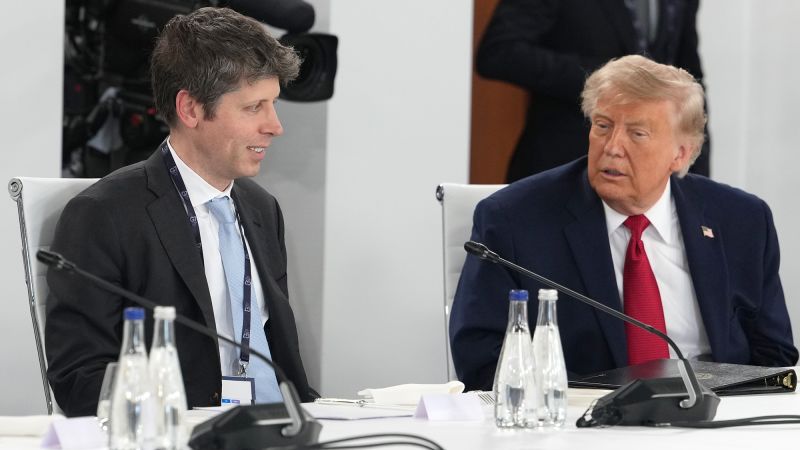
OpenAI in Talks to Grant Trump Administration a 5% Stake, FT Reports
OpenAI in talks to give Trump – According to reports from the Financial Times, OpenAI—the organization behind the groundbreaking ChatGPT platform—is currently engaging in discussions to allocate a 5% ownership stake in its company to the Trump administration. This proposal, if finalized, would mark a significant shift in the relationship between the U.S. government and artificial intelligence firms, potentially setting a precedent for broader involvement in the sector. The plan reportedly involves other major U.S. AI companies contributing similar shares to the government, as revealed in conversations with two individuals who described the developments as “early conversations.”
Government Scrutiny and Strategic Partnerships
The initiative comes amid increasing governmental oversight of AI technologies, which have sparked debates over their societal and economic impacts. The Trump administration’s interest in securing a financial stake in OpenAI aligns with its broader strategy to ensure national competitiveness in emerging technologies. OpenAI’s CEO, Sam Altman, has emphasized that such an arrangement could enable the public to share in the prosperity generated by AI advancements. However, the company has yet to provide a formal statement on the matter, leaving details uncertain.
“This would allow every citizen to have a piece of the AI-driven economic growth,” Altman explained in an interview with the Financial Times. “It’s a way to distribute the benefits of innovation more broadly.”
The potential value of the 5% stake is estimated at around $42.6 billion, based on OpenAI’s March funding round that valued the company at $852 billion. This figure underscores the magnitude of the deal, should it materialize. Advocates argue that such a move could help mitigate public concerns about AI’s disruption to industries and its implications for national security. By involving the government in AI’s economic trajectory, critics believe the initiative might address growing skepticism toward the technology’s rapid expansion.
Rival AI Firms and Regulatory Hurdles
OpenAI is not the only company facing regulatory challenges. Its competitor, Anthropic, which developed the Claude AI series, recently announced that the U.S. government had eased export controls on its most advanced models following negotiations with officials. This development highlights the ongoing efforts by AI firms to navigate government regulations while maintaining innovation. However, the White House has also taken a proactive stance, requesting that OpenAI limit the release of its upcoming GPT 5.6 model to a select group of government-approved partners due to its advanced capabilities.
Both OpenAI and Anthropic are preparing for stock market listings, which would open their financials to public scrutiny and allow investors to purchase shares. These listings could serve as a platform for the public to gain a foothold in the AI industry, a concept that has gained traction as part of broader discussions on democratizing access to technological progress. The Financial Times noted that OpenAI’s proposal draws inspiration from the Alaska Permanent Fund, a sovereign investment vehicle that channels oil revenues into dividends for residents.
“A public wealth fund could mirror the Alaska model, redirecting AI profits to benefit citizens directly,” the FT quoted an unnamed source. “This would create a shared interest in the technology’s success.”
The idea of a public stake in AI firms has been championed by Trump’s administration, which has positioned artificial intelligence as a cornerstone of American leadership in the global tech race. Last month, the president outlined plans to convene top AI executives to explore how government partnerships might allow the public to reap rewards from the industry’s growth. This approach reflects a desire to align private innovation with public interests, ensuring that the economic gains of AI are not confined to corporate shareholders.
Implications and Uncertain Path Forward
While the proposal appears promising, its implementation may require legislative action. The Financial Times highlighted that the plan is still in its early stages and depends on approval from Congress, which has shown mixed reactions to AI-related policies. Other AI companies are also being evaluated for their potential support, though it remains unclear whether they will endorse the idea. Some analysts suggest that the success of such an initiative hinges on its ability to balance innovation with accountability, ensuring that the government’s role is both beneficial and transparent.
OpenAI’s advocacy for a “public wealth fund” gained momentum in April, when it proposed a model that would grant every citizen—regardless of financial background—a stake in AI-driven economic growth. This vision aligns with Trump’s priorities, which include fostering American technological dominance. The administration’s push for government involvement in AI firms also echoes earlier actions, such as the 10% stake the U.S. government acquired in chipmaker Intel for $8.9 billion in August. Such investments are seen as a way to secure strategic advantages in critical industries.
As AI continues to reshape the economy and society, the debate over public ownership of tech companies is intensifying. The Trump administration’s interest in a 5% stake in OpenAI reflects a broader effort to integrate AI’s benefits into the public domain, potentially influencing how future innovations are managed and shared. Whether this strategy will gain traction or face opposition remains to be seen, but it signals a new era of collaboration between government and the private sector in the AI space.
Broader Impacts of AI Governance
The growing government scrutiny of AI firms is not merely about financial stakes—it also raises questions about control, transparency, and the ethical implications of large-scale automation. With AI threatening jobs in multiple sectors and altering traditional labor markets, the push for public involvement is framed as a way to ensure equitable distribution of gains. OpenAI’s proposal, if realized, could serve as a blueprint for other companies to follow, creating a more inclusive framework for technological development.
However, the success of this initiative depends on its ability to navigate complex regulatory and political landscapes. The White House has not yet responded to CNN’s request for comment on the matter, leaving questions about its commitment to the plan. Meanwhile, OpenAI’s upcoming GPT 5.6 model remains under government watch, with its release restricted to a limited number of partners. This cautious approach underscores the administration’s desire to balance innovation with oversight, ensuring that AI’s power is harnessed responsibly.
As the AI boom accelerates, the question of how to navigate the workforce and economic shifts becomes increasingly urgent. The Trump administration’s strategy to secure a stake in OpenAI is part of a larger conversation about the role of government in shaping the future of technology. While the proposal offers a potential solution to public concerns, its implementation will require careful negotiation and a commitment to long-term collaboration between policymakers and industry leaders. The outcome could have far-reaching implications for how AI is governed and who benefits from its transformative potential.
