
Tesla sales soar 25% in sign its troubles may be easing
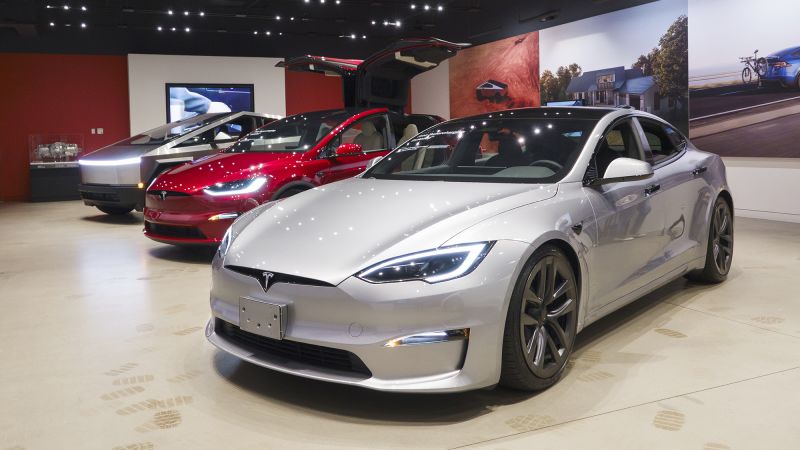
Tesla Sales Soar 25% in Europe Signals Recovery Momentum
Tesla sales soar 25 in sign – Tesla’s performance in the European market has shown promising signs of improvement, with global sales rising by 25% in the second quarter of 2026. This uptick, particularly in Europe, suggests that the company may be overcoming challenges that had plagued it in recent years. Deliveries during the three months ending June 30 totaled over 480,000 units, surpassing the 384,000 recorded in the same period of 2025. While Tesla does not provide regional breakdowns, industry data indicates that Europe played a pivotal role in this growth.
A European Comeback Driven by Market Shifts
The European Automobile Manufacturers’ Association (ACEA) reported a 77% surge in Tesla sales during the first five months of 2026, highlighting the region’s strong performance. Analysts attribute this recovery to a combination of factors, including rising fuel costs, government incentives for electric vehicles, and a decline in public discontent toward Elon Musk’s political stances. The latter, which had been a notable issue in Europe, appears to be diminishing as consumers gradually recalibrate their views.
Earlier in 2025, Tesla’s European sales had dropped by 38%, partly due to Musk’s support for far-right candidates in Germany and Britain. His involvement in Donald Trump’s administration, especially efforts to reduce federal workforce numbers, further fueled skepticism among European buyers. However, the latest figures suggest a reversal of this trend, with the market showing renewed confidence in Tesla’s offerings.
“Europe is bouncing back after a year of anti-Musk sentiment,” said Dan Ives, global head of technology research at Wedbush Securities, in an emailed statement to CNN. “The region’s enthusiasm for electric vehicles has rebounded, and Tesla is once again a key player in this growth.” Ives’ analysis underscores the positive shift in consumer perception, which has allowed Tesla to regain traction in one of its most competitive markets.
Global Performance Exceeds Expectations
Tesla’s Q2 results not only reflect robust growth in Europe but also exceeded analysts’ forecasts. Deutsche Bank had predicted deliveries of 416,000 units for the quarter, emphasizing that international markets, particularly Europe, were driving the company’s recovery. This success comes amid broader challenges, including the removal of U.S. EV tax credits, which had previously boosted demand for Tesla vehicles in America.
The company’s ability to sustain growth despite these hurdles indicates a more stable foundation. Seth Goldstein, a senior equity analyst at Morningstar, noted that Tesla’s increased market share in Europe is a critical factor. He pointed to the affordability of electric vehicles compared to traditional combustion engines, along with the expansion of fast-charging networks across major highways and urban areas. “Europe is becoming a more attractive market for electric vehicles as the infrastructure improves and prices become more competitive,” Goldstein explained in a recent analysis.
Yet, Tesla’s recovery in Europe is not without obstacles. Chinese electric vehicle manufacturers, such as BYD, continue to pose stiff competition. Last year, BYD overtook Tesla as the world’s largest EV maker, and its European sales have grown by 159% in the January-to-May period. This growth has narrowed the gap between BYD and Tesla, with BYD now holding a 12% lead in the region. However, Tesla’s resurgence in Europe could position it to reclaim some ground in the coming months.
Expanding Beyond Electric Vehicles
While Tesla’s focus remains on electric vehicles, the company is actively diversifying its ambitions. Musk’s vision extends to autonomous driving and artificial intelligence, with recent initiatives targeting these sectors. Last summer, Tesla launched its robotaxi service in select markets, utilizing vehicles equipped with full self-driving (FSD) technology. This venture aims to revolutionize urban mobility by offering fully automated ride-hailing options.
Despite these forward-looking strategies, progress has been slower than anticipated. The robotaxi rollout has faced delays, and the company’s humanoid robot project remains in development. However, Tesla’s decision to discontinue production of its high-end Model S and Model X vehicles has freed up factory capacity, allowing it to prioritize other innovations. This strategic shift underscores the company’s commitment to scaling its autonomous and AI-driven initiatives.
Analysts suggest that Tesla’s European success may serve as a blueprint for its global expansion. With the continent’s demand for EVs growing steadily, the company’s ability to adapt to local preferences and policies could help it regain its former dominance. While the U.S. market still presents challenges, Europe’s improved sentiment offers a promising counterbalance. “The European market is a critical test for Tesla’s long-term strategy,” Goldstein added. “If it can maintain this momentum, the company may begin to see consistent growth across all regions.”
Looking ahead, Tesla faces the dual challenge of maintaining its European momentum while competing with Chinese rivals. The rapid rise of BYD in the region highlights the need for continued innovation and marketing. However, the company’s recent performance suggests that it is on the right track. By addressing consumer concerns and leveraging Europe’s evolving market conditions, Tesla may be able to stabilize its position and even reclaim its global leadership.
Implications for the EV Industry
Tesla’s European recovery has broader implications for the entire electric vehicle industry. As more consumers adopt EVs, the market becomes increasingly competitive. The success of Tesla’s strategy in Europe could influence other automakers to invest heavily in similar initiatives. Conversely, it also underscores the risks of political missteps, as seen in the company’s earlier struggles.
For now, the positive numbers in Europe signal that Tesla’s challenges are beginning to ease. While the path to full recovery remains uncertain, the company’s ability to adapt and innovate offers hope. The next few quarters will be crucial in determining whether this growth is sustainable or merely a temporary rebound. As Musk’s ambitions expand beyond EVs, the company’s focus on autonomous technology and AI could provide new avenues for success, even as it navigates a rapidly changing market landscape.
With Europe acting as a key driver of Tesla’s global recovery, the company’s next steps will likely shape its future trajectory. The combination of economic factors, policy support, and shifting consumer attitudes has created a favorable environment for Tesla to rebuild its market presence. As the EV industry continues to evolve, Tesla’s ability to balance innovation with customer satisfaction will be vital in sustaining this growth. The road ahead is challenging, but the early signs are encouraging.
