
How the new World Cup ball helped knock Croatia out with use of technology
How the New World Cup Ball Helped Knock Croatia Out with the Aid of Technology
How the new World Cup ball – The VAR decision in the Croatia-Portugal clash has sparked intense debate as one of the most pivotal moments in World Cup history. Whatever the terminology, the call left Croatia devastated and Portugal elated, marking a defining moment in the tournament. At the core of this controversial outcome was the new World Cup ball, the Trionda, which incorporated advanced technology to revolutionize offside decisions. Let’s delve into the specifics of the match, the technology that reshaped the call, and the reactions from those involved.
The Dramatic Match in Question
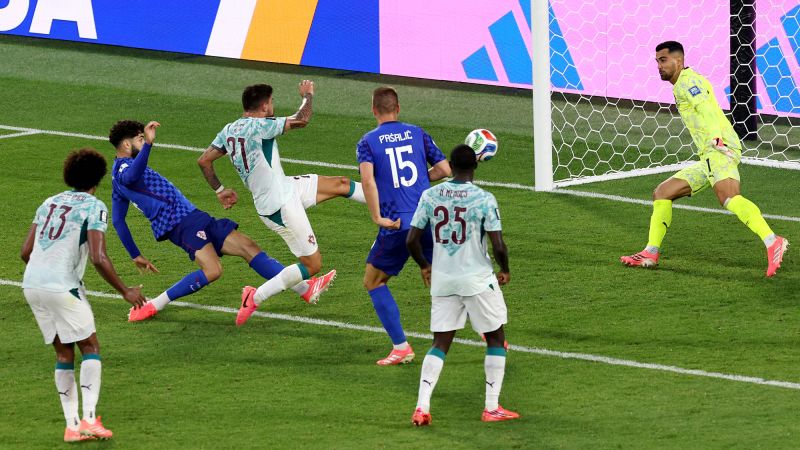
The game between Croatia and Portugal took place in the Round of 32, with both teams vying for a spot in the Round of 16. Portugal emerged victorious after a last-minute goal by Gonçalo Ramos sealed a 2-1 win. The decisive moment came in the 103rd minute, when the Croatian team believed they had equalized. Joško Gvardiol, the defender, appeared to bundle the ball into the net, igniting joy among Croatian players and fans. However, the celebration was short-lived as the video assistant referee (VAR) intervened, reviewing the play for potential offside violations.
The incident unfolded after a cross from the flank reached Mario Pašalić, who was positioned onside. Yet, as the ball traveled toward him, it made a minuscule contact with Igor Matanović’s head. This slight brush, almost imperceptible to the human eye, altered Pašalić’s position, leading to the offside ruling. The Croatian players were stunned, with manager Zlatko Dalić expressing frustration that the decision “killed the emotions” and disrupted the flow of the game.
The Technology at the Heart of the Decision
FIFA’s decision to implement the Trionda ball in this year’s World Cup has been a topic of discussion. The ball features embedded sensors capable of detecting even the smallest interactions, sending real-time data to VAR officials. This innovation allows referees to analyze plays with unprecedented precision, particularly in determining whether a player was in an offside position. The system, known as the “heartbeat graphic,” visually highlights the ball’s movement, making subtle touches visible to both officials and viewers.
Previously, such minor contact might have gone unnoticed, resulting in goals being awarded despite offside. This time, the technology proved decisive. According to FIFA, the data confirmed Matanović’s touch, enabling the correct offside call. The governing body hailed the Trionda ball as a triumph, noting that the sensor’s accuracy has addressed longstanding criticisms about its unpredictable speed. However, the decision also reignited debates about the role of technology in preserving the soul of football.
FIFA’s Response and the Offside Controversy
FIFA swiftly issued a statement following the incident, emphasizing that the sensor data provided “proven” evidence of Matanović’s contact. The organization argued that the technology allowed officials to make decisions with greater confidence, ensuring fairness in high-stakes moments. This explanation was met with mixed reactions. While some praised the innovation, others, including Croatian fans, questioned whether the ruling was too technical, stripping the game of its spontaneity.
The offside rule, which dictates that a player must be in an advanced position when receiving the ball, became the focal point of the controversy. In this case, the ball’s movement off Matanović’s head was the key factor. The play had initially appeared fair, but the sensor’s detection of the contact transformed the outcome. Portugal’s manager Roberto Martínez, on the other hand, welcomed the technology, stating that the decision was “very clear” and attributed to the ball’s new capabilities.
The Broader Implications of the Innovation
The Trionda ball’s use in this match has positioned it as a game-changer. Its sensors, which measure every touch, represent a significant leap from traditional methods. This technology mirrors systems used in cricket for ball-tracking but marks a new era for soccer. The ability to freeze moments and analyze them frame-by-frame has shifted the balance of decision-making toward data-driven accuracy. However, critics argue that the reliance on such tools may overshadow the human element of the game.
The decision also drew attention to the NBA’s plans to test a similar sensor-equipped ball in its summer leagues. This cross-sport adoption suggests that technology is becoming a universal tool for officiating. Yet, for football purists, the incident highlighted the tension between technological precision and the emotional essence of the game. Croatia’s fans, who had celebrated the goal only to see it overturned, took to the pitch in protest, throwing bottles to delay the restart. The drama underscored the growing influence of VAR and the Trionda ball in shaping match outcomes.
Emotional Fallout and Managerial Reactions
For Croatia, the result was a bitter defeat, with manager Zlatko Dalić lamenting the “ruin of the game’s spirit.” He criticized the overreliance on VAR, arguing that it had transformed the match into a technical exercise. “It kills the emotions. It kills everything within you,” he said in a
quote from TNT Sports. “It’s not easy to deal with all of this. Football should be fair, and the decisions should be such, but we’ve gone too far about VAR.”
Portugal’s Martínez, by contrast, praised the technology’s role in maintaining fairness. “The message is very clear,” he stated after the game. “The balls now have a chip, and it’s very clear that’s why the VAR intervened. It’s not a subjective opinion.” His confidence in the system reflects a broader trend in football towards embracing innovation. While the Trionda ball’s role in this particular decision may be contentious, its impact on officiating is undeniable. The technology has provided a new layer of scrutiny, ensuring that even the smallest touches are not overlooked.
As the World Cup progresses, the Trionda ball will likely remain a point of discussion. Its ability to detect subtle contact has already influenced one of the tournament’s most memorable moments. For Croatia, the decision was a costly one, but for FIFA, it’s a victory for the new era of officiating. The debate over technology’s role in football will continue, but one thing is certain: the Trionda ball has changed the way the game is played and watched. Whether this marks a step forward or a departure from tradition remains a question for fans and officials alike.
Despite the correct call, the incident has left a lasting impression. The heartbeat graphic, which visualizes the ball’s motion, became a symbol of technological intervention. While some may argue that the decision was necessary for fairness, others see it as an overreach that dampens the spontaneity of football. As the tournament moves on, the Trionda ball’s role in this pivotal moment will linger, proving that even the smallest advancements can have the biggest impacts.
