
Tricorn hats or Trump rally? Americans have July Fourth options
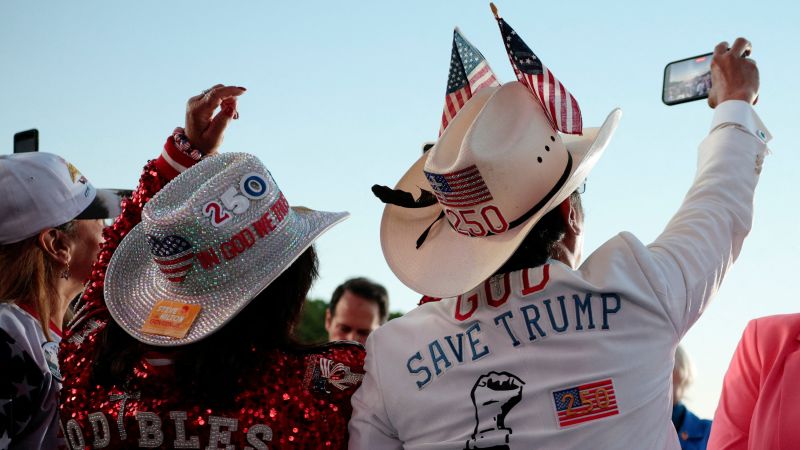
July 4th Celebrations: A Nation’s Divided Commemoration
Tricorn hats or Trump rally Americans – As the United States marks a significant centenary milestone with the 250th anniversary of the Declaration of Independence, the country finds itself at a crossroads. This historical document, which laid the groundwork for Western democratic ideals, is now being reimagined through the lens of a new era. While the National Mall in Washington, D.C., is set to host a grand display of fireworks, the event has taken on a distinct character under the leadership of Donald Trump. The festivities, organized by a Trump-aligned group, are not merely about celebration but also about political rebranding, as the former president aims to shift the focus of America’s birthday party toward his own vision of national pride.
The Trump Era’s Takeover
Traditionally, July Fourth has been a time for unity, with citizens gathering to honor the nation’s founding principles. However, this year’s celebrations appear to be a different story. Trump has transformed the National Mall into a platform for his political messaging, advertising the fireworks display as “the most spectacular TRUMP RALLY of them all, a ‘TRIBUTE TO AMERICA.’” This approach contrasts sharply with the more inclusive tone of past events, where music and culture took center stage. Instead of mainstream performers, the rally will feature military bands under Trump’s command and a curated playlist that includes his favorite song, “YMCA” by the Village People. The choice of this anthem, which has become synonymous with his campaign, signals a deliberate effort to align the festivities with his personal brand.
“THE LARGEST FIREWORKS SHOW IN HISTORY,” Trump proclaimed in a social media post, emphasizing his belief that this event would surpass all previous celebrations in scale and impact.
Yet, the question remains: will the public respond with the same enthusiasm as in 1976, when the bicentennial sparked widespread excitement? That year, the National Mall became a focal point for millions, with reports indicating that up to 1 million people gathered on or near the site. The event was marred by traffic jams that stretched into the early hours of the following day, a result of the massive crowds. However, the political tone of the celebration was more subdued, with events like a speech outside Independence Hall in Philadelphia drawing another million attendees, according to a New York Times report.
Controversies and Logistical Challenges
Despite the grand ambitions, the current festivities face several hurdles. The organization, Freedom 250, has taken over the planning from the bipartisan group America 250, which Congress established a decade ago. While America 250 continues to coordinate events nationwide, including a grassroots initiative called “America’s Block Party,” Trump’s version of the celebrations has sparked debate. The group, which operates as a public-private entity, has been criticized for its partisan undertones, particularly after its decision to host a UFC fight night on the White House lawn during the president’s birthday. This event, described as a “gladiatorial” commemoration of democratic governance, highlighted the growing divide between the nation’s ideals and its current political landscape.
Logistical issues have also plagued the event. Freedom 250’s Great American State Fair, a monthlong festival on the National Mall, has struggled with inconsistent attendance and challenges in managing large crowds. Even the symbolic representation of the nation’s unity has been called into question, with at least one appearance of a Confederate flag during the celebrations. This has raised concerns about how the event reflects the country’s broader divisions. Additionally, the cost of the festivities remains a point of contention, as the group has not yet disclosed the total expenditure, despite its goal to set a Guinness World Record for the largest fireworks display.
A Fractured National Celebration
As the country reflects on its founding, the July Fourth celebrations have become a microcosm of the political fractures that define modern America. The Declaration of Independence, originally a list of grievances against British rule, is now being reinterpreted by Trump as a justification for his leadership. His approval rating, hovering in the 30s, suggests that while half of voters may not have supported his rival, there is still a segment of the population that views him as a symbol of national strength. This sentiment is evident in the rally’s emphasis on American ideals, even as the event serves as a stage for political messaging.
The comparison to the 1976 bicentennial is striking. At that time, the nation was recovering from the Watergate scandal and the Vietnam War, yet the celebrations managed to unite people in a shared sense of pride. Today, with the country divided over issues such as the role of the Constitution and the interpretation of fundamental rights, the fireworks display may not achieve the same level of collective enthusiasm. The Supreme Court’s recent debate over whether the Constitution protects birthright citizenship underscores the ongoing ideological battles that have overshadowed the traditional spirit of the holiday.
One notable difference between the past and present is the involvement of the National Guard. While the 1976 events saw a more relaxed atmosphere, this year’s festivities are being closely monitored by the military, which reflects the heightened political stakes. The National Guard’s presence is a reminder that the July Fourth celebrations are no longer just about historical reflection but also about ensuring that the event aligns with the current administration’s priorities.
Even the public broadcaster PBS has been affected by Trump’s rebranding efforts. Last year, the network faced funding cuts from the Trump administration and Republicans, which has led to a change in the way events are covered. This year, PBS will not be airing the National Mall fireworks show, a departure from decades of tradition. The decision highlights the growing influence of political ideology on the media landscape and the potential for the July Fourth celebrations to become a tool for partisan messaging rather than a unifying national event.
As Americans prepare to commemorate their nation’s founding, the events on the National Mall serve as a reminder of the evolving nature of patriotism. While the Declaration of Independence once stood as a universal symbol of freedom, it now faces scrutiny from a new generation of citizens who question its relevance in today’s political climate. Whether the July Fourth festivities will succeed in capturing the spirit of the past or become another chapter in the nation’s divided history remains to be seen. What is certain, however, is that the celebration has taken on a new dimension—one that is as much about political branding as it is about historical reflection.
