
Putin and Trump held ‘businesslike’ 90-minute July 4 call, Moscow says
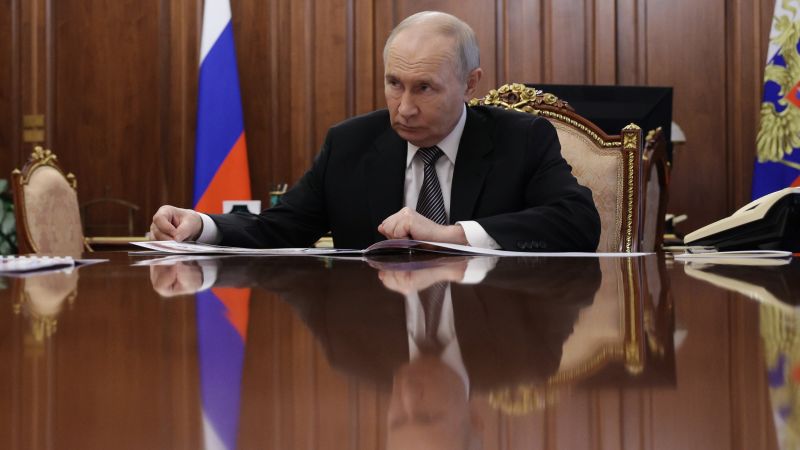
Putin and Trump Hold Strategic July 4 Call
Putin and Trump held businesslike 90 minute – Russian President Vladimir Putin engaged in a 90-minute phone conversation with U.S. President Donald Trump on July 4, during which Trump reiterated his willingness to assist in resolving the Ukraine conflict, as confirmed by Russia’s foreign ministry. The dialogue took place on the eve of a significant NATO summit in Turkey, scheduled to commence Tuesday, and coincided with intensified Russian military operations in Ukraine’s eastern Donetsk region. Moscow emphasized that the meeting was a crucial opportunity to address the ongoing war, with the U.S. leader expressing his commitment to facilitating a swift end to hostilities.
Geopolitical Tensions Intensify
As the NATO summit approaches, tensions between Russia and Ukraine have escalated, with Moscow seeking to expand its control over Donbas. The region, a strategic focal point for the Kremlin, has seen increased Russian troop movements and attacks. Meanwhile, Ukrainian forces have maintained their assault on critical Russian infrastructure, including energy systems, in a bid to disrupt supply lines and weaken the enemy’s logistical capabilities.
“The Russian side once again emphasized the preference for a political and diplomatic resolution to the conflict,” said the Ministry of Foreign Affairs, highlighting Moscow’s stance that Kyiv and its European allies are prolonging the war. “Our president has outlined the reality of the situation on the battlefield, where the Russian Armed Forces are advancing confidently,” the ministry added, underscoring the perceived progress of Russian military operations.
Ukraine’s Response to the Call
Ukrainian President Volodymyr Zelensky described his Saturday conversation with Trump as “very good,” expressing optimism about the potential for a resolution. “There is a real prospect to put an end to this war, and America’s resolve is decisive,” Zelensky stated, signaling confidence in U.S. support. The call followed the U.S. announcement last month of its plan to “rightsize its contributions to the NATO force model,” aiming to reduce overreliance on American military assets within the alliance.
Donbas as the Key Objective
The Kremlin has long maintained that the conflict will only conclude when Russia fully controls the Donbas region, a claim central to its strategic ambitions. This weekend, Moscow claimed to have captured the town of Kostyantynivka in Donetsk, calling it an “important milestone.” However, the Ukrainian military disputed this assertion, noting that small Russian units had infiltrated the area but counter-sabotage efforts were already underway. “Ukrainian defenders continue to hold their positions along designated lines,” the military reported, challenging the narrative of a Russian victory.
“It is just another Russian lie, an attempt to generate some kind of a news story,” Zelensky remarked, dismissing the claim as “disinformation designed to create the illusion of success.” The U.S. leader’s offer to aid in ending the war was framed as a fresh opportunity to negotiate, despite ongoing battlefield dynamics that have seen Ukrainian forces reclaim some southern territory in recent weeks.
Shifting Battlefield Dynamics
Recent months have witnessed a reversal in the conflict’s momentum, with Ukrainian troops making gains in the south and Russian advances slowing due to heavy casualties. Analysts note that Moscow’s exaggerated reports of battlefield success, such as the purported capture of Kostyantynivka, serve to bolster its narrative of a inevitable Russian triumph. The Institute for the Study of War (ISW) highlighted that these claims are part of a broader effort to depict Ukrainian frontlines as collapsing, despite evidence of resilience.
Infrastructure Strikes as a New Front
Ukrainian forces have intensified their attacks on Russian energy and military infrastructure, targeting oil refineries, ports, and production facilities. This strategy has seen drones strike critical locations, including an oil terminal in St. Petersburg, which Zelensky labeled as a source of revenue for Russia’s war efforts. Over the past month, eight Russian oil refineries have been hit, resulting in the destruction or severe damage of more than 60 storage tanks. These strikes aim to cripple Russia’s war economy and divert resources from the front lines.
Crimea Under Threat
In addition to mainland Ukraine, the Ukrainian military has also targeted facilities in Crimea, the region seized by Russia in 2014. Recent satellite imagery shared by the ISW reveals a marked decline in nighttime electric light activity across Crimea compared to a year ago, suggesting diminished industrial output and energy consumption. “Ukrainian drones have also targeted fuel and power facilities in Crimea,” the military noted, emphasizing that these actions are part of a coordinated effort to undermine Russian strategic advantages.
Broader Implications for the NATO Summit
The upcoming NATO summit in Turkey will serve as a critical stage for discussing the war’s trajectory. With Trump set to attend, the meeting is expected to address how the alliance can balance its commitments and support Ukraine’s defense. The Russian Ministry of Foreign Affairs highlighted that the July 4 call reinforced the idea that diplomacy remains the preferred path, even as military actions continue to shape the conflict’s outcome. The summit will also consider the U.S. plan to adjust its contributions, reflecting a broader realignment of NATO’s resources and priorities.
Global Context and Strategic Messaging
As the war enters its second year, both sides are using diplomatic engagements to influence international opinion. Putin’s call to Trump was framed as a reaffirmation of Russia’s goals, with the U.S. leader’s offers of assistance seen as a potential bargaining chip. The 250th anniversary of the U.S. declaration of independence provided a symbolic backdrop for the conversation, with Putin extending personal congratulations to Trump and the American people. This gesture, while diplomatic, underscored the strategic importance of aligning with Western leaders to secure global support.
Opposition to Russian Claims
Ukrainian officials have criticized Moscow’s assertions of territorial gains, arguing that they rely on selective reporting and tactical misinformation. The capture of Kostyantynivka, for instance, has been questioned, with fighters in the area posting videos to challenge the claim. “It is just another Russian lie,” one unit stated, asserting that the town remains under Ukrainian control. Such defiance highlights the ongoing struggle between narratives of progress and reality on the ground, as the war’s outcome hinges on both military outcomes and diplomatic maneuvering.
The conflict’s evolution has prompted a reevaluation of NATO’s role in the region, with the alliance now balancing direct military support against Ukraine with the need to manage its own strategic commitments. As the July 4 call marked a renewed effort to bridge differences, the coming weeks will test whether diplomacy can mitigate the war’s toll or if the battle for Donbas will continue to define the conflict’s course. With infrastructure strikes and territorial gains shaping the battlefield, the interplay between military action and political negotiations remains central to the war’s resolution.
