
The Nashville Zoo has become an unlikely battleground in America’s data center race
Nashville Zoo Becomes Data Center Battlefront
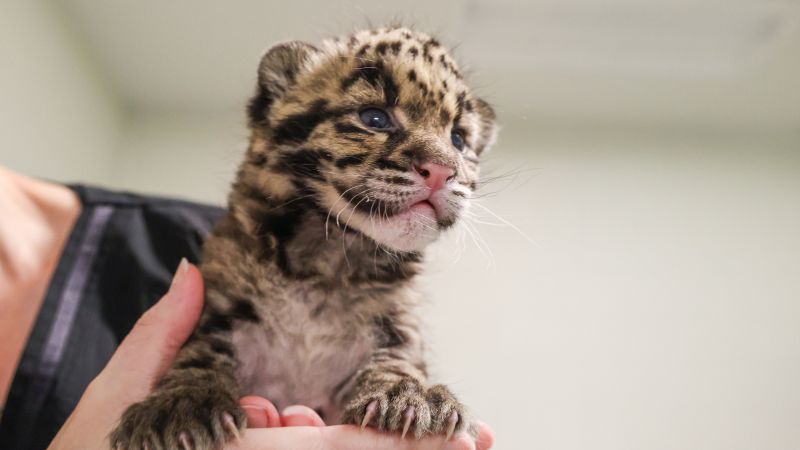
The Nashville Zoo has become an unlikely – The Nashville Zoo has become a focal point in America’s expanding data center landscape, where conservation efforts now intersect with industrial development. At dawn, Dr. Heather Schwartz prepares a feeding bottle for a clouded leopard cub, small enough to fit in her hands. The cub, eager and restless, waits for nourishment from the zoo’s animal health director. As the young animal latches on and begins to nurse, its tiny paws flap in the air with each bite. This routine, part of a broader initiative to ensure the species’ survival, has made the zoo a unique hub for clouded leopard breeding in the U.S. Yet, this commitment to wildlife is now challenged by a proposed data center adjacent to its grounds. Officials fear the industrial project could introduce persistent noise, light, and activity that might disrupt the animals’ delicate habitat.
The Clash of Interests
The Nashville Zoo, the only U.S. institution to successfully breed clouded leopards in the past breeding season, is raising alarms about the new data center’s proximity. Situated just beyond the zoo’s perimeter, the facility is designed to support the demands of cloud computing and AI technologies. For the zoo’s leadership, however, the project represents a critical threat. CEO Rick Schwartz stressed that the situation is unprecedented, noting no other accredited zoo has publicly opposed a data center development immediately outside its borders. The zoo’s argument centers on the belief that industrial-scale data centers, even with mitigation efforts, could harm sensitive wildlife in unforeseen ways.
Among the zoo’s most vulnerable residents are the clouded leopards, which have thrived under its hand-rearing program. Dr. Schwartz explained that this method prevents parental neglect and reduces stress on cubs by gradually introducing them to human presence. This bond also fosters harmonious relationships between animals and keepers, enhancing breeding success. But the data center’s constant hum and vibrations could disrupt these interactions, potentially undermining future reproduction efforts. The zoo is concerned that the adjacent facility might compromise the conditions essential for raising these cubs in a stress-free environment.
A National Environmental Debate
The conflict at the Nashville Zoo is part of a growing national dialogue about the environmental impact of data centers. With over 4,000 such facilities across the U.S., communities are increasingly questioning their effects on local ecosystems. These concerns include electricity consumption, water usage, noise, and light pollution. Costa Samaras, director of the Carnegie Mellon University Scott Institute for Energy Innovation, noted that the zoo’s case exemplifies a broader trend: communities challenging industrial expansion for technological progress. He emphasized the need to balance innovation with environmental preservation, as the demand for cloud computing and AI accelerates.
“This highlights the growing interactions between data centers and concerned communities,” Samaras said. The zoo’s petition has gained over 500,000 signatures in just four weeks, drawing public figures like country music artist Brad Paisley, who described the project as “an absolute nightmare.” Their support underscores public unease about technology encroaching on natural habitats. Heather Kostick, associate director of the Penn Center for Science, Sustainability, and the Media, added that data centers emit low-frequency hum, which animals like elephants and cassowaries can detect. These vibrations, crucial for communication, could be disrupted by the nearby facility, complicating the zoo’s efforts to maintain natural-feeling environments.
Despite these concerns, DC BLOX, the Atlanta-based company behind the data center, insists its modern design will address the zoo’s worries. The company plans to implement noise-dampening technology and strategically position the facility to minimize interference with animal exhibits. Yet, the zoo’s leadership remains skeptical, arguing that no data center should be built adjacent to its operations without thorough evaluation of long-term effects. Schwartz pointed out that the clouded leopard exhibit, being the closest to the proposed site, would suffer disproportionately from noise and light pollution, which could jeopardize the breeding program’s success. The zoo is now pushing for a comprehensive study to assess the risks before proceeding.
