
America has been deeply divided before. Here’s why today’s divisions are different
America Has Been Deeply Divided Before. Here’s Why Today’s Divisions Are Different
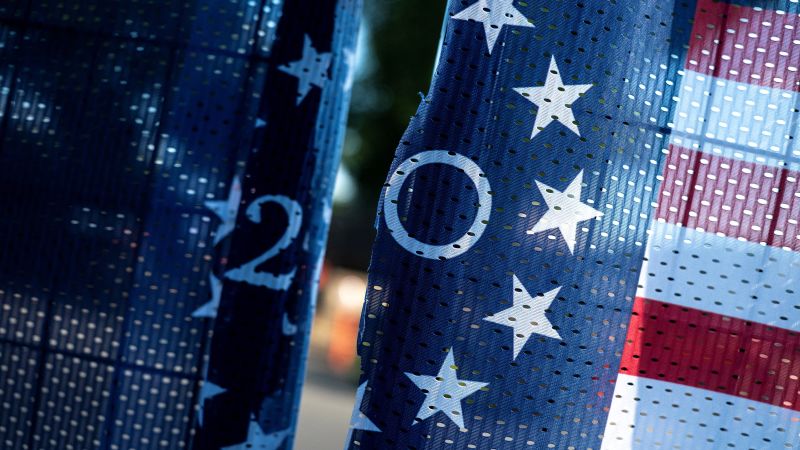
America has been deeply divided before – As the United States approaches its 250th anniversary, the nation’s fractures are becoming increasingly visible. While partisan and regional splits have always existed, the current level of discord has reached a new intensity, surpassing even the Civil War era in some respects. The growing rift between the red and blue political factions is no longer confined to the halls of Congress or the media; it is now a pervasive force shaping nearly every facet of American society. This deepening divide has been fueled by the contentious leadership of Donald Trump, whose presidency has consistently challenged traditional norms and heightened the nation’s ideological battles. Even the commemoration of this historical milestone has become a battleground, with the country splintering into opposing camps.
Quantifying national conflict is a complex task, but several indicators suggest the United States is experiencing a period of extreme polarization. These include the divergent policy stances across states, Trump’s frequent clashes with Democratic figures, the erosion of bipartisan collaboration in Congress, and the rise in political violence. Historically, the nation has weathered moments of intense disagreement, yet the current situation feels more volatile. Unlike past eras, where tensions were often temporary or could be resolved through compromise, today’s divisions seem more entrenched, with a unique combination of factors contributing to their persistence.
Trump’s Polarizing Influence
Donald Trump’s tenure as president has been a catalyst for unprecedented division. His unapologetic approach to governance, often described as norm-defying, has deepened the ideological chasm between the political left and right. The president’s rhetoric and actions have not only amplified existing differences but also introduced new dimensions to the conflict, such as the weaponization of social media and the politicization of everyday life. His leadership has created a climate where opposing viewpoints are not just debated but actively dismissed, leading to a sense of alienation among many citizens.
“What’s different this time is that not only are there fundamental divisions, but divisions that are being driven deliberately by the nation’s leader,” said Donald Kettl, former dean of the University of Maryland School of Public Policy.
Historians note that while past leaders may have exacerbated tensions, Trump’s role is distinct in its intentional focus on inflaming differences. His presidency has acted as a magnifying glass, bringing to light and expanding the nation’s internal conflicts. This has resulted in a situation where even the act of celebrating national unity, such as the July 4th commemorations, has become a source of contention. The current era is marked by a willingness to accept extreme polarization as a normal part of governance.
Historical Echoes of Division
Throughout history, the United States has encountered eras marked by heightened friction, yet none have matched the current scale of division. One notable period was the aftermath of the War of 1812, when the nation briefly experienced what contemporaries dubbed “the era of good feelings.” This period of relative unity, however, was short-lived, as regional and ideological differences resurfaced. The Democratic-Republican Party, which had dominated politics, began to fracture, paving the way for the eventual emergence of new parties and the intensification of partisan conflict.
Another pivotal moment occurred in the early 1800s, when the Federalist Party and the Democratic-Republican Party clashed over critical issues. The Federalists, based in the Northeast and aligned with England, faced off against the Democratic-Republicans, led by Thomas Jefferson and James Madison, who favored France. These ideological battles were fierce, yet they ultimately gave way to a more stable political landscape. In contrast, the current divisions seem more intractable, with the political system struggling to find common ground.
The Civil War as a Benchmark
The Civil War remains the most harrowing example of national division in American history. Between the 1840s and 1850s, the country endured a series of crises that progressively unraveled the unity between the North and South. These tensions were rooted in the conflict over slavery, which not only divided the nation but also fractured religious denominations and realigned political parties. The Southern Baptist Convention, for instance, was formed during this period as a response to the growing ideological split.
The emergence of the Republican Party as the voice of Northern Protestants against slavery’s expansion further intensified the divide. This new party became a symbol of the North’s resistance to Southern interests, setting the stage for the bloodshed of the Civil War. Even after the war, the nation remained in a state of prolonged struggle, with the federal government and Southern Whites engaging in a campaign of systemic violence to suppress the rights of newly freed African Americans. This conflict persisted until the North’s commitment to Reconstruction wavered, allowing Jim Crow segregation to take hold in the South.
“It was supposed to be a moment of reconciliation between North and South, but it was not a very just peace,” said Manisha Sinha, author of “The Rise and Fall of the Second American Republic.” “The celebration took place on the backs of Black people in the South who would steadily lose their rights… not to mention experience terrible racist violence.”
Historians often cite the Civil War as the peak of internal conflict, yet the current situation presents new challenges. Unlike the 19th century, where the nation eventually found ways to manage its differences, today’s divisions are more complex, involving not only regional and racial tensions but also economic disparities and cultural divides. The role of social media, for instance, has transformed how these conflicts are communicated and amplified, making them more immediate and pervasive.
While the United States has faced periods of significant discord in the past, the current era is characterized by its uniqueness. The combination of a leader who actively stokes division, the rapid spread of information, and the deepening of societal rifts has created a situation where unity feels increasingly out of reach. As the nation marks its 250th anniversary, the question remains: will it find a way to bridge its differences, or is it entering a new chapter of enduring conflict?
