
How the Supreme Court has changed on transgender rights since 2020
How the Supreme Court has changed on transgender rights since 2020
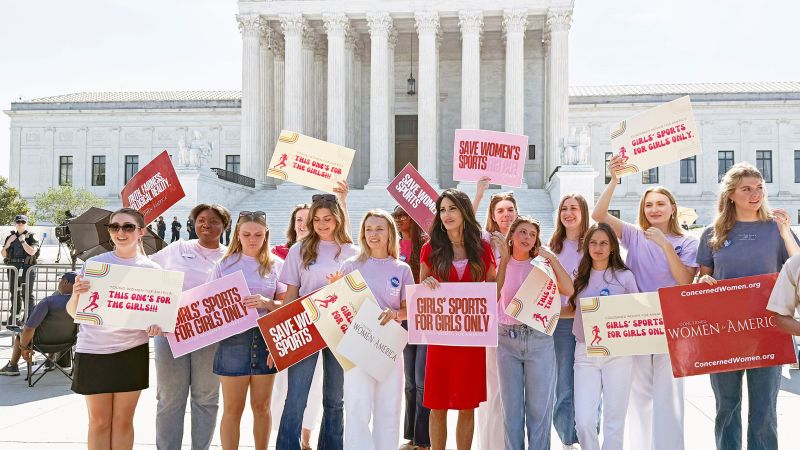
How the Supreme Court has changed – Recent developments in the Supreme Court’s jurisprudence reveal a shifting landscape for transgender rights, with rulings that have increasingly aligned to limit protections for trans individuals. Last Tuesday, the Court’s 6-3 decision to uphold state laws banning trans women from competing in female sports teams exemplifies this trend, echoing broader efforts to reshape legal frameworks around gender identity since the 2020 Bostock ruling. While the 2020 case marked a significant victory for trans rights, subsequent decisions have shown a growing emphasis on conservative interpretations of gender and equality, reshaping the trajectory of LGBTQ+ protections in the United States.
From Legal Breakthrough to Polarization
In 2020, the Court’s landmark ruling in Bostock v. Clayton County expanded the scope of Title VII of the Civil Rights Act, a cornerstone of federal anti-discrimination law. Justice Neil Gorsuch, who joined the majority in that case, used a textualist approach to argue that the law’s prohibition on discrimination “because of … sex” inherently included transgender individuals. The decision, which was authored by Gorsuch and supported by conservative Justice John Roberts and the four liberal justices, overturned decades of precedent and affirmed that transgender employees are entitled to workplace protections. However, this progress has since faced resistance, with the Court’s composition evolving and political dynamics reinforcing a more conservative stance on gender issues.
The Bostock ruling was notable not only for its legal impact but also for its unexpected origins. Gorsuch, Trump’s first appointee to the Court, was a surprise choice for the opinion, which had initially seemed to favor a liberal interpretation of the law. The decision’s alignment with progressive values, such as protecting transgender workers from discrimination, contrasted with the broader trajectory of the Court’s recent actions. Despite the initial optimism, the ruling has not translated into a sweeping revolution for trans rights, as subsequent decisions have highlighted the Court’s growing division on the issue.
Reinforcing Anti-Trans Policies
Since Bostock, the Court has continued to support policies that restrict transgender rights in various domains. The recent 6-3 decision to uphold state laws preventing trans women from participating in female sports teams reflects this pattern. Justice Brett Kavanaugh, writing for the majority, emphasized concerns about fairness and safety, citing the physical advantages of biological males in athletic competition. His argument echoed broader sentiments among conservative justices, who have framed trans inclusion as a threat to traditional gender roles and sporting equity.
Similarly, the Court has permitted states to restrict medical care for transgender youth, allowing them to deny gender-affirming treatments. In another case, the administration’s policy requiring U.S. passports to reflect an individual’s biological sex was upheld, despite arguments that it violated the rights of trans individuals. These rulings have created a legal environment where transgender people are often positioned as targets for scrutiny and exclusion, even as they represent a small portion of the population—approximately 1%—according to recent demographic studies.
The political landscape has also played a role in shaping these outcomes. President Donald Trump’s 2024 campaign explicitly targeted transgender and LGBTQ+ communities, with Republican backers promoting a message that contrasted his support for traditional gender roles with Kamala Harris’s perceived liberal views. A campaign ad denounced Harris for advocating “they/them” pronouns, concluding with the phrase, “President Trump is for you.” This rhetoric has contributed to the rise of state-level anti-trans legislation, with 27 states enacting laws that prohibit transgender women from competing in women’s sports over the past six years.
“Law is being used to scapegoat transgender people,” said Suzanne Goldberg, a Columbia University law professor who has studied LGBTQ+ rights for over two decades. “We can see it in restrictions that cordon off transgender people from almost every area of civic life, in schools, in getting a passport, from serving in the military, in getting healthcare.”
The Court’s ideological shift has been partly driven by the replacement of Justice Ruth Bader Ginsburg, a key liberal voice, with Amy Coney Barrett in October 2020. This change has bolstered the conservative majority, enabling them to consolidate their influence on issues of gender and identity. While the Court’s decision in Bostock initially seemed to support trans rights, its later rulings have underscored a more fragmented approach, with justices like Kavanaugh and Roberts advancing arguments that prioritize biological sex over gender identity.
Recent cases involving transgender youth have further intensified the divide among justices. In one instance, the Court overturned lower court decisions that had favored trans individuals, allowing states to impose bans on their participation in school sports. Justice Kavanaugh, in his opinion, framed the issue as one of protecting female athletes from “unfair competition,” while Justice Sonia Sotomayor, in her dissent, highlighted the loss of opportunities for trans girls. These contrasting perspectives underscore the Court’s role in defining the boundaries of gender identity in legal and social contexts.
The broader implications of these rulings extend beyond sports and healthcare. They reflect a growing willingness among conservative justices to interpret laws in ways that exclude transgender individuals from key areas of public life. For example, the Court’s approval of Trump’s policy to dismiss transgender servicemembers from the military and its endorsement of sex designation on passports based on biological sex have reinforced a legal framework that prioritizes traditional gender norms. This shift has created a climate where trans people are often subject to scrutiny, with their identities serving as a focal point for political debates.
Despite the progress made in 2020, the Court’s evolving composition and conservative leanings have tempered the impact of the Bostock decision. While the ruling extended workplace protections to transgender workers, subsequent decisions have shown a pattern of undoing those gains in other areas. The Court’s 6-3 split on issues like sports participation, healthcare access, and military service illustrates a consistent approach to gender identity, with the majority favoring policies that restrict trans rights and the dissenters advocating for broader inclusion.
As the political and legal landscape continues to change, the Supreme Court’s stance on transgender rights will likely remain a central point of contention. The decisions since 2020 have not only shaped the lives of trans individuals but also reflected the broader ideological battles between progressive and conservative values in American society. With the Court’s composition and public attitudes evolving, the fight for transgender rights will likely continue to unfold in the courts and in the public sphere alike.
