
Female American rower completes record-breaking solo journey from California to Hawaii
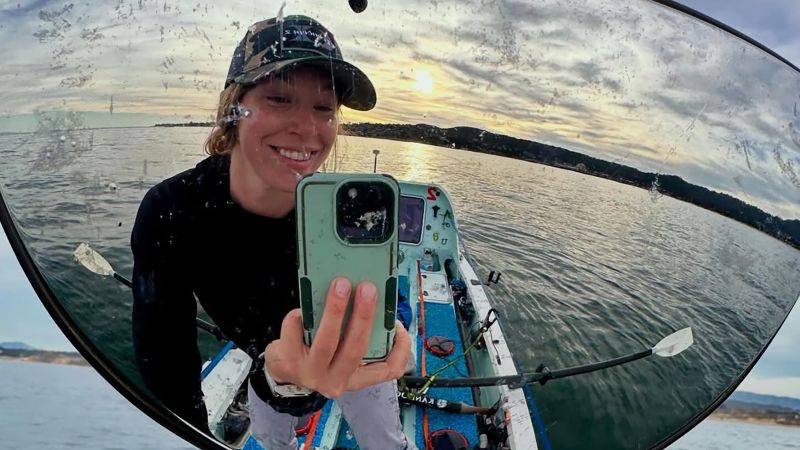
American Woman Rower Makes Historic Solo Crossing from California to Hawaii
Female American rower completes record breaking – Kelsey Pfendler, a Grand Canyon river rafting guide, has etched her name into the annals of oceanic endurance by completing a solo rowing journey from California to Hawaii. This feat, achieved after nearly 45 days of solitary navigation, marks her as the first American woman to undertake the 2,400-mile crossing independently, according to her official website. The accomplishment has sparked widespread celebration, with local media highlighting the emotional impact of her arrival in Honolulu on Friday evening. Her row boat, named *Lily*, became the focal point of a global audience that followed her progress through social media, where she documented her solitary journey with candid videos and reflections.
A Solo Odyssey Across the Pacific
Launched from Monterey, California, in May, Pfendler’s expedition began as a personal challenge to redefine the boundaries of maritime exploration. Her goal was not only to set a new record but also to claim the title of the youngest and fastest woman to complete the route alone. The Ocean Rowing Society International, which oversees ocean-rowing achievements for Guinness World Records, confirmed her time of just under 44 days, surpassing the previous women’s record of 86 days and even outpacing the men’s record of 52 days. While the society has yet to formally respond to media inquiries from The Associated Press, her accomplishment has already been recognized as a milestone in solo endurance sports.
The journey, spanning over a month and a half, tested Pfendler’s physical and mental resilience in ways few have experienced. She relied on a combination of strategic planning, self-reliance, and adaptability to navigate the unpredictable Pacific Ocean. Her videos, shared during the voyage, captured the raw intensity of the experience, offering glimpses into the solitude of the open sea and the moments of triumph and exhaustion that defined her path. From battling blistered hands to enduring stiff winds that made sleep a challenge, Pfendler’s narrative resonated with audiences worldwide, blending adventure with introspection.
The Journey’s Challenges
Surviving the vast expanse of the Pacific required Pfendler to master a variety of survival techniques. In her video diaries, she explained how she prepared meals using compact equipment, shielded her skin from relentless sun exposure, and purified seawater into drinkable supplies. She also detailed the routines that kept her physically and mentally grounded, such as washing clothes in the ocean and managing her caffeine intake to stay alert during long stretches of calm. These small acts of ingenuity underscored the grueling nature of her endeavor, where every decision could mean the difference between success and failure.
Despite the physical toll, Pfendler’s journey was as much about psychological endurance as it was about physical strength. She recounted how the ocean’s relentless currents and shifting winds demanded constant adjustments to her course. In one video, she described the frustration of navigating against unfavorable conditions, which often felt like an unending battle. Yet, she also shared moments of joy, such as the thrill of spotting a distant island or the satisfaction of completing a grueling day of rowing. Her ability to balance these extremes—celebrating victories while enduring setbacks—highlighted the mental fortitude required for such a solitary undertaking.
A Legacy of Adventure
Before setting her sights on the Pacific, Pfendler had already established herself as a skilled adventurer. Her career as a professional raft guide began at age 18, and over the past eight years, she has led expeditions along the Colorado River in the Grand Canyon. This background in navigating rugged environments likely informed her approach to the ocean, where the challenges were both similar and distinct. “I just love boats in the middle of nowhere,” she said in one video, a sentiment that encapsulated her passion for remote exploration. Her transition from river rafting to ocean rowing symbolizes a broader commitment to pushing human limits in natural landscapes.
Pfendler’s journey has also become a source of inspiration for others. In a recent video posted as she neared Oahu, she reflected on the significance of her achievement, urging viewers to embrace their own challenges. “If any part of this made at least one person feel a little bit more powerful in their own skin, I couldn’t ask for anything else and I’m happy,” she stated, her voice tinged with emotion. Her message resonated with many, emphasizing the idea that perseverance and courage are often the keys to overcoming seemingly insurmountable obstacles.
The public’s response to her voyage has been overwhelmingly positive, with hundreds of thousands of people tuning in to follow her progress. Her social media presence, which included daily updates and personal reflections, created a sense of connection between her and her audience, many of whom found her story both motivating and relatable. Local news outlets reported that Pfendler was expected to address the media in the days following her arrival, though an interview request from her team remained unanswered as of Saturday morning. This delay did little to dampen the enthusiasm surrounding her achievement, as her name has already become synonymous with courage and innovation in the world of endurance sports.
The Future of Exploration
Pfendler’s record-breaking journey raises questions about the future of solo oceanic exploration. With her success, she has set a new benchmark that others may aspire to reach. Her approach—combining meticulous preparation, physical training, and mental resilience—offers a blueprint for aspiring adventurers. The Ocean Rowing Society International’s records now reflect her name alongside the previous holders, a testament to her groundbreaking accomplishment. As the society continues to verify her results, the world watches with anticipation for the recognition she deserves.
Her journey also highlights the growing role of technology in modern exploration. While the physical challenges of the ocean remained unchanged, Pfendler’s ability to document and share her experience in real time has brought a new dimension to solo voyages. Social media platforms transformed her expedition into a global event, allowing people from all walks of life to engage with her story. This digital connection amplified her impact, turning her personal challenge into a shared celebration of human potential. Pfendler’s words, whether filled with emotion or humor, have become a rallying cry for those who seek to conquer their own fears and limitations.
As she reflects on the journey, Pfendler’s vision for the future remains clear. She has already hinted at pursuing more ambitious goals, stating, “I’m going to go finish my big, hard scary thing.” This determination underscores her belief in the transformative power of adventure. Her record-breaking solo crossing from California to Hawaii is not just a personal triumph but a catalyst for inspiring others to embark on their own journeys of discovery. With her story now part of the maritime legacy, Pfendler’s name will be remembered as a symbol of resilience, creativity, and the unyielding spirit of exploration.
The Pacific Ocean, vast and unrelenting, has long been a proving ground for human endurance. Pfendler’s achievement adds a new chapter to this history, one that blends the traditional elements of solo rowing with contemporary storytelling. Her journey, marked by both physical hardship and emotional depth, serves as a reminder that the greatest challenges often lie not in the distance itself, but in the courage it takes to cross it alone. As the world celebrates her success, it also looks forward to the next chapter in her story—one that promises to redefine the boundaries of what is possible.
