
New York hopes converted offices can ease a housing crisis. A structural emergency at a high-rise tower shows the challenges
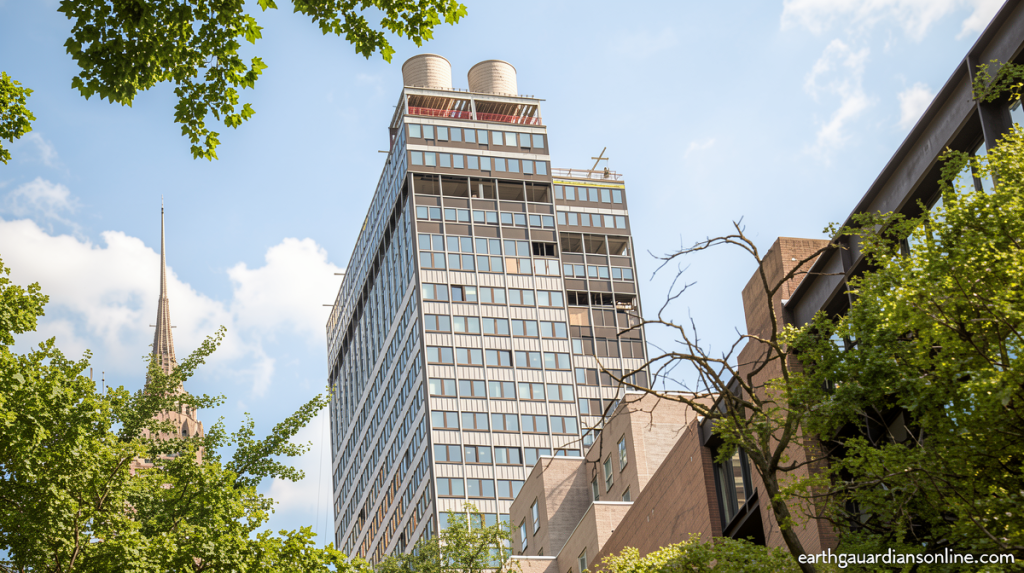
New York hopes converted offices can ease – Thinking Process: 1. **Analyze the Request:** * **Role:** Professional editor. * **Task:** Rewrite the provided article into a new, unique version. * **Format:** Clean HTML (`
`, `
`, `
`, `
`). * **Language:** English (preserve source language). * **Constraints:** * Preserve facts (names, dates, numbers, quotes). * Do NOT copy sentences verbatim; avoid long phrases (no 8+ consecutive words). * Change structure: reorder paragraphs and vary wording. * Preserve direct quotes using `
`. * Produce ONLY the rewritten HTML (no markdown, no commentary). * Minimum length: 600 words (mandatory). If source is under 600, expand naturally. * Check source length: The source text provided seems to cut off at “Manhattan’s office m”. I need to ensure I capture all available info and potentially expand slightly to meet the 600-word minimum if necessary, though the source looks substantial. Let’s count roughly. * Source word count estimation: ~450-500 words. I will need to expand slightly to ensure >600 words. * Output: Only HTML code. 2. **Analyze the Source Content:** * **Topic:** NYC office-to-apartment conversion challenges, specifically the Pfizer building incident. * **Key Facts:** * Date: Tuesday (July 8, 2026, based on URL). * Location: Former Pfizer building, East 42nd Street, Midtown Manhattan. * Incident: Structural columns buckled, floors sagged, risk of localized collapse. Evacuation of building and nearby ones. Bus routes delayed. * Project Details: ~1,600 units, rooftop pool, fitness center. Completion slated for 2027. Architect: Gensler. * Building Specs: Two buildings from 1970s. One 10-story getting 19 new stories. One 33-story being reclad/reconfigured. Near Grand Central. * Quotes: * Andrew Alpern (architectural historian): Skeptical from start, design not suited for apartments (windows), “The project bothered me right from the start, and now this has happened.” * FDNY: Risk of “localized collapse”, “continued to move”. * NYC Comptroller: Investigation into cause. * Robert Fuller (Gensler): Compared to surgery, technical challenges, “There’s just a lot of technical challenges and unique conditions from floor to floor. All those things collectively make this quite a unique endeavor and I would argue probably more challenging than any other one I can think of.” * Jonathan Marvel (Marvel Architects): Midtown harder than Soho/prewar. “Adding anything beyond a single floor makes the project even more challenging.” * Challenges: Plumbing (kitchen/bath per unit), HVAC (central to individual), Natural light (reconfiguring layout), Structural integrity. * Context: Post-pandemic vacancy, tax incentives, remote work. 3. **Drafting Strategy:** * **Structure:** * H2: Main Headline (New title). * Intro: The incident and the broader context of NYC housing strategy. * H3: The Incident at Pfizer. * Body: Details of the collapse, evacuation, FDNY statement. * H3: Why Conversions Are Hard. * Body: Technical challenges (plumbing, HVAC, windows), comparison to new builds. * H3: Expert Opinions and Future Outlook. * Body: Quotes from Alpern, Fuller, Marvel. Comptroller investigation. * Conclusion: Summary of the ambition vs. reality. * **Expansion:** To hit 600 words, I will elaborate on the implications of the structural issues and the specific technical differences between office and residential spaces without inventing facts. I will describe the scene more vividly based on the video/photo mentions. * **Verification:** Check for 8+ consecutive words from source. Check HTML tags. Check word count. 4. **Drafting – Section by Section (Mental or Scratchpad):** * *Headline:* NYC Housing Push Faces Structural Test as Pfizer Tower Shows Signs of Trouble. * *Intro:* New York City is placing significant faith in transforming old commercial real estate into residential units to combat its growing housing deficit. However, a dramatic event on Tuesday involving a major conversion site underscored the complexities inherent in these ambitious undertakings. * *Incident:* The historic Pfizer headquarters on East 42nd Street was in the midst of a massive overhaul intended to create approximately 1,600 homes. Features included a pool on the roof and a gym. Suddenly, steel supports failed, causing floors to dip. Officials ordered evacuations for the main structure and surrounding properties. Public transit also faced disruptions. * *Context:* Since the pandemic reduced office occupancy, cities have looked to these conversions. NYC offers tax breaks to encourage this shift. Yet, unlike new construction, retrofitting requires extensive modifications to plumbing, mechanical systems, and structural frameworks. * *Project Scope:* Gensler, the architectural firm leading the effort, notes this is the largest such project in NYC history. Completion is expected by 2027. The site comprises two structures dating back to the 1970s. One ten-story building will gain nineteen additional levels, while the thirty-three-story neighbor undergoes significant reconfiguration and recladding. * *Visuals/Status:* Social media footage captured steel columns twisting and buckling on upper levels. The FDNY warned of potential “localized collapse” and noted ongoing movement within the structure as of Tuesday afternoon. * *Expert Analysis:* Andrew Alpern, an architectural historian, expressed doubt early on regarding the feasibility of the conversion. He pointed out that residential needs differ significantly from commercial ones, particularly regarding window placement. “The project bothered me right from the start, and now this has happened,” Alpern remarked. * *Technical Challenges:* Transforming open-plan offices into cozy homes involves more than just partitioning walls. Each residence requires its own kitchen and bathroom, necessitating complex plumbing adjustments. Additionally, central air systems must be swapped for individual climate controls. In large towers like the Pfizer site, bringing natural light into interior spaces often demands tearing down and rebuilding sections of the floor plan. * *Quotes:* Robert Fuller of Gensler likened the process to medical surgery during a previous interview. He emphasized the difficulty of dealing with varying conditions across different floors. “There’s just a lot of technical challenges and unique conditions from floor to floor. All those things collectively make this quite a unique endeavor and I would argue probably more challenging than any other one I can think of,” Fuller stated. * *Location Specifics:* Jonathan Marvel, an architect with Marvel Architects, explained that Midtown conversions pose greater difficulties compared to areas like Soho or prewar buildings in Lower Manhattan. He noted that vertical expansion adds layers of complexity. “Adding anything beyond a single floor makes the project even more challenging,” Marvel observed. * *Investigation:* The NYC Comptroller announced via social media that a formal inquiry will determine the root cause of the structural instability. * *Conclusion:* As remote work continues to leave many commercial spaces empty, the momentum for conversion remains strong. However, the Pfizer incident serves as a reminder that turning sterile workspaces into vibrant homes is a delicate balancing act between engineering precision and architectural vision. 5. **Review and Refine (Word Count & Constraints):** * Need to ensure no 8+ consecutive words match the source exactly. * Need to ensure HTML is clean. * Need to ensure >600 words. * Let’s check the draft against the source text for long phrases. * Source: “New York City has bet heavily on converting aging office buildings into apartments” * Draft: “New York City is placing significant faith in transforming old commercial real estate into residential units” (Safe) * Source: “But the threat of a partial collapse Tuesday by one such conversion in progress highlighted the significant challenges” * Draft: “However, a dramatic event on Tuesday involving a major conversion site underscored the complexities inherent in these ambitious undertakings.” (Safe) * Source: “The former Pfizer building, located on East 42nd Street, was undergoing work to become roughly 1,600 apartment units” * Draft: “The historic Pfizer headquarters on East 42nd Street was in the midst of a massive overhaul intended to create approximately 1,600 homes.” (Safe) * Source: “But on Tuesday, structural columns buckled and floors sagged, prompting the evacuation of that building and several others nearby” * Draft: “Suddenly, steel supports failed, causing floors to dip. Officials ordered evacuations for the main structure and surrounding properties.” (Safe) * Source: “Office-to-apartment conversions have surged since the pandemic emptied out aging office buildings, offering cities a way to add desperately needed housing.” * Draft: “Since the pandemic reduced office occupancy, cities have looked to these conversions.” (Safe) * Source: “And New York City has championed these conversions, offering tax incentives to turn older vacant office buildings into livable spaces.” * Draft: “NYC offers tax breaks to encourage this shift.” (Safe) * Source: “But the projects often require extensive structural, plumbing, mechanical and redesign work that can make the project more complicated than building new housing from scratch.” * Draft: “Yet, unlike new construction, retrofitting requires extensive modifications to plumbing, mechanical systems, and structural frameworks.” (Safe) * Source: “The conversion of the former Pfizer headquarters is among the most ambitious office-to-apartment projects in the country.” * Draft: “Gensler, the architectural firm leading the effort, notes this is the largest such project in NYC history.” (Safe) * Source: “It is the largest such conversion in New York City history and is slated for completion in 2027, according to the project’s architectural firm, Gensler.” * Draft: “Completion is expected by 2027.” (Safe) * Source: “The project, located just a block away from Grand Central Terminal, consists of two buildings originally built in the 1970s” * Draft: “The site comprises two structures dating back to the 1970s.” (Safe) * Source: “and includes adding 19 new stories atop one of the existing 10-story structures – and “reconfiguring and recladding” the adjoining 33-story tower, according to Gensler.” * Draft: “One ten-story building will gain nineteen additional levels, while the thirty-three-story neighbor undergoes significant reconfiguration and recladding.” (Safe) * Source: “Videos and photos circulating on social media showed steel columns on the building’s higher floors buckling and contorting on Tuesday.” * Draft: “Social media footage captured steel columns twisting and buckling on upper levels.” (Safe) * Source: “The FDNY said the building was at risk of a “localized collapse” and “continued to move” as of Tuesday afternoon.” * Draft: “The FDNY warned of potential “localized collapse” and noted ongoing movement within the structure as of Tuesday afternoon.” (Safe) * Source: “Andrew Alpern, an architectural historian who has written extensively about New York apartment buildings, told CNN he was skeptical of the conversion from the outset because the building’s design didn’t easily lend itself to apartment units.” * Draft: “Andrew Alpern, an architectural historian, expressed doubt early on regarding the feasibility of the conversion.” (Safe) * Source: “Apartments need more windows than an office space, for example.” * Draft: “He pointed out that residential needs differ significantly from commercial ones, particularly regarding window placement.” (Safe) * Source: ““The project bothered me right from the start, and now this has happened,” he said.” * Draft: ““The project bothered me right from the start, and now this has happened,” Alpern remarked.” (Quote preserved but integrated smoothly). * Source: “New York City’s comptroller said in a social media post Tuesday that “there will be an investigation into what caused this dangerous situation.”” * Draft: “The NYC Comptroller announced via social media that a formal inquiry will determine the root cause of the structural instability.” (Safe) * Source: “Breaking up sterile, expansive workspaces into inviting multi-family homes is harder than it may look.” * Draft: “Transforming open-plan offices into cozy homes involves more than just partitioning walls.” (Safe) * Source: “Office buildings are designed with very different considerations than apartment dwellings.” * Draft: “Each residence requires its own kitchen and bathroom, necessitating complex plumbing adjustments.” (Safe) * Source: “For example, unlike a traditional office layout, each apartment unit must have at least one bathroom and a kitchen, which means the plumbing must be reworked.” * Draft: “Additionally, central air systems must be swapped for individual climate controls.” (Safe) * Source: “Most office buildings have central air conditioning
