
Venezuelan cemetery expands burials for earthquake victims, many of whom remain unidentified
Mass Burials Continue at Venezuelan Cemetery Following Devastating Earthquakes
Venezuelan cemetery expands burials for earthquake – In the mountainous region of Venezuela’s La Guaira state, cemetery workers have been busy excavating fresh trenches to accommodate hundreds of victims from the powerful twin earthquakes that struck nearly two weeks ago. Despite the passage of time, numerous bodies being interred still lack identification, leaving families in limbo. On Monday, CNN reporters observed heavy construction equipment operating at La Esperanza cemetery while personnel clad in blue protective suits carefully maneuvered coffins into prepared gravesites and readied additional burial spaces.
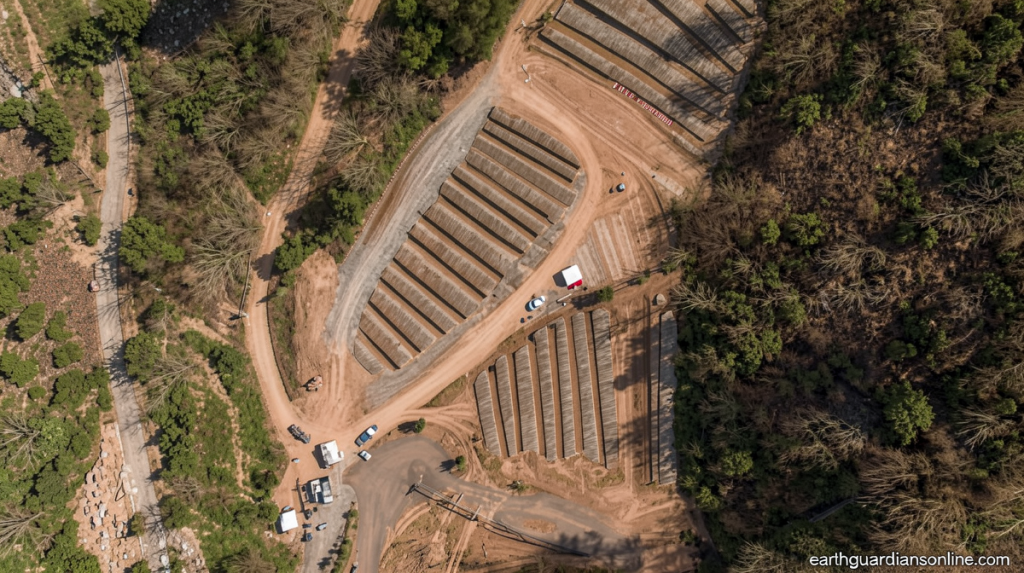
Satellite imagery captured by spatial intelligence firm Vantor reveals more than twenty rows of newly excavated trenches stretching across the cemetery grounds. Each trench measures sufficiently wide to hold multiple caskets positioned side by side, maximizing burial capacity during this crisis. According to a cemetery employee speaking with CNN, approximately five hundred new burial plots have been created in response to the emergency situation. Additionally, the facility has set aside a dedicated section containing roughly one hundred fifty graves specifically reserved for unidentified victims whose families continue searching.
Organized Graves Help Families Find Their Loved Ones
Photographic evidence from Reuters shows certain burial locations marked with small stones forming distinct outlines. Through careful analysis of these images alongside trench dimensions, CNN estimates that hundreds of individuals may already be resting in these newly prepared sites. The extensive rows of fresh graves at La Esperanza cemetery underscore the tremendous scale of last month’s catastrophic event.
Official government statistics indicate that the earthquakes claimed at least three thousand six hundred eighty-five lives while injuring sixteen thousand seven hundred forty individuals and displacing seventeen thousand nine hundred seven people. Recovery operations persist across the hardest-hit regions, yet countless families remain uncertain about the fate of their missing relatives. Tuesday’s official count failed to specify how many people are still unaccounted for.
They are buried in the designated area so that when the city begins pouring concrete, each mourner can come and identify their loved ones.
Nicolás Rivas, representing the Chaparral Los Pinos community council, explained this arrangement to Reuters. In the section specifically allocated for unidentified victims, every body receives its own individual grave plot separated by marked boundaries. Each burial site carries a unique code designed to help families locate their relatives when identification becomes possible, according to local authorities and community representatives speaking with Reuters.
Community Leaders Praise Organized Burial System
Video footage captured dozens of coffins lined up along a cemetery in northern Venezuela on Monday as workers prepared to bury victims from the twin June earthquakes. Local media reports indicate that many bodies recovered from collapsed buildings have yet to receive proper identification. The graves are systematically arranged on terraces labeled with letters and clearly demarcated using white stones to differentiate them from existing cemetery sections.
These terraces A, B, C, D, F and G have been in use for just a week. We can see that they are well organized, and the deceased are being given the dignified burial they all deserve.
Elis Zabala, a community leader in the affected area, told Reuters that this organized setup will enable families to visit their loved ones and pay their respects. Several delivery trucks arrived throughout Monday carrying coffins, according to the cemetery worker who spoke with CNN. Staff members estimated that at least eighty bodies were transported to the cemetery during those hours alone.
Police officers were visible guarding the cemetery entrance as observed by CNN, with additional agents arriving throughout the day as burial work continued. The systematic approach to handling the massive number of victims demonstrates both the severity of the disaster and the community’s commitment to providing dignified rest for all victims, whether identified or not. The terraces have been actively used for only seven days, yet already show clear organization and purpose.
Michael Rios contributed to this report.
