
‘We do need to defund the police’: 2020 interviews undermine Abdul El-Sayed’s claim he never advocated for unpopular movement
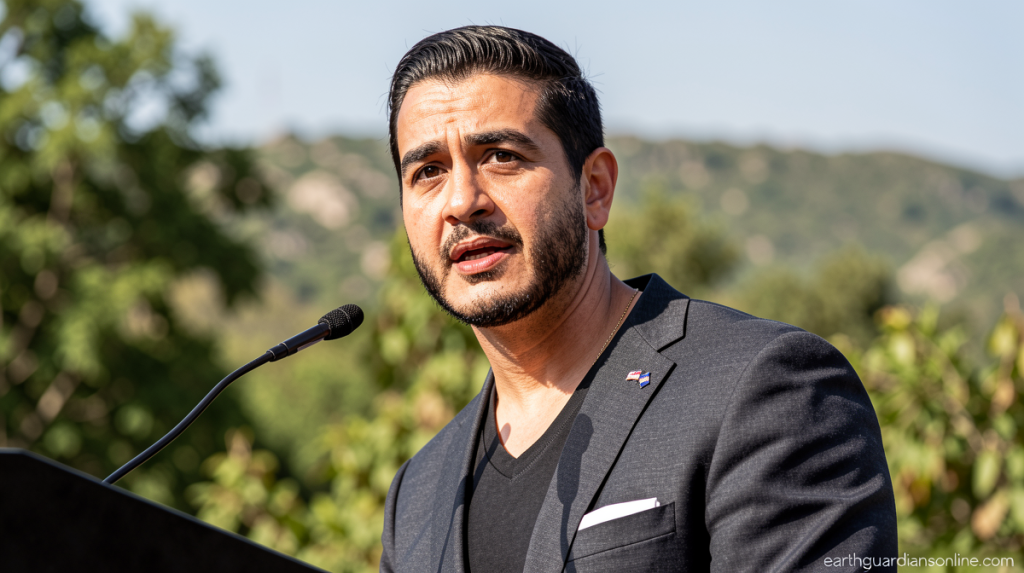
El-Sayed’s Past Stance on Police Funding Under Scrutiny
We do need to defund the police – Michigan’s Democratic Senate candidate Abdul El-Sayed is encountering renewed attention regarding his historical positions on police budget allocations. During recent media appearances, the political figure has maintained that he “never, never called for defunding” law enforcement agencies. However, a comprehensive examination of his public statements from 2020 reveals a different narrative. During a CNN interview with Kasie Hunt last week, El-Sayed explained that he removed older social media posts supporting the movement, characterizing them as being taken “out of context” and describing them as “clickbait in DC.”
Historical Context of His Statements
A CNN KFile investigation into El-Sayed’s media appearances demonstrates that he consistently supported the concept of reducing police budgets during the height of the movement’s prominence. This period followed the tragic death of George Floyd in May 2020, which catalyzed widespread public discourse about criminal justice reform. In one 2020 radio conversation, El-Sayed explicitly stated, “We do need to defund the police,” while addressing how this slogan might impact broader reform initiatives.
“We do need to defund the police,” El-Sayed said in a 2020 radio interview while specifically discussing how the slogan could undermine criminal justice reform efforts.
His remarks from both 2020 and 2021 indicate genuine endorsement of the movement’s core philosophy rather than mere rhetorical support. The principle he championed involved redirecting financial resources from law enforcement toward other public services, including mental health programs and initiatives targeting poverty. At that time, El-Sayed worked as a public health advocate, maintained a podcast, and held the position of Detroit’s public health director.
Elaborating on His Vision
El-Sayed provided detailed explanations of what he meant by reducing police funding. In June 2020, speaking on Detroit Public Radio, he noted that public discourse often becomes oversimplified into brief statements. He argued that providing clear explanations proved more valuable than relying on hashtags to convey complex ideas.
“I believe that we do need to defund the police in so far as defunding the police is disinvesting in the means of incarcerating someone or killing them on the streets,” he added. “And in investing more in the means of educating and empowering, engaging communities with the means of being able to take on systemic poverty, that we’ve allowed systematic racism to allow to fester in too many communities.”
He further clarified that his position involved both increasing investments in social services and decreasing expenditures on policing. He posed several rhetorical questions about potential outcomes if society redirected funds toward public schools, libraries, and social service programs.
Campaign Response and Current Race
Roxie Richner, representing El-Sayed’s campaign, highlighted his extensive public health background working alongside law enforcement in Wayne County, Michigan. She emphasized to CNN that his viewpoint has evolved to become more sophisticated over time.
“One simple word has never been enough to fully explain the reforms we need for a challenge as complex as our criminal legal system,” Richner said. “Just as he did in Wayne County in 2023, Abdul believes we need to improve law enforcement recruitment, retention, and retirement funding so that law enforcement officers come from the communities they serve. He also believes we must reject militarized policing, pass the George Floyd Justice in Policing Act, and opt for community violence intervention, behavioral health response, and improvements in public health to reduce violence and protect the lives of communities and law enforcement alike.”
El-Sayed currently leads the Democratic field ahead of Michigan’s August 4 primary election. He will compete against US Representative Haley Stevens following the withdrawal of state Senator Mallory McMorrow. The two candidates are scheduled to debate on television statewide on Tuesday evening. The Democratic primary victor is anticipated to challenge Republican former Representative Mike Rogers during the general election in November.
Michigan, a crucial battleground state that Donald Trump won in two of the previous three elections including 2024, positions itself as a key contest where Republican voters may examine Democratic candidates’ historical positions on crime and policing issues. El-Sayed, now 41 years old, brings considerable experience as a progressive activist who led Detroit’s Health Department and subsequently headed Wayne County’s Department of Health, Human and Veterans Services. He also contributed to CNN programming and hosted his podcast, “America Dissected.”
Public opinion data from that era indicates that policies promoting police budget reductions faced considerable resistance. A Fox News survey conducted in July 2020 revealed that 82 percent of Michigan registered voters held positive views of their local police departments. Additionally, an Axios/Ipsos poll from 2021 demonstrated that only 27 percent of respondents endorsed the “defund the police” approach, underscoring the political challenges associated with the movement during that period.
