
An impenetrable steel ‘Black Box’ will record ‘every step’ humanity takes toward catastrophe
A Monument to Mankind’s Journey Toward Disaster
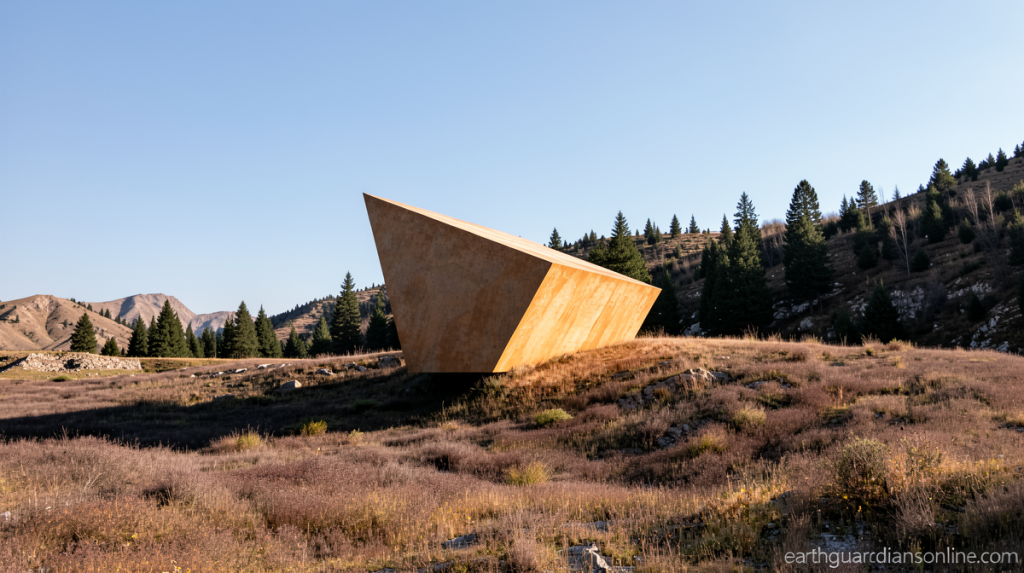
An impenetrable steel Black Box will – On the windswept, rugged coastline of western Tasmania, a forgotten airport runway is preparing to host a monumental steel edifice. This angular structure, destined to become a permanent fixture on the island’s granite terrain, carries a solemn mission: documenting “every step” humanity makes on its path toward potential “catastrophe.” Known officially as Earth’s Black Box, this striking monolith is scheduled to become fully operational by the close of the year, assuming no further delays occur. Situated approximately 150 miles from the Australian mainland, the location was selected for its stability and isolation.
Engineering a Time Capsule
The physical design of the installation is both imposing and functional. Resembling a public transit vehicle in scale, the structure utilizes heavy steel plating that is three inches thick to ensure durability. It will be encased within concrete panels and topped with a robust glass canopy, beneath which solar arrays will harvest energy to keep the internal systems active. According to Rob Beamish, the creative director and founder of Rouser Lab, one of the primary organizations driving the initiative, the unit is “essentially an indestructible, self-powered data-recording device.”
Inside this protective shell, the machinery will capture hundreds of distinct environmental metrics. These include rising sea levels, fluctuating temperatures, and other critical climate indicators. Beyond raw numbers, the box will also archive contextual human activity, such as significant political addresses and scientific climate reports. In the near term, Beamish notes that the structure will be “talking to the world, communicating current data sets and findings.” Visitors can currently access this information online or by connecting directly to the unit via their mobile phones.
A Message for Future Civilizations
While the immediate goal is public engagement, the long-term vision is far more ambitious. The project aims to create an enduring archive for any future civilizations that might emerge should climate change prove fatal to modern humanity. The official project website states that the installation will “provide an unbiased account of the events that lead to the demise of the planet.” It serves a dual purpose as both an artistic statement and a scientific repository, functioning partly as a traditional time capsule and partly as a generator of anxiety regarding our current trajectory.
The creators, which include the advertising firm Clemenger and the art group Glue Society, view the project as a urgent call to action. They hope the sheer presence of the box will snap public attention toward the escalating environmental crisis. Beamish describes the emotion it aims to provoke as “a massive motivator for climate action,” noting that while the situation is dire, “the plane’s still in the air … there is still hope to really avoid the very worst of climate change.” The name itself draws inspiration from the flight recorders found on airplanes, which store pilot decisions and help investigators understand crashes. In this analogy, the Earth is the aircraft and humanity serves as the pilot.
Delays and Expert Perspectives
The journey to this point has been lengthy. The concept was first unveiled in 2021 during the COP26 UN climate summit in Glasgow, where it quickly garnered media attention and even appeared in Stephen Colbert’s opening monologue on the Late Show. “We’re doomed,” Colbert declared to the camera at the time. Project leaders originally predicted completion in 2022, but four years have passed since then. Construction has yet to officially commence, though components are currently being assembled. Beamish acknowledges that timelines are “slippery,” citing the necessity for precise engineering plans, local building approvals, and substantial donor funding.
Local officials in Tasmania have expressed enthusiasm for the development. Shane Pitt
