
Is Mbappé too good for France?
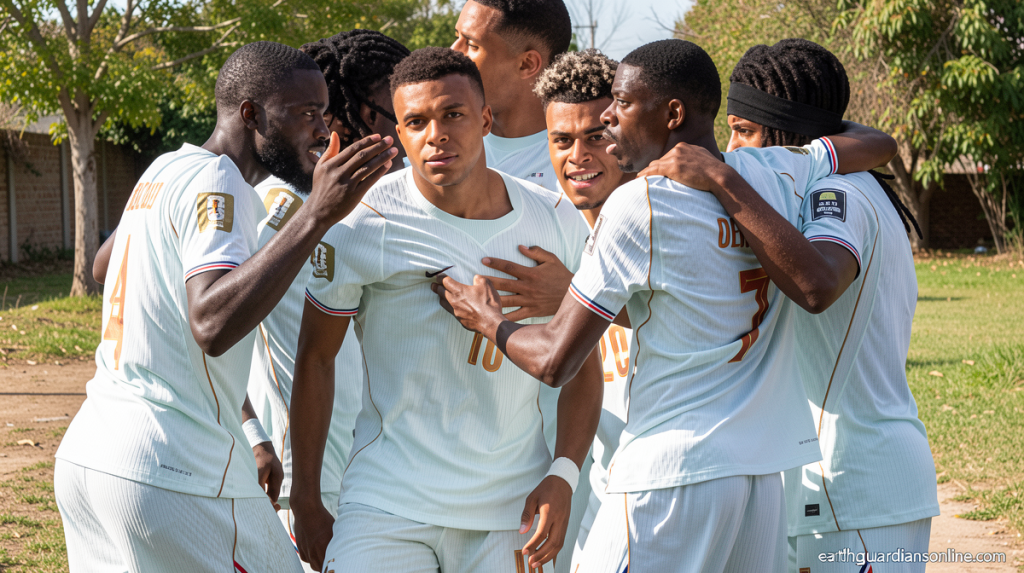
Is Mbappé Too Good for France? Star Faces Racism Amid Political Storm
Is Mbappé too good for France? As the national team prepares for Tuesday’s semifinal clash against Spain, the 27-year-old captain stands at the peak of his career. With 20 goals across World Cup tournaments, he ranks second only to Lionel Messi in all-time scoring. Yet despite his extraordinary achievements, the Paris-born forward continues to confront racial prejudice both domestically and internationally.
A Near-Departure Five Years Ago
During Euro 2020, France entered as tournament favorites but suffered a devastating elimination at the hands of Switzerland. After dominating much of the match, the French found themselves trailing following two late Swiss goals that forced a penalty shootout. Mbappé, then just 22 years old, stepped up for the decisive kick but saw his effort saved by the goalkeeper.
The defeat triggered an immediate media storm. ESPN characterized the result as a “huge failure,” while French publications delivered harsh verdicts. Le Parisien’s front page proclaimed “Disillusionment,” and L’Equipe described the team as “Devastated.” For Mbappé personally, the sporting disappointment morphed into something more painful as social media users unleashed a wave of racist commentary.
One particularly virulent message circulated widely, with a user writing that the footballer “deserves to receive a hundred lashes and be sold in Libya.” The irony was not lost on observers: Mbappé had been born in Paris and played a crucial role in France’s World Cup triumph mere years earlier. When confronted with this hostility, Mbappé delivered a candid message to French Football Federation President Noël Le Graët: “I cannot play for people who think I’m a monkey. I’m not gonna play.”
Redemption and Rising Political Tensions
Mbappé ultimately remained with the national team, and his perseverance paid dividends. The following year, he captained France to the World Cup Final in Qatar, where they fell to Argentina in another penalty shootout. Now, five years later, the team has returned to the semifinals with Mbappé in his prime.
Beyond the pitch, the footballer has become entangled in France’s political landscape. Of Cameroonian and Algerian descent, Mbappé represents both the strength of French multiculturalism and, to some critics, a challenge to traditional national identity. His public warnings about the National Rally in a Vanity Fair feature prompted sharp responses from party leaders Marine Le Pen and Jordan Bardella, who pointed out that Paris Saint-Germain secured the UEFA Champions League title after Mbappé’s departure.
Le Pen, widely considered a contender for next year’s presidential race, has advocated for halting all immigration and once likened Muslims praying outdoors to the Nazi occupation of France.
The French squad, predominantly composed of first- and second-generation immigrants, has consistently positioned itself against the far-right movement. In 2024, Mbappé alongside teammate Ousmane Dembélé encouraged French voters to participate in elections following the National Rally’s strong polling performance.
From Paris to Paraguay: A Pattern of Abuse
Le Pen’s criticism extended beyond politics. She told CNN that Mbappé “doesn’t represent French people with an immigration background,” arguing that many immigrants live on minimum wages and struggle with basic expenses like housing and heating. This argument, frequently repeated within her party, suggests that success somehow erases immigrant identity—a notion that critics dismiss as contradictory.
Following France’s victory over Paraguay in the current World Cup, Paraguayan senator Celeste Amarilla launched a scathing attack. She described Mbappé as a “colonized Cameroonian, pretending hard to be French” and added that “the brute didn’t even learn to write; instead of mother’s milk, he sucked on coconuts, and the most educated things he heard were chimpanzees.” Amarilla subsequently retracted her comments, attributing them to being “in the heat of the moment,” and attempted to characterize Mbappé’s rejection of racism as gender-based violence. In an Instagram letter, she wrote: “Retract your remarks, honor your French citizenship and apologize to me.”
French President Emmanuel Macron quickly defended the footballer on X, declaring: “Another goal for Kylian Mbappé. Against racism this time.” Le Pen remained notably silent throughout the controversy.
Racism Follows Across Borders
The prejudice Mbappé faces extends beyond France’s borders and political circles. During the 2025-26 season while playing for Real Madrid, he endured persistent monkey chants in a match against Real Oviedo, resulting in one supporter’s detention. Similar incidents occurred after France’s 2022 World Cup defeat, when Mbappé and other Black French players faced a barrage of racist abuse from fans.
As France looks toward the future, the question remains: Is Mbappé too good for France? The footballer has proven his worth time and again on the pitch, yet off the field he continues to navigate a complex web of racial and political challenges. His journey from a young player nearly leaving the national team to becoming its most prominent voice against racism speaks volumes about his character and the nation he represents.
