
He was told he’d never walk again. He set off on a trip around the world with his best friend anyway
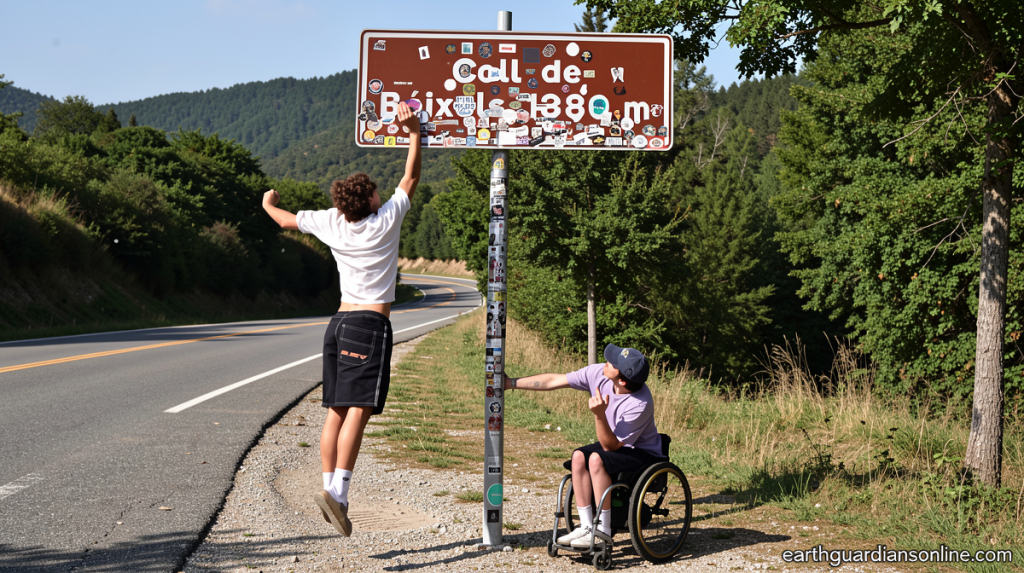
He was told he d never – When Fletcher Crowley broke his back in a biking accident three years ago, doctors diagnosed him as paraplegic and told him he would never walk again. But over the past three months, the Australian and his friend, Lachie Bennett, have summited mountains, crossed snowy peaks and taken adrenaline-filled adventures in Europe, Asia, Africa and South America. Demonstrating how friendship and a “Say yes” mindset can open the world, they’ve found ways to experience landmarks that are typically inaccessible to wheelchair users, from riding piggyback up the 268 steps that lead to Hong Kong’s Big Buddha, to hitching a ride up the snowy Swiss Dolomites and cruising as an e-bike–wheelchair tandem along the French Riviera.
“Our plan was just to show us, and the chair is tagging along,” Crowley told CNN during their final days in South Africa, as they drove through a mountain pass en route to a paragliding experience. “Most of the stuff we do would not be under the general term of ‘accessible’ — we’ve definitely pushed that. Some things have to be done a bit differently and we have to work a little harder for them, but they are so much more rewarding.” In May, family and friends welcomed the pair home to Sydney, Australia, after their action-packed journey through 10 countries, which they shared with their community of 140,000 followers on their Instagram channel ‘twomates1chair.’ Following the mountain bike accident in September 2023, Crowley spent six months recovering in the hospital, following an intensive rehabilitation program.
“I had been building a jump to do a double back flip,” he said. “I did it about six times and landed it, falling onto my side. Then, on the seventh try, I landed on my neck.” During his rehabilitation, Crowley reconnected with school friend Bennett, who worked at a spinal cord injury support and hotel facility in Sydney’s northern beaches area.
Crowley was going there for physiotherapy training, and their shared interest in adventure brought them closer as friends. Until then, they had each been traveling abroad on their own and had just done a few domestic trips together. Last year, Bennett traveled solo through the United States and Mexico, and Crowley — who pivoted to adaptive skiing after his accident — spent the winter working in Australia’s Perisher ski resort before hitting the slopes in Japan.
Then a plan for their first joint trip took shape, initially for two weeks in South America. But a deal at the Flight Centre travel agency tempted them to buy a multi-stop ticket, allowing them to visit four continents for the same price — $2,800 AUD ($1,480 USD) each. “We just jumped on it,” Bennett said.
“Europe and Hong Kong hadn’t really crossed our minds, but suddenly we were going.” Rather than restricting themselves to accessible accommodation and activities, the friends prioritized the experiences they wanted with the mindset “we can make this work,” Crowley said. Starting in Hong Kong, Bennett gave Crowley a piggyback ride up to the Big Buddha, an enormous bronze statue set among the mountains, in an endeavor they jokingly called “two mates, no chair and 12 flights of steps.” In one video on Instagram, Bennett stretches his legs before carrying Crowley — weighing 170 pounds plus 30 pounds of camera gear — on his back for the 30-minute climb from top to bottom, over wet, slippery ground. “Nothing is impossible,” Bennett says in the clip, moments after their feat.
While in the city, they also hiked to the top of Victoria Peak, a 1,180-foot ascent nearly as high as the Empire State Building’s roof, for sweeping views of the skyline. “A local told us about this accessible hike and it was, in that it was paved. But holy smokes, that was a steep push,” Bennett told CNN.
“Fletch’s arms were dead, my calves were burning, but it was insane and totally worth it.” Crowley’s upper body strength, youth and background in skating helped make his chair feel “natural and comfy,” which he said could have a big impact on a person’s mobility. The friends acknowledged that a trip like theirs might not be feasible for all wheelchair users, as it depends on factors such as physical ability, support systems and having a chair suited to individual needs. German engineer becomes first wheelchair user to travel to space After five days “full of high energy and high vibes” in Hong Kong, Bennett and Crowley flew to Italy to kick-start their road trip across Europe.
They touched down in Milan just as the 2026 Winter Paralympics got underway and piggybacked their way into the stands to watch the sit-ski event. “It just happened to line up with our trip, and it’s such an awesome community,” said Crowley, who had trained with the Australian team the previous year. From Milan, they embarked on a road trip through Pisa, Florence, Rome and Venice, where they explored the “floating city” by gondola.
When an Italian in the Dolomites invited them to “jump in” his snowmobile, the pair eagerly said yes, leaving Crowley’s wheelchair behind as Bennett supported him through the snow — ready to go wherever the ride might lead. “We had no clue where we’d end up,” Crowley said. “Next thing we knew, we were at the top of the Dolomites, looking out over an insane view of rolling mountains.” Crowley’s spinal cord injury left him an incomplete paraplegic, meaning his brain still sends some signals to his lower body.
“I can walk 10 meters, but then I’ll be absolutely wrecked,” he said. At home in Sydney, he leads an independent life and is a sports enthusiast, enjoying sit-skiing, sit-skateboarding, adaptive mountain biking and surfing. “I can live an epic life completely by myself, but to do the stuff I want to do, I sometimes need Lachie’s help or another hand on,” he said.
After driving over the border into Switzerland, a local family welcomed Crowley and Bennett into their home when their 10-year-old son spotted the duo’s Hong Kong adventures on social media. Soon, the pair were joining school runs, cheering at a neighborhood ice hockey game and sharing stories over home-cooked meals with their new Swiss hosts, who helped them navigate their snowy surroundings. “We never thought as two young Australians that we would get offered to stay with the nicest Swiss family ever — and then it kept happening,” Bennett said.
“Of course, you have to use your judgment and stay safe, but the generosity from strangers has been overwhelming.” Their next invitation took them inland from the French surf town of Biarritz to a sheep farm run by Paddy, a fellow Australian who had relocated to France to start a new life. Helping out with the sheep was “one of the most unexpected and memorable” stops. Crowley attached a front off-road wheel to his chair, making it easier for Bennett to push him across the hay in the barn.
“I was stationary a lot of the time because as soon as I moved, the sheep would freak out,” Crowley said. “Some animals see the chair and run away as fast as they can, if it’s not their norm.” Also in Europe, the pair hopped on a flight to the Netherlands to explore Amsterdam’s famous canals. Here, their transport of choice was a rented cargo bike — or a “bakfiets,” to locals — with Bennett pedaling and Crowley riding in the wooden box attached between the handlebars and front wheels.
After exploring northern Spain with Crowley’s parents, the pair set off on their own again to finish their European tour on the French Riviera. On Nice’s chic promenade, they perfected a speedy travel hack – Crowley in his wheelchair holding onto Bennett as he zipped along on an e-bike. “Fletch would hold my pocket and tailgate,” Bennett said.
Their choice of lodgings added another layer of adventure, such as the night they stayed in a 10th-century chapel with a pool, perched atop a hill with 1,000 steps. To get them there, the chapel owner drove up in his Land Cruiser, with Crowley hitching a ride by holding onto the back from his own set of wheels. Once at the base, Bennett and Crowley piggybacked up the long, winding staircase to the front door.
“It was not accessible at all, but that was never gonna stop us,” Crowley said. “There were stairs all throughout this place, but with Lachie piggybacking me, and me scooting up on my bum, we made it.” Minor hardships did arise, particularly when the pair were tired and Bennett found himself managing heavy luggage, medical bags and Crowley’s chair — often after a piggyback ride. But Bennett said “it’s always worth it,” noting that when fatigue set in, they simply took the easier route.
The only time they felt held back was at the occasional raised shopfront, where Bennett ran in for snacks while Crowley waited outside. “I get more annoyed by it than Fletch, who is very resilient. It’s taught me a lot about traveling,” Bennett said.
And there were advantages too, such as accessible parking and Crowley’s chair doubling as a “24/7 trunk” providing handy storage space beneath his seat. Stairs didn’t stop the friends in Brazil, where they enjoyed rooftop parties in São Paulo and explored caves in Belo Horizonte. Crowley, travelling piggyback, guided Bennett through striking rock formations, both wearing hard hats.
One of their biggest setbacks came during their time in the remote countryside, when they set off with drivers in off-road buggies along a dirt track and Crowley’s vehicle crashed after clipping a bump in the road. The pair were “stranded in the middle of the Brazilian bush for six hours” waiting for the vehicle to be towed out, with no reception, no water and Crowley’s chair left 60 miles away at their accommodation. “It (the buggy) hit its back tire and tumbled two complete rolls into this tree,” Bennett said.
“My heart just dropped but, thankfully, everyone was okay.” Next, the pair made an epic 18-hour, single-day drive to reach the island of Florianópolis. There, they embraced the pared-back hostel culture by the beach, once again prioritizing experience over accessibility. After navigating Europe’s labyrinths of narrow streets and endless staircases, tackling the sand was a breeze when the friends went for a dip, or on the hunt for local food.
Crowley and Bennett’s final stop was South Africa, where they spent five nights in Cape Town, visiting townships, watching penguins at Boulders Beach, paragliding and road-tripping along the Garden Route. Highlights included shark-cage diving in Gansbaai, where they took a boat into the Atlantic, donned wetsuits –– Bennett helping Crowley suit up –– and lowered themselves into a cage as sharks glided by. They also enjoyed their first safari at Amakhala Game Reserve, looking for lions, leopards, giraffes and both black and white rhinos.
Crowley boarded the safari vehicle independently, one of few adaptive features on this part of the trip. “Hearing a lion roaring over the valley was an insane moment,” he added. Another memorable moment was their final piggyback ride to Cape Point, the dramatic tip of the African continent perched 200 meters above the crashing ocean.
The friends, both support workers, described their trip as much smoother than anticipated, with no major issues like injuries, illness or theft. Still, they faced some setbacks like unexpected luggage fees in South Africa when two airlines charged extra for Crowley’s medical bags, which were usually checked in for free. Their piggyback rides also attracted attention, with some onlookers assuming they were joking around rather than using a practical method to climb stairs.
“On a climb in South Africa, I got to the top and this lady asked ‘Are you guys playing games?’ and I said ‘No, I can’t walk.’” Crowley said. During nights out, Crowley sometimes found it difficult to be heard as a chair user at waist height. On other occasions, people would address Bennett as a “middleman” instead of speaking to Crowley directly, perhaps assuming he was Crowley’s support worker, he said.
The pair’s social media presence drew occasional criticism about safety, like when Crowley rode an escalator in his chair, secured by holding the handrail. Meanwhile, bumpy footpaths and hills were sometimes riskier, with Crowley once falling from his chair on a ramp in Brazil. Despite this, the friends remained focused on the positives throughout their trip.
Their journey challenges the definition of accessibility, with Bennett asking “is it the ramp, is it the person or something else?” “You can make the world a lot more accessible with the help of people,” Crowley said. “And I wouldn’t be close to making this possible without Lachie.” But according to Bennett, everyone needs a helping hand at times. “When I was traveling solo, I needed support to meet new people and do an adventure with,” he said.
“Whether in a chair, not in a chair, everybody needs support in their own way.”
