
Tourist helicopter hit flock of birds before crashing into the Hudson River last April, NTSB says
NTSB Investigation Reveals Bird Strike Caused Hudson River Helicopter Crash
Incident Details and Timeline
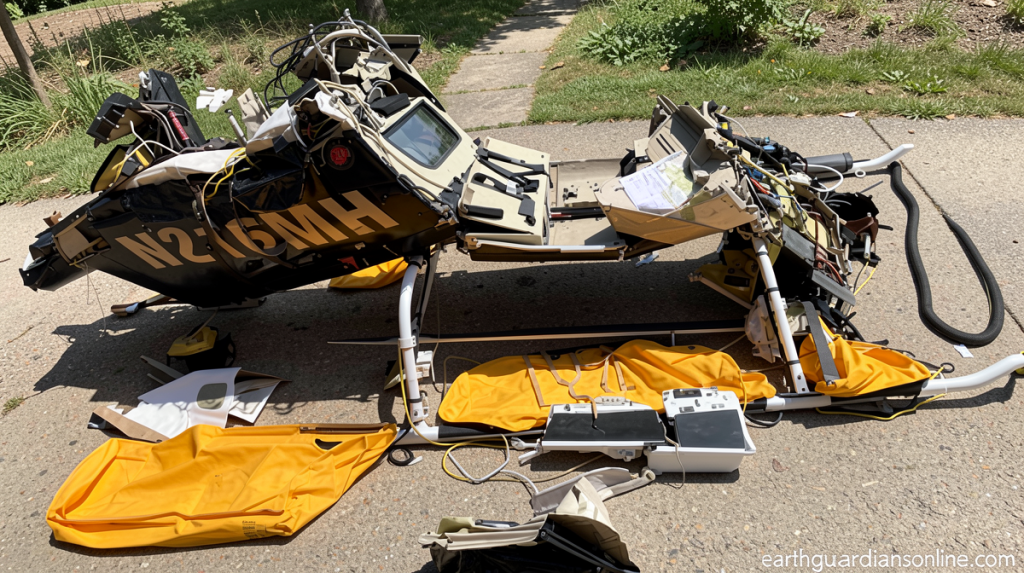
Tourist helicopter hit flock of birds – A sightseeing helicopter that plummeted into the Hudson River near New York City last year has been determined to have crashed after colliding with a flock of geese, according to investigative reports published by the National Transportation Safety Board on Thursday. The Bell 206L-4 aircraft, operated by New York Helicopters, departed from lower Manhattan on April 11, 2025, conducting a tour that included circling the Statue of Liberty before proceeding northward along the Hudson River. Following a southward turn, the aircraft was positioned near the New Jersey shoreline when it suddenly broke apart in midair, flipping and spiraling downward into the water below.
The Smithsonian Institution’s feather identification laboratory conducted extensive analysis to determine what struck the helicopter. Their findings revealed that a mixed-species flock consisting of Brant and Canada Geese impacted both the rotor blades and the rear portion of the aircraft. Additionally, the laboratory discovered that a Great Blackbacked Gull was struck by flying debris from the tail section with sufficient force to mangle the bird and cause its wing to separate, eventually coming to rest on a rooftop alongside other helicopter debris.
Witness Accounts and Victim Information
Several witnesses provided compelling testimony about the dramatic incident. One individual residing in a nearby apartment complex described observing the helicopter “fall like a brick” into the water, according to investigators’ reports. This witness recalled seeing “hundreds of birds” in the area but could not remember their altitude. Another witness, who was jogging along the Hudson River, observed approximately twenty “very big, fat birds” suddenly take flight directly in front of her and head toward the river. Roughly two minutes later, she heard a loud “bang” overhead, though she did not notice any birds in the vicinity of the helicopter as it disintegrated midair.
The tragedy claimed the lives of six people, including three children and their parents, both of whom were employed by Siemens, a German multinational technology conglomerate. The pilot was also killed in the crash. According to NTSB records, the helicopter’s last major inspection had been conducted on March 1, and it had completed seven tour flights earlier on the day of the accident.
Investigation and Broader Context
The Smithsonian Institution, primarily recognized for its public museums in Washington, plays a crucial role in assisting investigators by identifying bird remains, commonly referred to as snarge, following aircraft collisions. The feather lab utilized whole and fragmentary feather comparisons with preserved bird specimens, microscopic examinations of diagnostic characters, and DNA analyses to identify the bird remains, as detailed in their report included in the docket.
The NTSB’s comprehensive investigation comprises more than 2,000 pages of materials, though these documents do not yet establish a probable cause for the crash. A formal determination is anticipated in the final report, which the NTSB indicated to CNN is “likely” to be released by the end of the year.
This incident occurred in a waterway famous for another bird-related aviation event. The Hudson River was the site of the “Miracle on the Hudson,” when Capt. Chesley “Sully” Sullenberger safely landed US Airways flight 1549 in 2009 after Canadian Geese disabled both engines of his Airbus A320 moments after departing LaGuardia Airport.
According to the Federal Aviation Administration, over 24,000 incidents of aircraft hitting animals were reported in their wildlife strike database last year, with more than 1,000 of those occurring in New York or New Jersey. The FAA noted that bird strike numbers have risen in recent years due to increased wildlife populations, more flights, faster and quieter aircraft, and improved reporting methods. Efforts to mitigate these risks include habitat management, detecting and predicting wildlife movements, and implementing strategies to keep animals away from flight paths.
