
‘How the ‘Trump-Graham chemistry’ reshaped US foreign policy
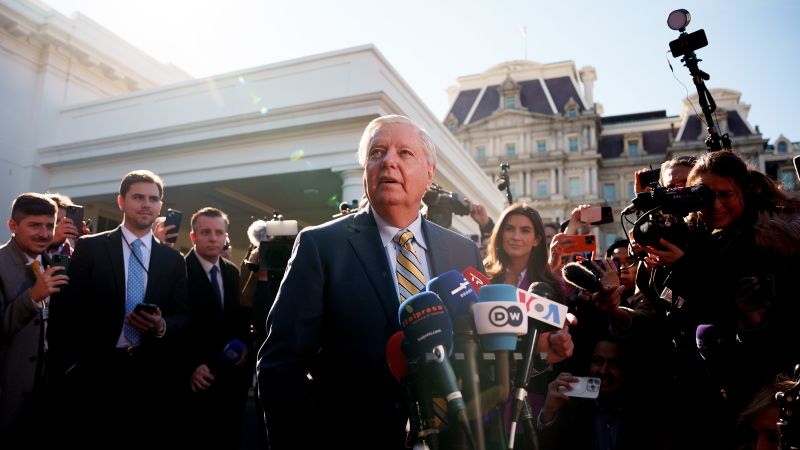
The End of an Era: How Lindsey Graham Redefined American Diplomacy
Earthguardiansonline.com – On February 28, 2025, Senator Richard Blumenthal found himself completely taken aback. The Democratic lawmaker was observing a pivotal bilateral encounter on live television when President Donald Trump, Vice President JD Vance, and Ukrainian President Volodymyr Zelensky’s meeting spiraled into disarray. Recognizing the gravity of the situation, Blumenthal immediately reached out to one person capable of restoring order: Senator Lindsey Graham. Only a few hours prior, the two senators had convened privately with Zelensky at Blair House, located mere steps from the White House residence. Their purpose was straightforward—equipping the Ukrainian leader for what promised to be a defining moment in U.S.-Ukraine relations.
Graham had cautioned Zelensky that regardless of events unfolding in the Oval Office, maintaining composure and adopting a conciliatory demeanor would be essential. Unfortunately, those instructions went unheeded. When Ukrainian officials were instructed to leave the White House, Graham stepped forward to publicly address the situation. He declared that Zelensky faced a critical choice: either step down and dispatch a representative with whom Washington could effectively work, or fundamentally alter his approach. Yet even as the public spectacle unfolded, Graham was already formulating strategies behind the scenes to mend the relationship he had dedicated years toward cultivating between Trump and the Ukrainian president.
“He just never gave up on this cause,” Blumenthal recalled in reflection.
A Vacancy That Cannot Be Filled
The weeks following Graham’s passing revealed a sobering truth for Republicans: no successor could adequately replace his influence on foreign policy or serve as the primary bridge to the Trump White House. This realization has prompted considerable debate within the GOP regarding where the party’s international strategy should head. Hawkish perspectives have grown considerably scarcer, and the vital connection between executive and legislative branches has been severed. Graham’s own interventionist convictions—deeply influenced by his late mentor, Senator John McCain—combined with his intimate rapport with the president positioned him as perhaps the final Republican capable of embedding interventionist principles within Trump’s predominantly non-interventionist, “America first” framework.
“It’s not about Graham’s views. It’s about that Trump-Graham chemistry,” remarked Senator Thom Tillis, a North Carolina Republican. “I think that is a unique chemistry and not one that will likely be repeated.”
The Senator as Ambassador
Through more than a dozen conversations, congressional members described Graham functioning as his personal State Department, international liaison, and frequently as America’s ambassador to whichever nation occupied his attention that particular weekend. All of this occurred while maintaining an unfiltered communication channel directly to the president. Senator Mark Kelly, representing Arizona, noted that Graham’s relentless travel schedule once led Kelly to witness his colleague spreading out a sleeping bag on the floor of a military transport plane.
“You could tell he knew what he was doing,” Kelly observed.
Graham rarely paused his diplomatic mission. Rather than viewing congressional recesses as time for rest, he transformed them into valuable opportunities for engaging with international leaders. Consequently, his passing generated tributes from global heads of state equal in number to those offered by fellow senators. Graham had spent his final hours in Ukraine before his death.
“I think he served as a counterbalance as some of the other people around the president that don’t share that view. So, I think that’s going to be the biggest loss for my perspective from a policy standpoint,” explained Republican Representative Brian Fitzpatrick, who collaborated extensively with Graham on Ukraine-related initiatives.
From Critic to Cornerstone
The closeness between Graham and Trump was not always guaranteed. During the 2016 presidential primary, Graham launched a fierce campaign against Trump, famously suggesting the party should tell him to “go to hell” and labeling him the “most flawed nominee in the history of the Republican Party.” However, once Trump secured victory, Graham evolved into a strategic partner for the president across cable news platforms, golf courses, and Capitol Hill corridors.
In exchange for his steadfast loyalty, Graham successfully channeled his influence into foreign policy—one of the domains closest to his heart. Senator Katie Britt of Alabama captured this dynamic perfectly.
“He was the linchpin in so many conversations and so many moments,” Britt stated. “I mean, his relationship with the president, with Democrats, with Leader Thune, with the conference as a whole, and then you add on that his relationship with world leaders. There’s just nobody like him, and he’s irreplaceable.”
Graham consistently urged the president to take decisive action regarding Iran, even when numerous figures within Trump’s inner circle harbored concerns that military engagement might entangle the United States in an endless conflict. Despite diminishing enthusiasm, Graham maintained pressure on the administration to sustain its assertive stance toward Tehran.
“I don’t trust Iran when it comes to enrichment, when it comes to the 900 pounds of highly enriched uranium, it needs
Related Reading
Frequently Asked Questions
What is How the Trump Graham chemistry reshaped?
How the Trump Graham chemistry reshaped is the main topic of this guide. The article explains the context, practical details, and next steps readers should understand.
Why does How the Trump Graham chemistry reshaped matter?
How the Trump Graham chemistry reshaped matters because readers are looking for a useful answer, not just a short summary. Good content should match search intent and help them decide what to do next.
