
After a year of tariffs, automakers are still resistant to moving production to the US
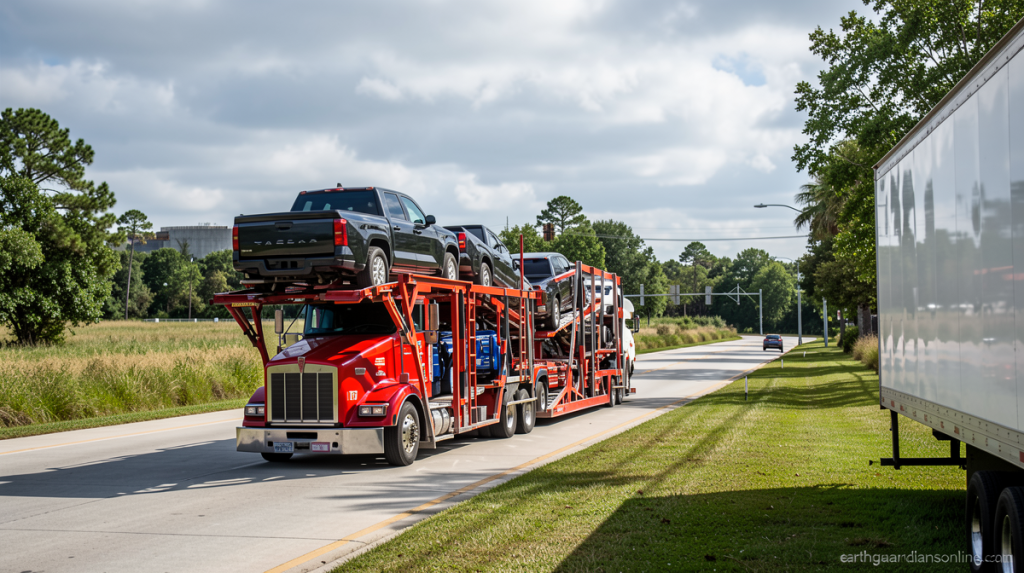
Automakers Resist US Production Shifts After a Year of Tariffs
After a year of tariffs automakers – After a year of tariffs, the automotive industry continues to demonstrate remarkable resistance to relocating manufacturing operations to American soil. More than twelve months following the implementation of sweeping automotive tariffs designed to encourage domestic production, most car companies remain hesitant to shift their operations to US territory. While the policy aims to boost local factory construction, the majority of industry leaders prefer absorbing the additional costs rather than committing billions toward new facilities. Consequently, the few production moves that have occurred typically involve utilizing existing infrastructure rather than erecting brand-new plants.
Toyota’s Strategic Expansion
Amidst this general resistance, Toyota recently announced a notable change in its strategy. The Japanese manufacturer revealed plans to relocate a portion of its manufacturing from Mexico to the United States. Specifically, the company intends to produce half of its highly popular midsize Tacoma pickup trucks at an expanded facility in San Antonio. This location already serves as a hub for the Tundra full-size pickup and the Sequoia SUV. Despite this expansion, Toyota will maintain some Tacoma production in Mexico to balance its supply chain.
“While we are impacted by evolving trade policies, our investments are multi-decade decisions based on broader strategic goals,” the automaker explained to CNN.
President Donald Trump quickly praised the announcement, characterizing the move as significant evidence that the tariff policies are succeeding. However, Toyota clarified that trade regulations were not the primary driver behind this decision. The company emphasized that its investments are long-term strategies based on broader objectives rather than immediate policy shifts.
Financial Burdens and Industry Caution
The reluctance to move stems largely from the immense financial commitment required to build factories. Ivan Drury, who leads insights at the Edmunds car buying platform, noted that constructing a new plant is a massive undertaking. He argued that making such a decision hastily would be nearly irrational.
“It’s a huge commitment (to build a factory) and to do it on a whim would be borderline crazy,” Drury stated. “So the safest action is no action. Continue on, even with that increased (tariff) cost.”
These costs are already affecting corporate earnings significantly. In its latest fiscal year, Toyota reported paying $8.4 billion in duties, which turned its North American results from a profit into a loss. Similarly, General Motors paid $3.1 billion in tariffs during 2025, while Ford contributed $1 billion. Despite these heavy payments, the number of imported vehicles remains high. According to Mobility Global, 46% of cars purchased by American consumers last year were imported, a slight decrease from 47.7% in 2024. This minor drop was partly attributed to automakers discontinuing the sale of lower-priced imported models like the Nissan Versa.
Uncertainty and the USMCA
Beyond immediate costs, uncertainty surrounding trade agreements plays a crucial role in automakers’ hesitation. The United States-Mexico-Canada Agreement, or USMCA, which facilitates the free movement of parts across borders, is currently undergoing renegotiation. Trump has indicated that he may withdraw from the deal if substantial changes favoring American businesses are not secured. This potential instability worries manufacturers who rely on seamless cross-border logistics.
The American Automakers Policy Council, representing major firms like General Motors, Ford, and Stellantis, issued a statement highlighting these concerns. “We urge a swift and durable resolution that ensures a level playing field and provides long-term certainty needed for capital-intensive automotive investments,” the group declared. Without clear rules, companies fear making permanent changes to their global footprint.
Existing Facilities and Market Demand
While new factory construction is slow, tariffs have not completely halted all production shifts. Some automakers are making incremental adjustments to their operations rather than undertaking massive capital projects. These gradual changes reflect a cautious approach to navigating the complex landscape of international trade policy. After a year of tariffs, the industry has learned that patience often proves more valuable than rapid response.
Looking ahead, automakers will continue to monitor developments closely before making any major commitments. The combination of high construction costs, uncertain trade policy, and strong consumer demand for imported vehicles creates a challenging environment for those considering US expansion. For now, the status quo remains the preferred option for most major car manufacturers operating in North America.
