
It was supposed to be Trump’s big legislative achievement. It could be a weapon for Democrats to win in the midterms
Trump’s Bill Faces Midterm Test
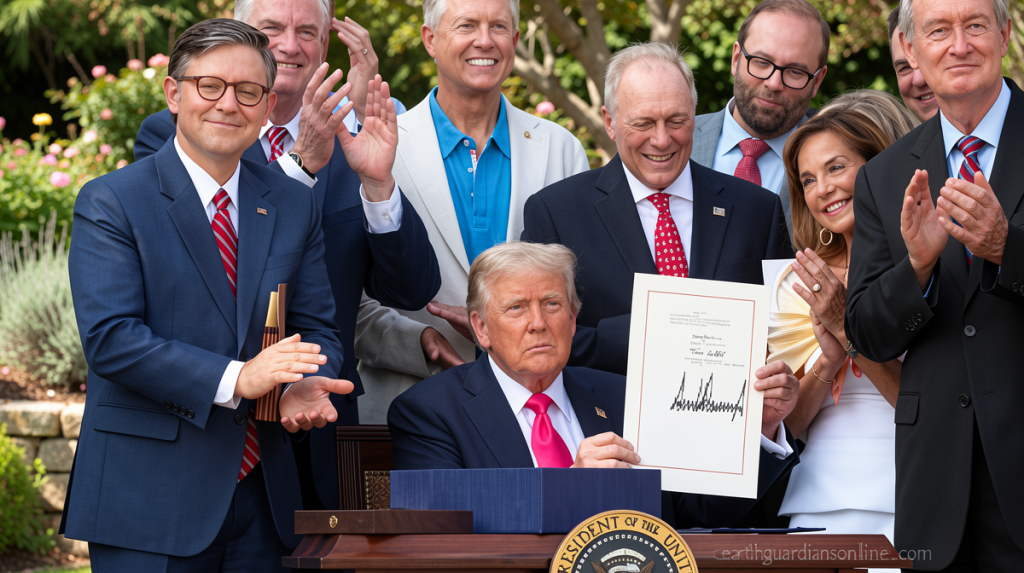
It was supposed to be Trump’s defining moment in Washington. The legislation, known as the One Big Beautiful Bill Act, was signed into law on July 4, 2025, marking exactly one year before the nation’s 250th anniversary celebrations. President Trump delivered a major speech during those festivities, addressing topics ranging from stock market performance to potential interventions in Venezuela and Iran. Yet beneath the fanfare lay a different reality for the Republican Party.
A Shifting Political Landscape
What began as a potential crowning achievement for Republican lawmakers has transformed into something quite different. Critics have focused heavily on proposed reductions to Medicaid and food stamp programs. Republicans attempted to rebrand the legislation as the Working Families Tax Cut Bill, hoping to change the narrative. Democrats quickly seized upon this rebranding effort, viewing it as confirmation that the original bill was struggling politically.
It was supposed to be Trump’s legislative triumph, but polling numbers tell another story. The negative sentiment surrounding the bill has created opportunities for Democratic candidates in competitive districts across the country. House control could hang in the balance as voters weigh their options in upcoming midterm elections.
Medicaid Cuts Take Center Stage
The Congressional Budget Office projects that the legislation would reduce Medicaid spending by $1.2 trillion through 2035. Additionally, approximately 7.5 million more Americans could lose coverage by 2034. A federal work requirement, long sought by Republicans, would also be added to Medicaid eligibility requirements.
Rep. Tom Barrett of Michigan’s 7th District acknowledged the challenge ahead: “We know that it’s going to be a robust campaign. I represent one of the top targeted districts in the entire country, and it’s on me to go out and sell the merits of this.”
Local Communities Feel the Impact
California’s 22nd District illustrates the stakes involved. Democrat Randy Villegas faces Republican incumbent David Valadao in what promises to be a closely contested race. Villegas emphasized the severity of the situation for his constituents.
“We’re the most impacted in the entire country, where two out of every three of our constituents rely on Medicaid,” Villegas stated. “Almost 70,000 people stand to lose healthcare in our district.” He noted that local clinics are “worried about the possibility of shutting down and not being able to provide services to our community.”
Valadao responded by highlighting his commitment to protecting vulnerable populations. “One of my goals representing the Central Valley is to protect Medicaid for those who truly need it the most: seniors, vulnerable children, and disabled Americans,” he declared.
Rural Healthcare Concerns Grow
Before the legislation passed, rural healthcare facilities expressed significant worries about funding. In response, lawmakers secured a $50 billion Rural Health Transformation Program. The National Republican Senatorial Committee promoted this achievement in advertisements, claiming it would “secure more than $209 million for rural healthcare in Iowa.”
However, the Kaiser Family Foundation pointed out that this program does not replace the estimated $137 billion in federal Medicaid funding that rural areas are projected to lose over a decade. Iowa specifically faces the prospect of losing more than $3.8 billion in federal Medicaid spending during that same period.
It was supposed to be Trump’s victory lap, but the political winds may be shifting. As midterm elections approach, both parties recognize that this legislation could determine the future of congressional control. The outcome remains uncertain, but the stakes have never been higher for American voters and their healthcare access.
