
Big beauty brands are going all in on longevity. Here’s what I learned
Beauty Brands Embrace the Concept of Longevity, But Is It Real?
Big beauty brands are going all – As the skincare industry evolves, a fresh trend has taken center stage: the pursuit of longevity. At a recent event in New York’s Financial District, Lancome unveiled its latest venture, framing the concept not as a battle against aging but as a proactive effort to sustain skin health. The presentation, which included futuristic tech and influencer-driven marketing, aimed to redefine beauty standards. Yet, the question remains—does this shift signal genuine innovation or just a rebranding of familiar anti-aging strategies?
From Diagnostics to Personalized Skincare
Participants in the event were given a unique experience: a skin assessment that blended science with spectacle. An employee swabbed under my eyes and captured a high-resolution image of my forehead, which already showed signs of oiliness and flakiness. The samples were then processed through Lancome’s Cell BioPrint machine, a device designed to analyze the body’s cellular processes. The results, displayed in dramatic red letters, claimed I had the skin of someone 28 years old, despite being 27. While the initial finding seemed flattering, the machine quickly revealed a more sobering reality: my skin was already at risk for sagging and enlarged pores.
“Longevity products are about maintaining the skin’s vitality rather than just fixing surface-level issues,” said Vania Lacascade, Lancome’s global brand president. “The goal is to understand how aging occurs at the cellular level and intervene before visible damage sets in.”
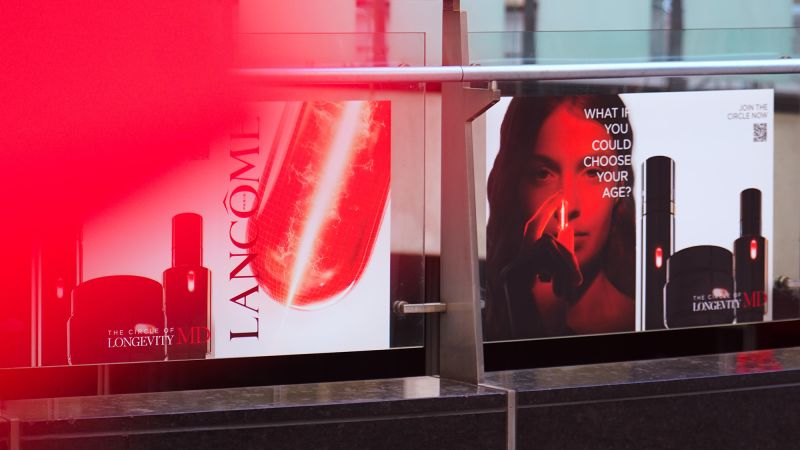
The event, though marketed as a cutting-edge exploration of skincare, felt like a curated experience. Attendees were greeted with photo opportunities, free facials, and interactive displays that explained the science behind longevity. A new LED mask, set for release in the near future, was presented as a revolutionary tool, almost like a historical artifact in a museum of beauty innovation. The slogan “What if you could choose your age?” hung prominently, suggesting a future where aging is no longer inevitable.
The Science of Mitochondrial Renewal
Lancome’s Absolute Longevity MD line hinges on a key ingredient: Mitopure, a supplement purported to rejuvenate mitochondria—the powerhouses of cells. By targeting these microscopic structures, the brand claims it can enhance the skin’s resilience and slow down the visible effects of aging. The product line, launched as Lancome’s most significant skincare initiative in two decades, is marketed not only to mature consumers but also to younger buyers who may prioritize prevention over treatment.
Dr. Macrene Alexiades, a dermatologist who has collaborated with Lancome in the past, offered a more grounded perspective. She noted that while the term “longevity” sounds futuristic, the core idea of anti-aging has long been a part of medicine. “Aging is simply the process of cellular and tissue degradation over time,” she explained. “The difference now is the branding—saying it’s about longevity makes it feel more scientific, even if the underlying principles are similar.”
“Medicine has always aimed to prevent or reverse cell damage,” Alexiades added. “Longevity skincare is just a new label for that same goal, which is both promising and potentially misleading.”
A Rebranding of Familiar Concepts
The rise of longevity as a buzzword reflects a broader shift in consumer priorities. Influencers and wellness advocates now push products that promise to delay aging, from gray-market peptides to salmon-sperm-infused serums. This trend is not limited to Lancome—brands like L’Oreal and Shiseido are also realigning their strategies to meet the demand for preventative beauty. The notion that one could start using Botox in their 20s to maintain a youthful appearance has become increasingly normalized, fueled by social media’s emphasis on eternal youth.
Yet, critics argue that longevity is more than just a marketing gimmick. Dr. Alexiades pointed out that the term has been co-opted by companies to evoke a sense of scientific authority. “It’s not going anywhere,” she said. “Anti-aging has always been a core part of skincare, but now it’s wrapped in a more aspirational package.” The event in New York, with its mix of diagnostic tools and curated experiences, exemplified this trend. Attendees were not just consumers—they were participants in a narrative about controlling their own biology.
Lancome’s approach, however, is backed by partnerships with innovative startups. The Cell BioPrint machine, developed in collaboration with South Korean firm NanoEnTek, uses protein samples to predict age-related changes. The results from my test, for instance, indicated that my skin’s natural renewal process was slower than average. This data-driven method aims to make aging feel more measurable and manageable, even as it raises questions about the accuracy of such predictions.
Can Longevity Skincare Deliver?
While Lancome’s diagnostic tools and personalized recommendations are impressive, the efficacy of their longevity products remains under scrutiny. The machine’s verdict that I had “accelerated aging” was based on a single analysis, and the company’s emphasis on “root causes” of aging—such as mitochondrial health—adds a layer of complexity. However, Dr. Alexiades cautioned that such claims can sometimes blur the line between science and marketing hype.
“The science behind mitochondria is real, but translating that into a skincare product requires more than just a catchy name,” she said. “It’s about how effectively these ingredients can penetrate the skin and influence biological processes.” The Absolute Longevity MD line, with its focus on mitochondrial renewal, is part of a larger industry push to position aging as a preventable condition rather than an unavoidable outcome.
Despite the enthusiasm for longevity, the concept has roots in centuries-old beauty practices. From ancient oils to perfumed creams, the pursuit of youth has been a constant in skincare. Now, brands are reframing these traditions with a modern lens, suggesting that longevity is not just a trend but a fundamental shift in how we think about aging. “It’s about keeping your skin fresh in the long term, not just addressing wrinkles today,” said a spokesperson for Lancome’s parent company, L’Oreal, during its April earnings call. “Longevity is undoubtedly the strongest of all trends.”
The Future of Beauty and the Risk of Misinformation
As longevity gains traction, it’s clear that the skincare industry is adapting to a new era. The diagnostic tools and personalized product recommendations are part of a strategy to make aging feel like a customizable process. However, this shift also raises concerns about the spread of unverified claims. With terms like “cellular health” and “mitochondrial renewal” becoming mainstream, it’s easy for consumers to overlook the scientific basis of these products.
Dr. Alexiades emphasized the importance of critical thinking when evaluating longevity claims. “The same techniques that have been used for decades are being rebranded with new language, which can be confusing for people trying to make informed choices.” While the idea of maintaining youthful skin through proactive care is appealing, the industry must balance innovation with transparency to avoid misleading consumers.
In the end, the question of whether longevity skincare is a breakthrough or a buzzword hinges on both science and perception. Lancome’s event highlighted the potential of technology to transform personal skincare routines, yet it also underscored the challenge of distinguishing genuine progress from rebranding. As the trend continues to grow, the distinction between health and beauty may become even more blurred. For now, the promise of longevity remains a compelling one—whether it’s backed by evidence or simply a well-crafted narrative is up to the consumer to decide.
