
The stock market rally that’s making some people rich and everyone else miserable
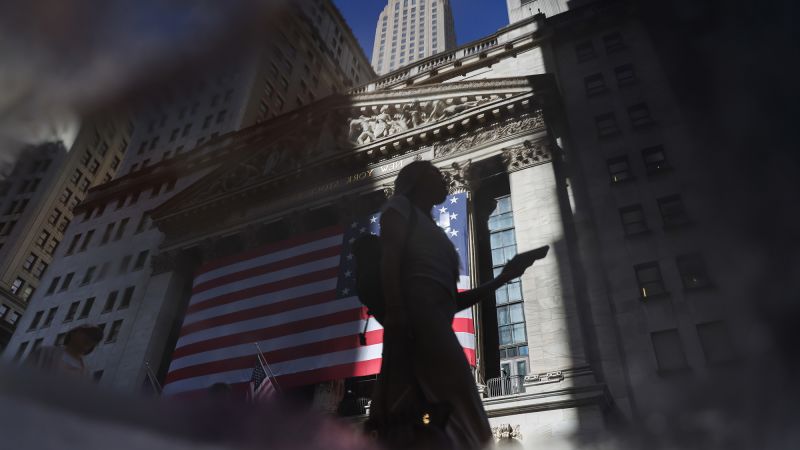
The Stock Market Rally Fueling Wealth Inequality
The stock market rally that s making – Despite the economic turbulence that has left many Americans frustrated, the stock market’s recent surge has emerged as a critical lifeline. While the nation faces challenges like inflation, tariffs, and geopolitical conflicts, affluent households are continuing to prop up consumer activity. However, this trend highlights a growing disparity: the wealthiest are benefiting disproportionately, while the rest of the population struggles to keep pace.
The Paradox of Market Growth
At the core of this economic dilemma is the stock market’s relentless rise. This phenomenon, while boosting overall economic momentum, also deepens the divide between the affluent and the less fortunate. The market’s gains create a Catch-22, where prosperity for some comes at the expense of others, leaving the economy in a precarious balance.
According to the Bank of America Institute, consumer spending in the U.S. has accelerated this year compared to 2025. Yet, the majority of this spending is driven by the top 20% of earners, who account for over half of all consumer activity. The Dallas Federal Reserve notes that this group contributes 57% of total spending, a figure that has remained steady despite near-record-low consumer confidence. Their spending power isn’t just a result of income levels—it’s tied to their financial assets and investment strategies.
Home Equity and the Wealth Concentration
One reason for this disparity is the concentration of wealth in housing equity. The New York Federal Reserve reports that the top 20% of earners hold more than 50% of the nation’s home value. This is partly due to the ability of wealthy households to access significant equity through rising home prices, especially for those who secured mortgages during the pandemic at rates below 3%. Meanwhile, the bottom 20% own just 3% of the total home value, underscoring the imbalance.
Another factor is the stock market’s role in wealth accumulation. The Federal Reserve’s Distributional Financial Accounts reveal that the top 20% control 87% of the wealth tied to individually owned stocks. This dominance means that market gains directly translate into increased spending by the wealthy, perpetuating the cycle of economic growth that favors their interests.
Quotes on Market-Driven Spending
“The appreciation in stock prices has become a key motivator for discretionary spending, particularly among older, wealthier households, which represent over 50% of total consumption in these categories,” explained Michael Pearce, chief U.S. economist at Oxford Economics.
Joe Brusuelas, chief economist at RSM US, emphasized that three-quarters of the spending generated by the stock rally flows through the top 20% of earners. His analysis suggests that the market’s gains have created a substantial financial cushion for this group, enabling them to maintain high levels of consumption. Over the past year, this has amounted to $53 billion in added spending, equivalent to roughly a seventh of the 2.1% GDP growth rate reported in the last quarter.
The Tech Sector’s Influence
The stock market’s momentum is heavily influenced by a single industry: technology. A third of the S&P 500’s total value is attributed to tech companies, with semiconductor stocks alone making up nearly 20% of the market. This sector’s performance has been a major driver of recent gains, fueled by advancements in artificial intelligence and digital transformation. Analysts note that this is not a repeat of the dot-com bubble, as demand for technology remains robust and tangible.
However, the reliance on tech stocks raises concerns. If this sector were to experience a downturn, the ripple effects could be severe. Joe Brusuelas warned that a significant decline in equity values could trigger a sharp economic contraction, as the spending incentives for the wealthy would diminish. “It’s a K-shaped market, and it’s a K-shaped economy,” Heather Long, chief economist at Navy Federal Credit Union, added. “The greatest threat to the economy is a recession—and that risk is amplified when both the market and the economy are structured in this way.”
The K-shaped economy, as described by experts, refers to a scenario where different segments of society experience divergent outcomes. While the wealthy thrive, lower-income households face stagnation or decline. This structure is exacerbated by the stock market’s role in distributing wealth unevenly. If the rally were to end, the economic consequences could be dire, as the market’s gains have become a cornerstone of consumer confidence.
Risks of a Market Correction
The stock market’s impact on the economy is more pronounced now than in previous decades, largely due to the extreme concentration of wealth. For instance, the top 20% of earners now hold the majority of financial assets, which means their spending decisions carry outsized influence. This dynamic has created a cycle where market gains sustain economic activity, but any reversal could leave the economy vulnerable.
Michael Pearce and Joe Brusuelas both highlight the fragility of this system. “If we are relying on the stock market to support consumer spending, we’re essentially depending on a mechanism that widens the economic gap,” Brusuelas said. The recent gains have not only improved the financial status of the wealthy but also intensified perceptions of inequity among the broader population. This sentiment could fuel social unrest if the market’s trajectory changes.
Despite these risks, the market’s resilience remains strong. The S&P 500 has delivered a total return of 22% in the past year, 76% since 2023, and 327% over the past decade. These figures reflect the market’s ability to generate wealth, even amid economic uncertainty. Yet, the question lingers: can this trend continue indefinitely, or will a correction expose the underlying fragility of the economy?
As the stock market continues to outpace other sectors, its role in shaping economic outcomes becomes increasingly central. For the affluent, it’s a source of stability and growth; for the rest, it’s a reminder of the growing divide. The interplay between market performance and consumer behavior underscores a complex relationship, where prosperity for one group often means challenges for another. The economy’s future hinges on whether this dynamic can be balanced—or if it will lead to deeper inequities and a more unstable financial landscape.
In conclusion, the stock market is not the entire economy, but its influence has grown to unprecedented levels. The recent rally has provided a temporary reprieve, yet its success is contingent on the continued performance of high-earning households. If this trend reverses, the consequences could be widespread, affecting everything from employment to social cohesion. The market’s gains, while impressive, also highlight a broader challenge: how to ensure economic growth benefits all segments of society, not just the wealthiest few.
