
5 things to know about the Ebola outbreak
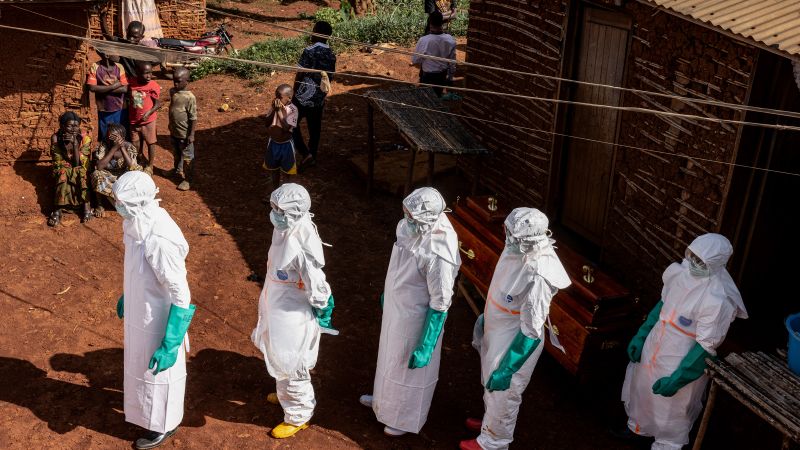
Key Insights on the Ebola Crisis in the Democratic Republic of Congo and Uganda
5 things to know about the Ebola – The mere mention of an Ebola outbreak sends waves of anxiety through communities. While the current situation in the Democratic Republic of Congo (DRC) is cause for concern, health experts emphasize that the threat to global populations remains manageable. This outbreak, which has already infected hundreds and claimed dozens of lives, has expanded beyond the DRC into neighboring Uganda. The World Health Organization (WHO) has labeled it a public health emergency of international concern, but the likelihood of it becoming a pandemic is considered low.
Timeline of the Outbreak and Early Misdiagnoses
On May 17, the WHO officially recognized the crisis as a global health issue. This decision followed reports of a high-mortality illness in the Ituri Province of the DRC. However, health officials now believe the virus may have been circulating earlier than initially documented, possibly as far back as February. At a recent CNN event, the mayor of Mongbwalu, a secluded gold mining town in Ituri, shared his belief that the first case emerged on February 22. He recounted how a body was transported from a local morgue, and a coffin was burned, only for the illness to rapidly spread through the community.
“The first case was on February 22,” the mayor stated, highlighting how the outbreak began unnoticed. “Within weeks, dozens of people were dead, and no one knew the cause.”
Local leaders initially suspected tuberculosis as the culprit, but early tests for the more common Zaire strain of Ebola came back negative. It wasn’t until later that the Bundibugyo strain, responsible for the current outbreak, was identified. This delay underscores the challenges of diagnosing emerging diseases in remote areas with limited resources.
Modeling Predictions and Global Risk Assessment
Recent data analysis from the Centers for Disease Control and Prevention (CDC) suggests that the outbreak could surpass historical records if interventions are not accelerated. The 2014-2016 West Africa outbreak, which infected over 28,000 individuals and caused more than 11,000 deaths, is now a benchmark. Current projections indicate that even a modest increase in cases could lead to a significant surge in infections, potentially reaching hundreds of thousands by late summer.
Despite these concerns, the WHO maintains that the risk to the broader world remains minimal. Dr. Jay Bhattacharya, acting director of the CDC, noted that the U.S. is actively preparing to respond, leveraging its experience with previous outbreaks. “We’re focused on containment,” he said, “but we’re also investing in research to better understand this strain’s behavior.”
Transmission Dynamics and Vulnerability Factors
While Ebola is not as easily transmissible as measles or Covid-19, it poses a serious risk under certain conditions. The virus requires a high viral load in an infected person to spread effectively. Typically, this occurs a week or more after infection, when symptoms are most severe. Healthcare workers and family members caring for patients are the primary vectors of transmission, as they come into close contact with bodily fluids.
Dr. Sanjay Gupta, who discussed the outbreak at a CNN event, explained that “the key to slowing spread is identifying cases quickly.” This is particularly critical in the DRC, where the outbreak is unfolding in regions with limited medical infrastructure. Even a small breach in personal protective equipment, such as a torn glove or a cracked mask, can increase the risk of infection.
Demographics and Community Impact
The outbreak has disproportionately affected women between the ages of 20 and 39. This demographic trend has raised questions about the virus’s behavior and how it interacts with human biology. In Mongbwalu, the community’s response has been shaped by both fear and resilience. Local leaders worked tirelessly to track cases and enforce isolation protocols, even as hospitals struggled to cope with the influx of patients.
The mayor described the scene in early March: “People were scared, but we had to act fast. We didn’t have enough masks or gloves, but we did what we could.” His account reflects the broader challenges faced by communities in the DRC, where access to medical supplies is scarce and the virus spreads rapidly in densely populated areas.
Resource Challenges and International Support
Managing an Ebola outbreak in the DRC is a logistical nightmare. The region’s remoteness and underfunded healthcare system have hampered efforts to control the spread. Hospitals in Ituri Province have been overwhelmed, with staff working in hazardous conditions due to a lack of equipment. “It’s like fighting a fire with a bucket,” said Dr. Gupta, who visited the area in 2014 and witnessed the strain on medical resources firsthand.
International partnerships have begun to shift the tide, but progress is slow. Aid organizations are deploying supplies and personnel to bolster local capacity. However, the pace of response has been criticized as insufficient. “Every day we delay action, the virus gains ground,” warned the WHO’s regional director for Africa, emphasizing the urgency of the situation.
Lessons from Past Outbreaks
Dr. Gupta’s experience in Guinea during the 2014 outbreak provided a sobering perspective. “We saw how quickly the virus can spiral out of control,” he recalled. “Without rapid testing and isolation, the numbers can escalate dramatically.” This lesson has informed current strategies, including aggressive contact tracing to identify potential exposures. The method involves following the movement of infected individuals to pinpoint those who might have come into contact with them, breaking the chain of transmission.
However, contact tracing is only effective if resources are available. In the DRC, the process has been complicated by a lack of technology and trained personnel. “It’s a race against time,” said Dr. Bhattacharya. “We need to scale up testing and trace every connection before the virus spreads further.”
Hope for Containment
Despite the challenges, there is optimism about containing the outbreak. The CDC’s modeling highlights the importance of early intervention. If cases are isolated quickly, the spread could be significantly reduced. “The numbers are still within可控 range,” Dr. Gupta asserted, “but we have to act decisively.” The success of past efforts in West Africa, where a combination of quarantine measures and community engagement curbed the virus, offers a template for action.
As the global community watches the situation unfold, the focus remains on preventing the DRC outbreak from becoming a worldwide crisis. With continued investment in public health infrastructure and rapid response teams, experts believe the worst-case scenarios can be averted. The fight against Ebola is not just about medical science—it’s about coordination, communication, and the will to act before it’s too late.
