‘Cancer has taken so much … but it’s also given us a few things’: One family’s journey

Daftar Isi
A Seventeen-Year-Old’s Fight for Life, and the Research Gap Behind Pediatric Cancer
Earthguardiansonline.com – Sabina McMahon is preparing for her senior year of high school. She has just finished recording her first full-length album as a singer-songwriter. She is also, at this very moment, undergoing treatment for aggressive tumors in her lungs at Nationwide Children’s Hospital in Columbus, Ohio. These facts sit side by side without contradiction, and that juxtaposition is precisely what makes her story worth telling.
McMahon was twelve years old when doctors identified osteosarcoma, a malignant bone cancer, in her right knee. The treatment protocol that followed included chemotherapy, radiation therapy, and a major surgical resection that removed the affected bone and replaced it with a titanium prosthetic rod. For a little over a year afterward, scans came back clean. Then the disease migrated to her lungs — the first of what would become five separate relapses.
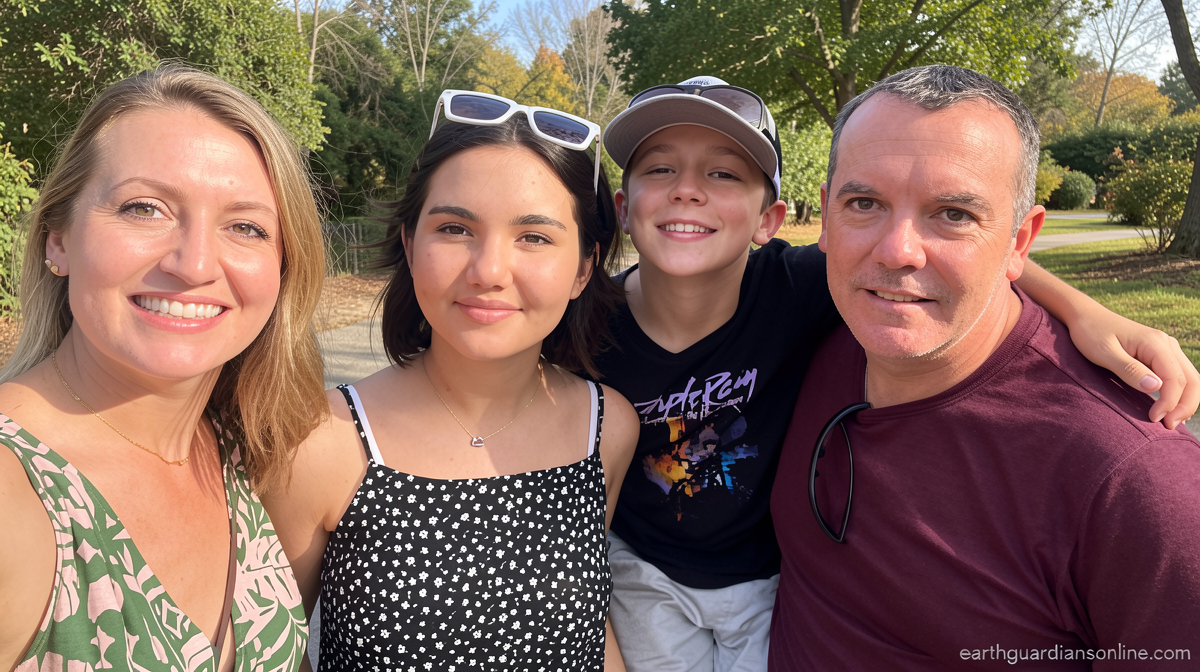
Her family, based in Portland, Oregon, has spent years shuttling across the country in pursuit of the most effective care available. Last spring, Sabina enrolled in a clinical trial in Cleveland, only to withdraw almost immediately when physicians determined she needed urgent chemotherapy to shrink rapidly growing pulmonary tumors. The family relocated to Columbus so her parents could stay at her bedside. Her younger brother, Charlie, remains part of the orbit of care and worry that surrounds her.
The Memory Gap and the Bell
Ask Sabina to recount the specifics of her treatment, and the details come back thin. Fellow patients in what they call the “cancer club” label the phenomenon ChemoBrain. As she has grown older, however, she has come to understand the gaps differently: medical post-traumatic stress disorder, or MPTSD, in which the mind walls off the most grueling episodes to spare the body a second reliving of them.
What does surface, though, are the anchors. The operating room where surgeons cut open her knee and slid in the titanium rod. The beeping IV pole strapped to the back of a tricycle, pedaled in wide circles around the children’s cancer ward in a desperate attempt to sweat out the medicine. The particular expression on her parents’ faces, and the small, sweet ring of the bell that signaled the final dose was done.
“You sit there and listen as they tell you about the poison they’ll be injecting into your body. You hold back a deep groan when they show you the heavy metal prosthetic knee they’ll eventually insert into your leg after they cut you open to remove the tumor.”
She was twelve. She chose to stay calm, to swallow, to listen, because walking out on the plan meant walking out on the chance to live.
A Father’s Commute
Sean McMahon, Sabina’s father, describes a routine from 2021 that now feels like another lifetime. He and his wife lived roughly six miles from Doernbecher Children’s Hospital in Portland. Each evening, as autumn turned the roads dark and slick with fallen maple leaves, the two of them would text each other a simple “let’s go” and drive in opposite directions — one heading home to be with Charlie, the other heading in to be with Sabina. Three or four songs on the car stereo, volume cranked, filled the short drive.
Five years on, those brief commutes have become something else. Moments of fear and grief still arrive without warning, and Sean says he lets them out alone, behind the wheel, with music turned up. His go-to tracks in those moments include “Forever Young” by Alphaville, “Before I Walk on Fire” by Sophie B. Hawkins, and “Bigger Than the Whole Sky.” The car becomes a private room where he is allowed to be a puddle of tears and snot, hidden from everyone else.
The Four-Cent Problem
Sabina has turned her survival into advocacy. She speaks publicly about a structural imbalance in American biomedical funding: pediatric cancer research receives roughly four cents of every federal research dollar. Drug companies, meanwhile, frequently deprioritize pediatric indications because the patient population is small and the regulatory pathway long. The result is that children with cancers like osteosarcoma often receive adult-derived protocols that were never designed for growing bodies.
That gap is not abstract to the McMahon family. Each of Sabina’s five relapses has forced a scramble for the next line of therapy, the next trial, the next hospital. The clinical trial in Cleveland that lasted barely long enough to begin was one such scramble. The decision to pull her out and start a different chemotherapy regimen was another. Every relapse resets the family’s geography, its sleep schedule, its sense of what a normal Tuesday looks like.
And yet Sabina is writing songs, planning her senior-year schedule, and building a public voice that asks a simple question: why should a child’s cancer get four cents when an adult’s gets ninety-six? The question is not rhetorical for her. It is the difference between the trial that started and stopped, and the one that might not yet exist.
The family’s story, shared here in their own words and edited for length and clarity, was developed in collaboration with the Global Health Reporting Center, with support from the Pulitzer Center. It stands as both a personal account and a pointed reminder that pediatric oncology remains one of the most underfunded corners of American medicine — and that the children in that corner are still in the room, still singing, still waiting for the bell.
Related Reading
Frequently Asked Questions
What is Cancer has taken so much but it?
Cancer has taken so much but it is the main topic of this guide. The article explains the context, practical details, and next steps readers should understand.
Why does Cancer has taken so much but it matter?
Cancer has taken so much but it matters because readers are looking for a useful answer, not just a short summary. Good content should match search intent and help them decide what to do next.