What college students really need in their first aid kits

Daftar Isi
Stocking a College Dorm First Aid Kit: What Actually Matters at 2 a.m.
Earthguardiansonline.com – The campus health center has closed for the night. The nearest round-the-clock pharmacy sits twenty minutes away by bus. Your child texts you from a dorm room, miserable and running a fever, and you are trying to decide whether this warrants the cost and hassle of an urgent-care visit. In most cases, it does not. What it does warrant is a well-organized first aid kit sitting within arm’s reach of the bed, stocked with the right tools and medications so that minor ailments get handled quickly and safely without escalating into an unnecessary ER trip.
A family physician who spent years running urgent care inside a university health center — and who also happens to be a parent of college-age children — has laid out what genuinely belongs in that kit. The guidance below distills that expertise into practical, dorm-room-ready advice.
Emergency Supplies: The Items That Can Save a Life
Before reaching for any over-the-counter pain reliever, the single most critical addition to a college first aid kit is a naloxone nasal spray. The U.S. Centers for Disease Control and Prevention identifies accidental poisoning — most often a drug overdose — as the leading cause of death among young adults in the country. On campuses, the specific danger has shifted: counterfeit study aids, anxiety medications, and opioid pain pills laced with fentanyl have turned routine roommate situations into medical emergencies.
Students who unknowingly take a fake amphetamine/dextroamphetamine tablet (sold as Adderall), an alprazolam pill (Xanax), or an oxycodone product (OxyContin, Percocet) can stop breathing within minutes if fentanyl is present. Narcan OTC, a naloxone spray available at pharmacies without a prescription, reverses that respiratory depression. Two operational details matter:
There is only one dose in the spray, so never “prep” with a test spray before administering. Always call 911 and stay with the person until help arrives.
Keep the spray in a visible spot — not buried under bandages — and make sure every roommate knows where it lives and how to use it.
Pain and Fever Management: Know the Differences
Students nationwide consistently report that pain relievers are the most-used items in their kits. The three main over-the-counter options work through different mechanisms, and understanding those differences prevents both under-treatment and accidental overdose.
Ibuprofen (Advil, Motrin) is a nonsteroidal anti-inflammatory drug. It reduces swelling, brings down fevers, and eases pain including menstrual cramps. A full-size bottle belongs in the kit as the primary analgesic.
Acetaminophen (Tylenol) targets headaches, sore throats, and fevers. It is gentler on the stomach than ibuprofen but carries a hepatic risk — a real concern when heavy alcohol consumption is in the picture. A smaller bottle serves as a secondary option.
Aspirin (Bayer, Excedrin) is generally not recommended for teenagers and young adults. Physicians may, however, prescribe aspirin/caffeine combination products specifically for migraine sufferers.
Hangover headaches and stomach-virus misery demand more than a pill. The body needs rehydration. Single-serving electrolyte powder packets — the kind you’d find in a sports-drink aisle — should be stocked in quantity. They restore sodium, potassium, and glucose faster than plain water and address the dehydration that drives the worst of the symptoms.
Cold, Flu, and Congestion: Avoid Ingredient Duplication
It is tempting to grab one multi-symptom cold product and call it done. But most combination cold remedies already bundle a fever/pain reliever (acetaminophen), a decongestant (phenylephrine), and a cough suppressant (dextromethorphan). Layering those on top of a separate ibuprofen or acetaminophen dose risks accidental double-dosing of the same active ingredient.
Treating each symptom with a targeted single-ingredient medication lets you control dosing, improves how well the body responds, and reduces the chance of drug interactions. If congestion is severe, a phenylephrine nasal spray or oral decongestant handles that one problem without dragging in unnecessary analgesics.
Digestive Comfort: When Heartburn Hits at Midnight
College life is a cocktail of caffeine, stress, late-night pizza, chocolate, alcohol, and nicotine — a recipe for frequent heartburn. Antacids rank as the second most-used first aid kit item among students. A simple, fast-acting antacid such as TUMS or its generic equivalent works immediately and comes in chewable or gummy forms that are far more palatable than chalky tablets.
If heartburn becomes frequent enough that a student feels compelled to reach for long-acting acid-blocking pills (H2 blockers or proton-pump inhibitors), that is a signal to schedule a physician visit and investigate the underlying cause rather than masking it indefinitely.
Diagnostic Tools: Give the Care Team Real Data
Campus health centers are perpetually busy. Walking in and saying “I felt feverish” gives a triage nurse almost nothing to work with. Walking in and reporting a specific reading — 102.7 degrees Fahrenheit, for example — lets the nurse gauge urgency immediately. An accurate digital thermometer makes that possible.
A pulse oximeter adds another data point: blood oxygen saturation. If a student is dealing with a hacking cough or shortness of breath, a quick fingertip reading tells the care team whether oxygen exchange is compromised and whether the situation warrants same-day evaluation versus watchful waiting. The more precise the information a student can supply, the faster and safer the clinical decision becomes.
Storage and Accessibility
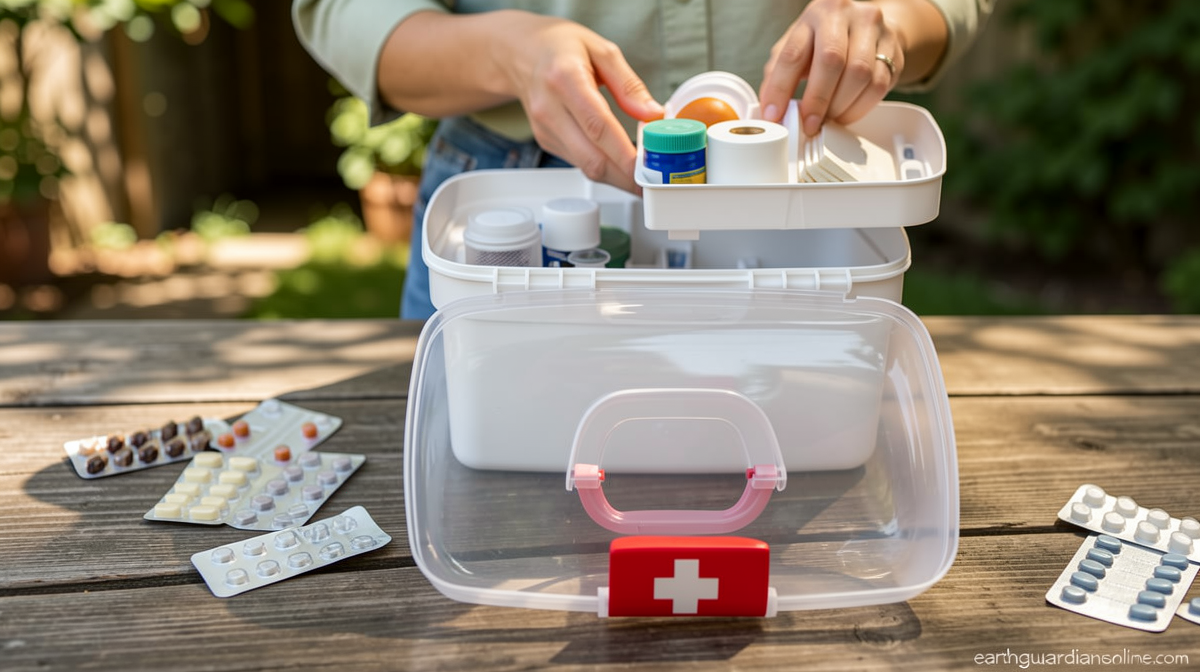
All of the above should live in one container — a labeled box, a small hard-sided case, a dedicated drawer — positioned where it can be grabbed in under ten seconds at 2 a.m. without hunting through a closet. Parents can verify the contents at move-in and again at mid-semester. Students should know every item’s purpose, dose, and expiration date before they ever need it in the dark.
A well-stocked, well-understood first aid kit does not replace medical care. It bridges the gap between “I feel awful” and “a professional has assessed me,” and in the narrow window where fentanyl or a rapidly worsening infection is the threat, that bridge can be the difference between a bad night and a tragedy.
Related Reading
Frequently Asked Questions
What is What college students really need in their?
What college students really need in their is the main topic of this guide. The article explains the context, practical details, and next steps readers should understand.
Why does What college students really need in their matter?
What college students really need in their matters because readers are looking for a useful answer, not just a short summary. Good content should match search intent and help them decide what to do next.