
Bill Gates says he didn’t witness crimes but may have been in presence of Epstein victims
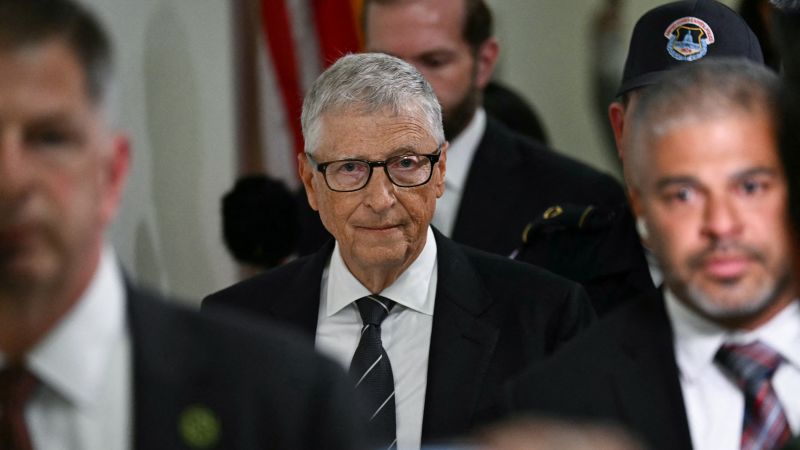
Bill Gates Testifies He Did Not Witness Crimes but May Have Been in Presence of Epstein Victims
Bill Gates says he didn t witness – On Tuesday, a transcript of billionaire Bill Gates’ closed-door interview with the House Oversight Committee was released, revealing his testimony about his relationship with the late financier Jeffrey Epstein. Gates, co-founder of Microsoft, stated that he had no direct interactions with victims of Epstein’s alleged crimes, though he admitted to being in their presence at times. The interview, which took place on Capitol Hill earlier this month, was part of an ongoing investigation into Epstein’s network of sexual misconduct and corruption. Despite his professional ties to Epstein, Gates claimed he never saw or participated in any sexual abuse.
Epstein’s Network and Gates’ Alleged Role
Rep. Robert Garcia, a Democrat on the committee, raised questions about Gates’ assertion of no direct involvement. He highlighted that Epstein’s employees were also victims, suggesting that Gates’ proximity to the financier might have exposed him to the abuse. “That’s a very good point,” Gates responded, acknowledging that he had observed some of Epstein’s female staff during a meeting on one of the financier’s private jets. While he maintained that his relationship with Epstein was strictly professional, he conceded that he could have been near victims without witnessing the crimes firsthand.
“I may have been in the presence of victims,” Gates said, adding that he never saw any explicit evidence of wrongdoing. His testimony underscored the tension between his claim of innocence and the broader picture of Epstein’s predatory behavior, which investigators have linked to multiple individuals over the years.
The committee’s inquiry gained momentum after the Justice Department released additional Epstein documents this year, which prompted questions about Gates’ connections to the convicted sex offender. These files, combined with testimonies from others, painted a complex picture of Epstein’s influence and the relationships he cultivated with powerful figures. Gates, who has been a vocal advocate for global health initiatives, described his interactions with Epstein as focused on philanthropy, despite the financier’s criminal past.
Epstein’s Assistant Testifies About His Manipulative Nature
Alongside Gates’ testimony, the committee also released the transcript of Lesley Groff, Epstein’s longtime assistant, who described the late financier as a “master manipulator.” Groff stated she was unaware of Epstein’s crimes when she arranged phone calls between him and former President Donald Trump, who was still a private citizen at the time. Over a decade, Groff connected Epstein with Trump multiple times, but she claimed she never knew the contents of their conversations. Trump, however, has consistently denied any wrongdoing related to Epstein, as well as allegations of sexual misconduct.
“I didn’t know about the content of the conversations,” Groff said. Her testimony, while not directly implicating Trump, added nuance to the investigation by highlighting Epstein’s ability to control information and shape relationships through his network.
Despite Groff’s accounts, the committee’s focus remained on Gates’ personal interactions. The transcript detailed how Epstein attempted to leverage Gates’ private life to gain influence. Gates recounted that the financier used information about his extramarital affairs—particularly his marital infidelity—as a tool to pressure him. This included an email sent by Epstein in 2014 requesting “reimbursement” for expenses related to a woman Gates had an affair with. Gates explained that he informed his top executive, Larry Cohen, that they would not pay anything for Epstein’s alleged advances.
Epstein’s Emails: A Weapon Against Gates
During the interview, Gates emphasized the role Epstein played in crafting a narrative against him. He pointed to a series of draft emails from 2013, which Epstein appears to have written to himself, as evidence of the financier’s efforts to distort the truth. These notes, riddled with typos and aggressive language, included unverified claims that Gates had engaged in sexual encounters and had concealed a sexually transmitted infection from his wife. Gates, however, disputed the accuracy of these allegations, stating he had never contracted an STD.
“I think Epstein took every potential negative thing he knew, and some that are completely false, and he put those into draft emails to himself,” Gates said. “If he discovered anything negative about me, we would have seen it in the emails he sent to himself.”
Gates further clarified that while he was aware of Epstein’s criminal conviction—described as “of a sexual nature”—he believed the financier could still be a valuable partner for his global health projects. He admitted that he had been hesitant to fully distance himself from Epstein’s reputation, even as the financier invited him to social events on his island. “I have regret that I didn’t factor that in to a greater degree,” Gates stated, reflecting on his decision to prioritize professional opportunities over caution.
The Impact of Epstein’s Network on Gates’ Judgment
Investigators pressed Gates on the possibility of other affairs, suggesting that Epstein’s access to his personal life might have extended beyond the initial meetings. Gates’ legal team defended his testimony, arguing that Epstein’s focus was on leveraging Gates’ personal vulnerabilities to strengthen his own position. The billionaire also mentioned that he had been introduced to Epstein in 2011 by Dr. Boris Nikolic, one of his most trusted employees, who Gates believed shared details about his extramarital relationships with the financier.
“I was aware Epstein had a criminal conviction, but I still pursued a professional relationship,” Gates said. “I thought he could raise billions for global health, and I didn’t realize the full extent of his network.”
Despite his regret, Gates maintained that his actions were not intentional. He described Epstein’s behavior as calculated, using personal information to manipulate and control those around him. The testimony also revealed that Gates had been conscious of avoiding Epstein’s social circles, particularly after learning of the financier’s convictions. “I never wanted to cross that threshold,” he said, referring to the line between professional collaboration and personal entanglement.
As the investigation continues, the committee is examining whether Gates’ relationships with Epstein could have contributed to a culture of secrecy and abuse. The release of his testimony, along with Groff’s account, has added new layers to the inquiry, prompting questions about the extent of Epstein’s influence and the willingness of his associates to overlook his misconduct. CNN has contacted Gates’ representatives and Groff’s for further comments, aiming to clarify the details of their testimonies and the implications for the ongoing probe.
With the transcripts now public, the public and lawmakers are left to weigh Gates’ claims against the evidence of Epstein’s widespread abuse. While Gates insists his relationship with Epstein was professional, the presence of potential victims in his orbit raises lingering questions about the role of his connections in the financier’s network. As the committee delves deeper, the narrative of Epstein’s crimes may continue to shape the perception of those who stood by him, including Gates, who now faces scrutiny over his decisions and judgments.
