
Graham and Trump’s unlikely alliance: From opponents to key allies — and golf buddies
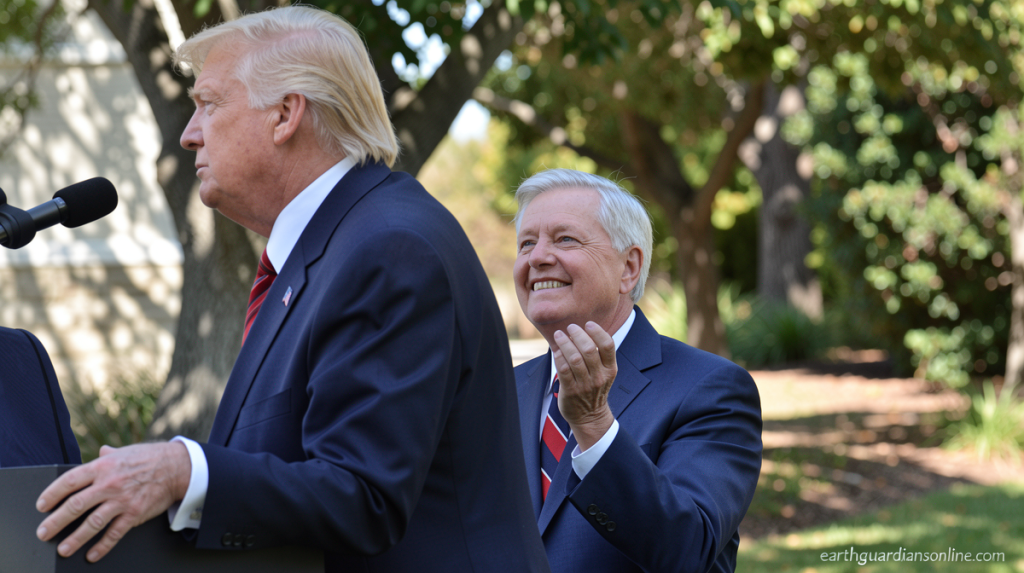
Graham and Trump’s Unlikely Bond: From Rivals to Allies
A Political Transformation
Graham and Trump s unlikely alliance began with sharp words. In December 2015, during the Republican presidential race, Senator Lindsey Graham told CNN viewers that making America great again meant telling Donald Trump to go to hell. The South Carolina senator also criticized Trump’s proposal to ban Muslims from entering the United States, calling it the stance of a xenophobic religious bigot.
That harsh assessment gave way to one of Washington’s most significant political partnerships. The relationship evolved through two presidential terms, shaping foreign policy and influencing the Republican agenda on Capitol Hill.
Before this transformation, Graham had established himself as a bipartisan dealmaker who worked across party lines, including with President Barack Obama. Over more than three decades in politics, he resisted rigid party-line thinking, demonstrated through his immigration reform efforts and his frustration with the tea party movement.
Building Trust Through Persistence
Trump’s 2016 victory triggered Graham’s remarkable shift from critic to confidant. Within months, the senator who had been among Trump’s loudest primary opponents became his closest congressional ally, a vigorous television surrogate, and a regular golf companion.
A March 2017 lunch meeting helped ease tensions between the two men. Graham then worked his way into Trump’s inner circle through consistent phone calls and golf outings. He later joked that the meeting went so well he gave the president his “new cell phone number,” after Trump had shared the senator’s contact information at a campaign rally.
“Lindsey used to be a great enemy of mine, and now he’s a great friend of mine,” Trump said during a 2018 gathering with Senate Republicans. “I really like Lindsey. Can you believe that?”
Following Graham’s unexpected death over the weekend, Trump honored his former rival by calling him “one of the greatest people and Senators I have ever known.”
A Trusted Voice in the Second Term
For Trump’s second presidential term, Graham positioned himself at the center of the administration’s most ambitious initiatives, including the Iran conflict and a sweeping Pentagon modernization effort. He would have played a vital role in several pressing congressional matters—such as a bipartisan effort to impose Russian sanctions, a deal Graham had announced just 48 hours before his passing, and the confirmation of Trump’s new attorney general nominee.
“He was one of those guys, just like Marco [Rubio], just like Jeb Bush, who didn’t understand the Trump phenomenon,” a longtime Trump adviser recalled regarding Graham’s early resistance. “But eventually Lindsey Graham figured it out. He saw that Donald Trump was where all the energy and the passion was in the Republican Party.”
Over the past decade, Graham evolved into one of Trump’s most reliable advisors on critical geopolitical questions. The adviser noted that the president earned his confidence even while the two frequently clashed on major strategic matters, particularly regarding American support for Ukraine and White House negotiations to conclude the Iran war.
“He looked at Lindsey as one of his foreign policy experts,” the adviser explained. “He didn’t always agree with him, but I think he respected him.”
Independence Within the Alliance
Unlike certain MAGA loyalists in Congress, Graham never surrendered his deeply held convictions when aligning with Trump. He selected his battles carefully and deployed his influence strategically. He opposed removing the filibuster, even though Trump told CNN after Graham’s death that he was “coming aboard” to the concept. He maintained fierce loyalty to his longtime friend and mentor, the late Senator John McCain, who frequently became a target of Trump’s criticism. Graham also found ways to sidestep direct confrontation with the president on points of disagreement, including the pardoning of Capitol rioters and Trump’s provocative comments about diplomatic partners.
Despite his initial sharp opposition to Trump’s political ascent, Graham nearly immediately began cultivating a relationship with his former adversary after the 2016 election. The two golfed together regularly, with Graham
