
Justices Barrett and Kagan to face lawmakers after divisive Supreme Court term
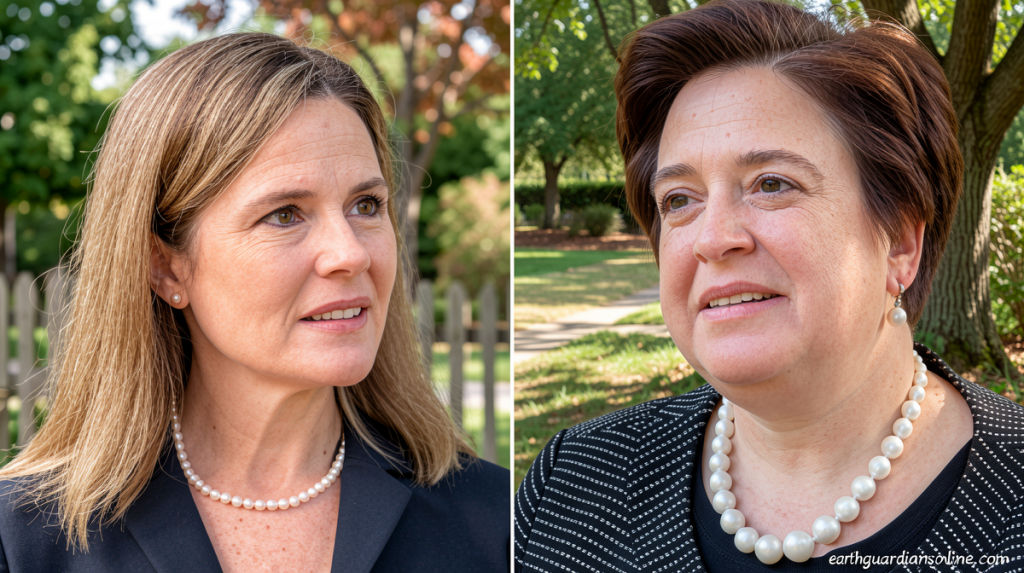
Justices Barrett and Kagan to Face Congress Over Security
Justices Barrett and Kagan to face lawmakers this week as the Supreme Court seeks enhanced security funding amid rising threats. The federal judiciary is making an uncommon personal appeal to Congress, requesting tens of millions of dollars for improved protection. Justice Amy Coney Barrett stands at the center of this effort, bringing firsthand experience to the challenges confronting the nation’s highest court. Since President Donald Trump appointed her nearly six years ago, Barrett has navigated several alarming security incidents. A particularly notable event occurred in May when a swatting attempt targeting her home was thwarted by law enforcement who recognized her as the intended recipient.
A Strategic Selection for Testimony
Gabe Roth, who leads Fix the Court—a group advocating for judicial transparency—commended the decision. “She brings direct experience to this issue,” he explained. “She’s a smart choice for the testimony.” Barrett’s personal encounters with threats make her well-positioned to speak about dangers facing the judiciary. She will attend two separate hearings on Tuesday, arriving shortly after the Court finished a contentious term. During this session, the justices overturned Trump’s efforts to end birthright citizenship and impose global tariffs. While Barrett typically sides with conservative colleagues, she has encountered significant pushback from the right for supporting these decisions. Congressional staff report that legislators are preparing questions to challenge both Barrett and Justice Elena Kagan beyond standard budget matters.
Unprecedented Security Needs
Supreme Court justices rarely appear before Congress, with the last testimony dating to 2019. These off-the-bench appearances usually follow carefully planned formats with federal judges moderating before respectful audiences. Yet the Court relies on Congress for most of its financial backing, and this year’s situation demands special consideration. With a documented rise in physical and cyber threats, the judicial branch is asking for substantial additional resources. The judiciary has requested roughly $921 million for security—a $29 million increase from the previous year. This funding covers frontline security staff at federal courthouses. The proposal also includes nearly $15 million to expand Supreme Court Police coverage for protecting justices and their families at private homes. The US Marshals Service took over protecting justices’ residences in 2022 after a draft opinion leak that would eventually overturn Roe v. Wade, though this arrangement was never intended to be permanent.
In total, the judicial branch is seeking $9.7 billion in discretionary funding, marking a 4.5 percent increase over last year. Security incidents involving judges that the Marshals Service labeled as “significant concern” jumped 57 percent in 2025—a figure that Barrett and Kagan will certainly highlight during their testimony.
Barrett’s Personal Security Incidents
Several close calls involving Barrett have become public knowledge. Police in Washington’s Virginia suburb responded to her home in May after what they termed a “fictitious” gunfire report. CNN later disclosed that Barrett’s residence was the target, though neither the justice nor the Court publicly acknowledged the incident. Earlier, her sister’s South Carolina home faced a bomb threat. Barrett also spoke publicly at a 2024 conference about being sent home from the Court wearing a bulletproof vest, though the Court never explained why she received protective gear.
The most high-profile incident involving a Supreme Court justice happened in 2022 when Sophie Roske, a Californian who now identifies as such, traveled across the country and appeared in Justice Brett Kavanaugh’s neighborhood carrying a bag packed with firearms and other weapons. Roske intended to kill the justice and was later sentenced to slightly more than eight years in prison plus lifetime supervised release.
Roth voiced support for the increased funding, saying it “will help them hire the right amount of personnel and protection that they sadly but definitely need.” He also acknowledged concerns, noting “it’s a precipitous increase and lawmakers have every right to want to examine rather than just giving the justices a blank check.” The judiciary’s 2027 budget request represents the latest effort to secure additional security resources, resulting in a noticeably stronger security presence whenever the justices travel.
