
How James Talarico is working to win over Black voters who strongly backed Jasmine Crockett
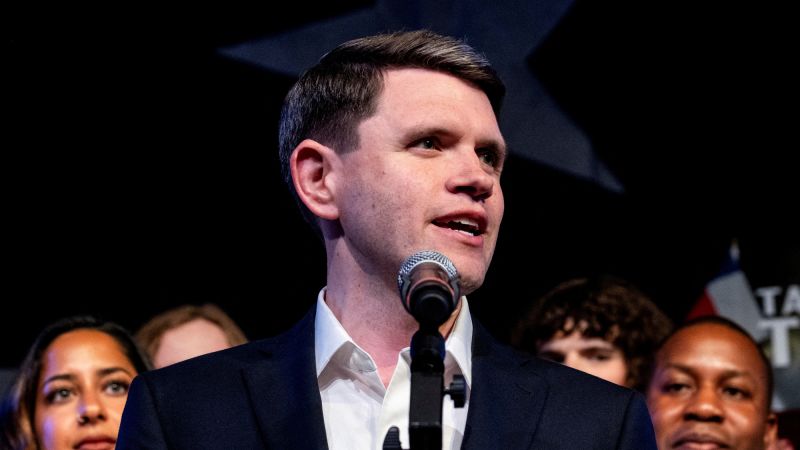
James Talarico Seeks to Rebuild Trust with Black Voters in Texas Senate Race
How James Talarico is working to win – Following the announcement of his general election opponent, Ken Paxton, James Talarico held his inaugural rally in Texas, a state where Black voters played a pivotal role in shaping the Democratic primary outcome. At the event, prominent Black leader Rodney Ellis, a Harris County commissioner and former state senator from Houston, publicly acknowledged his support for Talarico’s opponent, Rep. Jasmine Crockett, during their heated Democratic contest. “The past is behind us, and the focus is on the present,” Ellis remarked on Wednesday. “There’s too much at stake to dwell on minor differences.” His endorsement of Talarico, despite backing Crockett in the primary, signaled a potential shift in the political landscape for the state representative, who aims to broaden his appeal among Black Texans.
Talarico’s campaign is strategically targeting a demographic that has historically been a strong force for Democratic candidates, yet remains a critical untapped bloc for his party in Texas. Since the primary, he has taken deliberate steps to engage Black voters, including delivering a keynote speech at Paul Quinn College in Dallas—the oldest historically Black college in the state—and visiting Prairie View A&M University, another HBCU, in the Houston area. These efforts underscore his commitment to addressing the unique challenges faced by the Black community, such as the alarming rate of maternal mortality, which disproportionately affects Black women. His public pledge to combat this issue has been a focal point of his post-primary outreach.
However, Talarico’s road to winning over Black voters has not been without hurdles. After losing to Crockett in the Democratic primary, she emphasized the need for party unity, urging Democrats to rally behind their nominees. Yet, her campaign has not yet joined forces with Talarico, and her team reiterated to CNN that Texas Democrats still have significant work to do to challenge Republican dominance. Karrol Rimal, Crockett’s spokesperson, stated that “underestimating Paxton would be a mistake” and highlighted the long journey ahead before November. “Democrats must decide whether to invest in a Texas longshot or consolidate support in states where they’ve already secured victories,” Rimal added, pointing to Alaska and Georgia as examples. She also noted that the state’s top Democratic candidates are predominantly from Austin, a city that has historically been less representative of the state’s broader, more diverse electorate.
“Texas Democrats have a lot to prove if they want to change the outcome of this election,” Rimal said. “While we are energizing the base, we need to reach beyond Central Texas and engage with communities across the state.”
Talarico, meanwhile, has positioned himself as a candidate who understands the importance of bridging gaps with voters of color. His outreach has extended to notable figures such as former President Barack Obama, who recently accompanied him on a surprise visit to an Austin taco shop. The event, which drew attention from both media and social platforms, was seen as a symbolic gesture of solidarity. “He’s making a concerted effort to connect with the community,” said state Rep. Christian Manuel, a Black Democrat from southeast Texas and former Crockett supporter. “But the challenge is moving past the polarization that defined the primary.”
Manuel, whose district saw Crockett secure nearly 80% of the primary vote, pointed out that some Black Democrats have pushed for Talarico’s campaign to allocate more time to communities of color. “They’ve been responsive to those calls,” Manuel explained. “Even so, there are still voices online who cling to the past, which can slow down the momentum we’re trying to build.” He criticized the tendency of social media influencers to dwell on the earlier campaign battles, suggesting that the majority of Black voters are focused on the future. “We’re all working to pull as many people as possible into the November showdown,” he added.
Amid his efforts to cultivate Black support, Talarico has also engaged with key local figures, including Fort Worth civil rights activist Opal Lee and Dallas pastor Freddie Haynes, the Democratic nominee to replace Crockett in the House. These individual meetings aim to humanize his campaign and align it with the values and concerns of the Black community. “I’m determined to earn their trust,” Talarico said in a statement to CNN. “For too long, Black voters have been overlooked by the national Democratic machine, and I want to make sure they feel seen in this race.”
With no Democrat having won a statewide race in Texas since 1994, Talarico’s campaign is under pressure to prove that he can mobilize a broad coalition. His strategy hinges on demonstrating that he is not just a candidate for the party’s traditional base but one who can resonate with independent voters and disaffected Republicans as well. “Our state deserves a Senator who will fight for Black Texans,” he said, emphasizing the need for representation and policy focus. “I’m not just running for the title; I’m running to deliver results.”
The political climate in Texas has been shaped by the strong performance of Black voters in the Democratic primary, where Crockett’s victory was a testament to their power. Yet, the challenge for Talarico lies in translating that energy into a general election win. While Crockett’s team has called for unity, they also stress the importance of continued outreach to underrepresented groups. “Energizing the Democratic base is crucial,” Rimal said. “But we cannot ignore the broader electorate if we want to make Texas a Democratic stronghold.”
Talarico’s recent actions, from speaking at HBCUs to meeting with Obama, have been part of a broader effort to show that his campaign is inclusive and forward-looking. These moves have not gone unnoticed, with some observers noting that his approach is a departure from the more polarized tactics of the primary. However, the road to gaining the confidence of Black voters remains steep, and his ability to balance the needs of the party with the aspirations of the community will be a key factor in determining his success. As the general election approaches, Talarico’s campaign continues to navigate the delicate task of unifying a divided electorate while staying true to the principles that resonate with those who have long been the backbone of Democratic strength in Texas.
With the stakes high and the timeline tight, Talarico’s focus is on building momentum. The fact that he has managed to secure the support of influential Black leaders like Ellis and Manuel suggests that his strategy is beginning to take root. But as his campaign moves forward, the question remains: can he translate these early signs of progress into a decisive victory in November? For now, the answer hinges on his ability to connect with a community that has the power to tip the scales in the state’s most politically charged race.
