Inside DC’s historic heart, an IndyCar race backed by Trump kicks into gear

Daftar Isi
Engines Roar Past the Capitol: Washington’s 250th-Birthday IndyCar Spectacle Rolls Into Motion
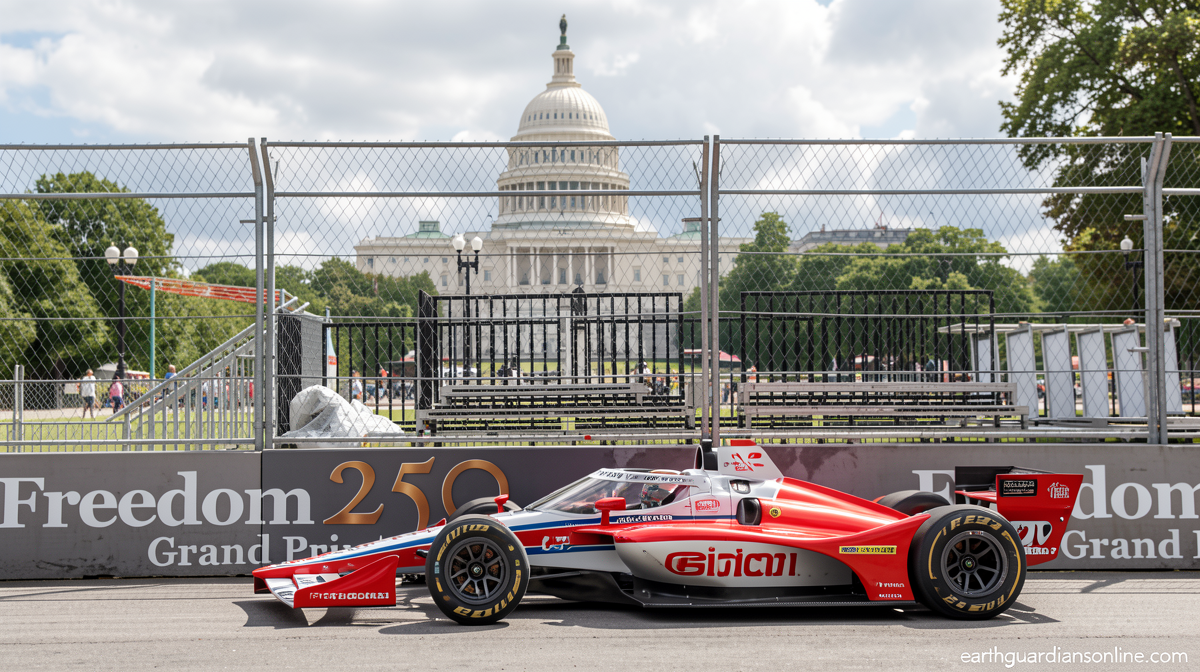
Earthguardiansonline.com – For one weekend, the most recognizable skyline in American politics doubles as a backdrop for open-wheel racing at up to 180 miles per hour. The Freedom 250 Grand Prix, a two-day street circuit threading through the heart of Washington, DC, opened its gates on Saturday morning under a thin drizzle, sending thousands of spectators streaming toward a stretch of 3rd Street where the start-and-finish line has been repainted in red, white, and cobalt blue. A bold black-and-white checkered-flag stripe now dominates that section of roadway, dwarfing the ordinary crosswalk markings just steps away.
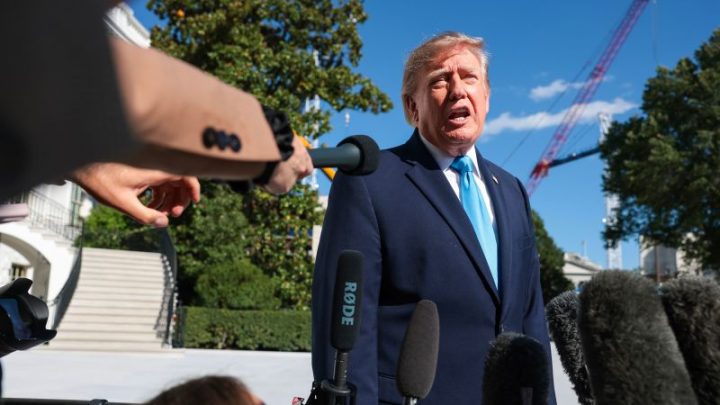
The event caps a summer of nationwide commemorations marking the republic’s 250th anniversary. What began as a pitch by Bud Denker, president of Penske Corporation, became a concrete reality in under twelve months after President Donald Trump signed a January executive order that sidestepped the usual layers of local permitting and bureaucratic review. Organizers project a combined attendance of nearly 300,000 across both days.
A Track Woven Through National Monuments
The 1.66-mile circuit is unlike anything IndyCar has hosted before. It begins along 3rd Street, sweeps across the National Mall directly opposite the Washington Monument, then hooks onto Pennsylvania Avenue — the same boulevard that fronts the White House. From there the course cuts through 9th Street, brushing past the National Gallery of Art and the National Archives, before swinging onto Constitution Avenue and slicing across 7th Street. It bisects the Mall once more, threads Independence Avenue past the Smithsonian’s Air and Space Museum, and finally loops back via Maryland Avenue to close the lap on 3rd Street. Seven turns define the layout, and the total distance stays just under 1.7 miles.
Pennsylvania Avenue proved essential to the design. Its unusual width allowed engineers to carve out a full pit lane where IndyCars will pull in for tire swaps, refueling, and mechanical work between stints. Without that stretch of extra pavement, the circuit would have been impossible to configure safely.
Saturday: Practice, Curiosity, and a Family’s First Lap
By roughly 8 a.m., racing teams were already positioning their cars for the opening practice sessions while early fans filtered in beneath the misty sky. By mid-morning the crowd had swelled to several thousand. The damp weather did little to cool the enthusiasm of dedicated motorsport followers who had driven or flown in from across the country.
Tom Lantz, who has attended multiple IndyCar events over the years, made the trip from Altoona, Pennsylvania, specifically so his 12-year-old son Levi Steele could experience a Grand Prix for the first time.
“I’m just glad I’m here,” Levi said.
Along the barriers, fathers lifted toddlers onto their shoulders for a clearer sightline. Small concrete blocks were spaced every few yards along the spectator zones, giving standing fans a slight elevation boost beyond what the grandstands alone could provide.
Drivers spent the day learning the circuit’s quirks for the first time. Top speeds appeared to be reached on the long Pennsylvania Avenue straight before a punishing right-hander on 9th Street NW. More than one driver clipped the apex, forcing a brief reversal to rejoin the racing line. Those early mistakes underscored how unforgiving the monument-lined layout would be come Sunday.
Sunday’s Symbolic Arithmetic
The main race will consist of 147 laps — a number chosen deliberately to echo the nation’s semi-quincentennial. At roughly 1.66 miles per lap, that translates to a 250-mile contest, tying the distance directly to the anniversary being celebrated. Before the green flag drops, Trump is scheduled to take a ceremonial lap aboard the presidential limousine, colloquially known as “The Beast,” and release the flag from the rear seat, according to a White House official.
Scott Talbott, a visitor from Dallas, summed up the emotional pull of watching open-wheel cars carve past the Capitol dome:
“The nostalgia of DC, the heritage — I’ll take this any day.”
Citywide Disruptions and Institutional Safeguards
The race’s footprint extends well beyond the track itself. District officials have imposed sweeping traffic and parking restrictions across multiple neighborhoods, meaning residents who never set foot near the circuit will still feel the event’s logistical reach. The Federal Aviation Administration announced it will suspend departures from Ronald Reagan Washington National Airport between 10:15 a.m. and 1:15 p.m. on Sunday, though those windows remain subject to adjustment.
Several Smithsonian institutions sit directly in the racing line. Visitors wishing to enter those museums during event hours must present a valid Freedom 250 Grand Prix ticket. The National Gallery of Art, whose galleries adjoin the pit lane, disclosed that it completed an “extensive vibration study” prior to the event and implemented a suite of protective measures designed to shield both patrons and the collection from any resonance effects generated by the passing cars.
For a city whose identity is inseparable from its monuments, the weekend represents a rare inversion: the monuments become scenery, and the spectacle moves through them at nearly highway speed, engines echoing off neoclassical facades that have stood silent for generations.
Related Reading
Frequently Asked Questions
What is Inside DC s historic heart an IndyCar?
Inside DC s historic heart an IndyCar is the main topic of this guide. The article explains the context, practical details, and next steps readers should understand.
Why does Inside DC s historic heart an IndyCar matter?
Inside DC s historic heart an IndyCar matters because readers are looking for a useful answer, not just a short summary. Good content should match search intent and help them decide what to do next.