The Republicans staying away from the ‘Trump-a-palooza’ convention

Daftar Isi
Republicans bring midterm campaign spectacle to Dallas
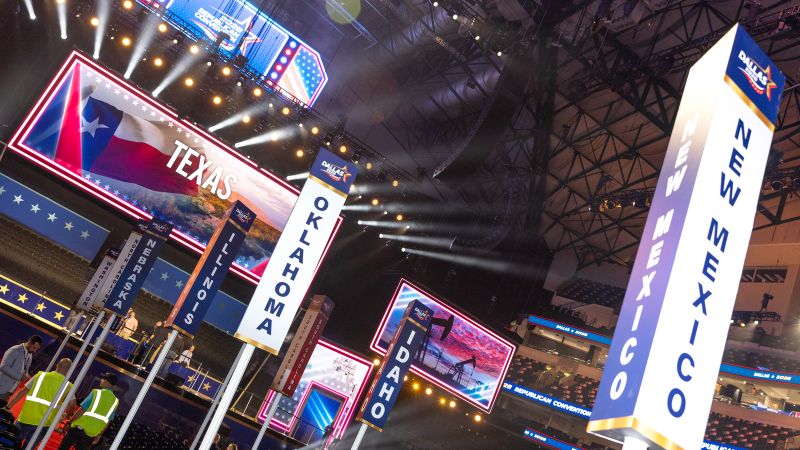
Earthguardiansonline.com – Republican leaders are opening an unusually high-profile midterm gathering in Dallas as the campaign season moves into its final stretch before November’s elections. The two-day event, built around President Donald Trump and a long roster of party figures, is designed to put competitive candidates before a national audience while energizing voters and donors.
Programming begins at 4 p.m. Eastern on Wednesday and Thursday. Organizers have scheduled 109 speakers, including party leaders, federal candidates and state-level contenders. The convention resembles the large gatherings more commonly associated with presidential election years, but it is being staged during a midterm cycle after party rules were changed to permit it.
Trump has made no secret of his preference for a major political production. He is scheduled to give the Wednesday-night keynote and return Thursday as the convention’s closing speaker. Vice President JD Vance is set to hold a prominent position as Thursday’s keynote speaker.
“It will be a RALLY like none other!”
That was Trump’s description of the planned event when he announced it during the summer. On Tuesday night, he declared on social media that the convention was “totally sold out,” while saying the party wanted to reserve speaking opportunities for candidates in close contests.
“Everybody wants to be there, but we’re really asking only those Candidates that are in tight Races, a little up, a little down, or even, to speak. We want to save the ‘stage’ for them,”
Trump added that candidates comfortably ahead did not need the same kind of platform, even if party leaders valued their presence.
Competitive candidates take the stage
The speaker list underscores the balancing act for Republicans competing in contested districts and states. A convention appearance can raise a candidate’s profile, strengthen connections with national donors and demonstrate support from the president. But it can also create complications for contenders who need votes from independents or other swing voters in districts where a highly partisan event may be less popular.
Several House Republicans seeking another term are choosing to participate despite that risk. The group includes Reps. Mike Lawler of New York’s 17th District, Derrick Van Orden of Wisconsin’s 3rd District, Monica De La Cruz of Texas’ 15th District, Ryan Mackenzie of Pennsylvania’s 7th District and Rob Bresnahan of Pennsylvania’s 8th District.
The Senate roster also features candidates in races expected to command significant attention this fall: Ohio Sen. Jon Husted, Texas Attorney General Ken Paxton, Georgia Rep. Mike Collins, former Michigan Rep. Mike Rogers and former Republican National Committee Chair Michael Whatley, who is running in North Carolina.
Two gubernatorial figures are also scheduled to speak. Texas Gov. Greg Abbott is pursuing a fourth term, an unprecedented bid in the state, while Florida Rep. Byron Donalds is running to replace outgoing Gov. Ron DeSantis.
Party officials see the convention as a way to reach voters who may not yet be focused on the election.
“A lot of these races are going to be very, very tight as we’ve seen in midterm cycles past,”
RNC national press secretary Natalie Baldassarre said.
“So, our goal is to remind voters who aren’t necessarily politically engaged all of the time that there is an election in November and it is critical for them to get out to vote.”
Not every vulnerable candidate is going
Some House members facing difficult reelection campaigns are not expected in Dallas. They include Reps. Maria Elvira Salazar of Florida’s 27th District, Tom Barrett of Michigan’s 7th District, Juan Ciscomani of Arizona’s 6th District, Zach Nunn of Iowa’s 3rd District and David Valadao of California’s 22nd District.
Rep. Tom Tiffany, the Republican nominee for Wisconsin governor, is also skipping the gathering. Several notable Senate candidates will not speak, including Sens. Susan Collins of Maine and Dan Sullivan of Alaska, Iowa Rep. Ashley Hinson and former New Hampshire Sen. John E. Sununu.
The absences illustrate a practical campaign decision. Candidates in the closest races must decide whether national visibility is worth time away from local events, fundraising meetings and direct voter contact in their home states or districts.
A Republican source said the National Republican Congressional Committee’s request that House lawmakers pay at least $25,000 for a ticket affected attendance.
“I do think it had an impact on member attendance for sure,”
the source said.
“Obviously there are some members who are in tighter races who feel it’s probably more beneficial to be on the campaign trail.”
A person familiar with the NRCC’s plans said the price was below the cost at earlier conventions and was a customary committee practice. That person said all available tickets had been distributed, totaling more than 2,700.
NRCC spokesman Mike Marinella said the event would give House Republicans and candidates from the most competitive districts an opportunity to present their case directly to voters and emphasize what is at stake in November.
A convention shaped by Trump’s political style
The Dallas meeting is as much a reflection of Trump’s approach to party politics as it is a campaign stop. Rather than waiting for the next presidential nominating convention, Republican leaders altered their rules to create a midterm version centered on the president’s preference for large rallies, dramatic programming and broad media attention.
For candidates who attend, the gathering offers access to the party’s most influential figures at a moment when campaign resources and voter enthusiasm can shape close races. For those who remain on the trail, the calculation is different: local campaigning may offer a clearer route to persuading the narrow slice of voters likely to decide their contests.
Either way, the Dallas convention will serve as an early test of how Republicans intend to connect Trump’s national appeal to a varied set of House, Senate and gubernatorial campaigns across the country.
Related Reading
Frequently Asked Questions
What is The Republicans staying away from the Trump?
The Republicans staying away from the Trump is the main topic of this guide. The article explains the context, practical details, and next steps readers should understand.
Why does The Republicans staying away from the Trump matter?
The Republicans staying away from the Trump matters because readers are looking for a useful answer, not just a short summary. Good content should match search intent and help them decide what to do next.